
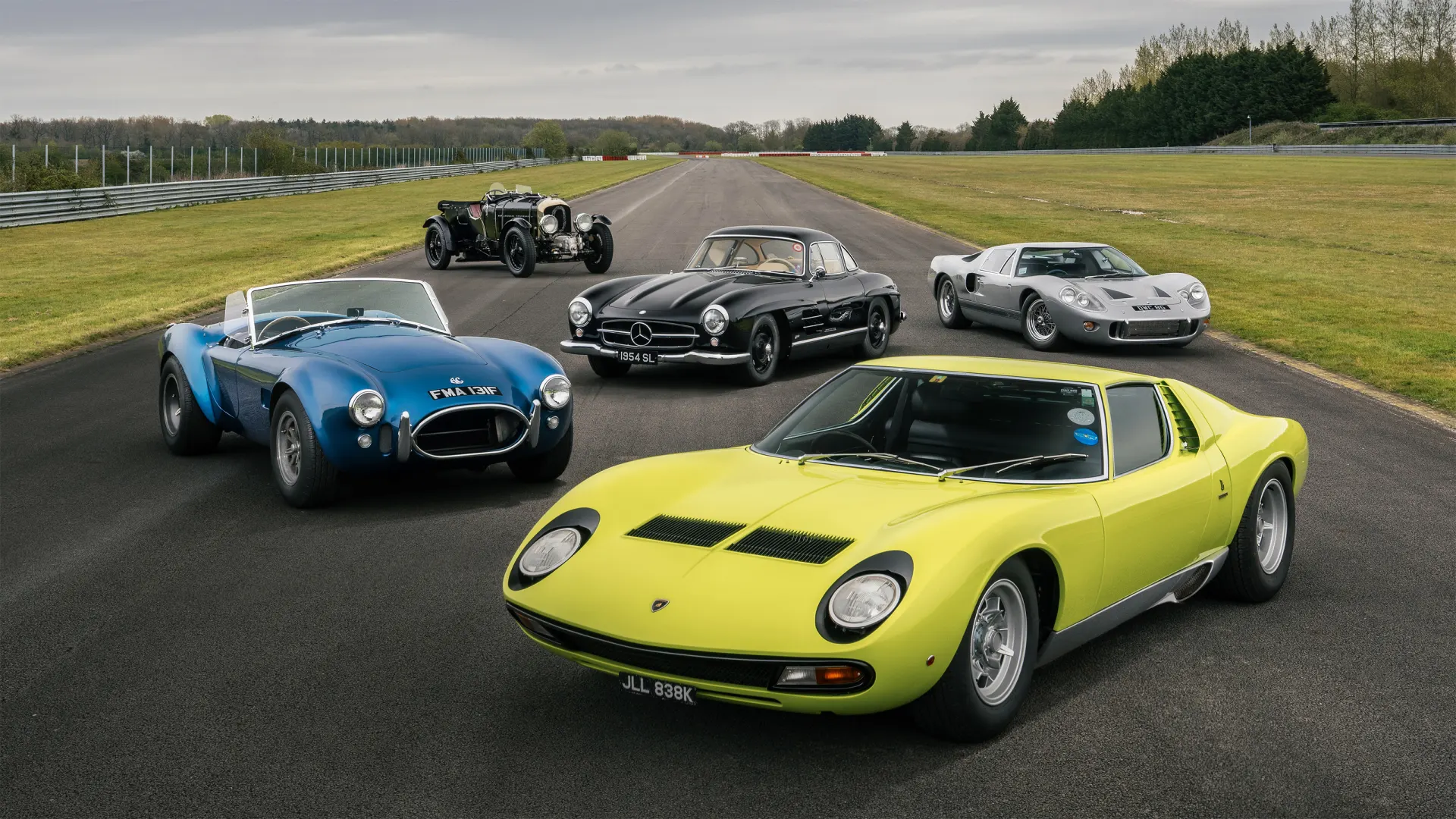
What was the world’s first supercar? The deeper you dig into this question, the more difficult it becomes to answer. Supercars have and always will be a collection of elements, from performance to dramatic styling and rarity, and pinning down exactly what point in history these came together in one whole is always a matter of debate.
In the latest issue of evo, we trace the origins of the supercar by driving five past icons that could lay claim to being the first: the Bentley Blower, Mercedes-Benz 300SL, AC Cobra, Ford GT40 and Lamborghini Miura. To read the full feature, pick up a copy of evo 346 in store or online via the evo shop.
On the surface, the Bentley Blower couldn’t be further from today’s notion of a supercar – it’s certainly not a shape school children would scribble in class – but in how it stretched the performance envelope of automobiles at the time, it’s absolutely in the conversation. It was effectively a race car for the road (50 road-legal examples were commissioned to homologate the Blower for motorsport), with 240bhp and a 125mph top speed – hugely impressive numbers for a near 100-year-old car.
The 300SL is another car born from motorsport, making its debut in 1954 as a descendent of a Mercedes race car from two years earlier. With a low-slung body and its famous gullwing doors it gets much closer to the supercar aesthetic we know today, and packs 215bhp from its 3-litre straight-six. A 155mph top speed is competitive even amongst modern performance cars.
While Europe was evolving the performance car formula, America didn’t sit still. In the 1960s the Shelby Cobra emerged combining a compact open-top body with massive firepower from a Ford small-block V8. Early cars were capable of hitting 60mph in the low four-second range, while later cars – packing monstrous 485bhp 7-litre engines – could hit 100mph in just 8.8sec. In the same period, Carroll Shelby was also hard at work developing the Ford GT40 – a dominant Le Mans winning race car, of course, but also a seriously fast and desirable road car in its later forms.
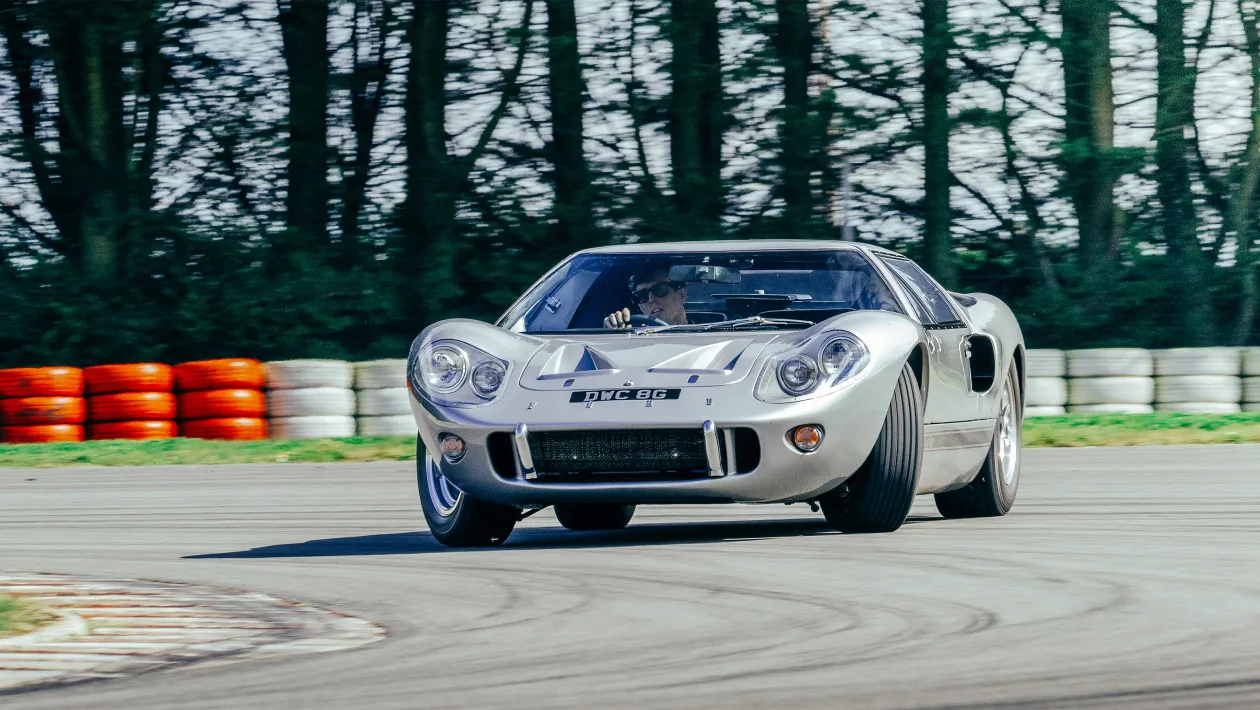
The GT40 served as inspiration for a supercar that set the template for decades to come – the Lamborghini Miura. A mid-mounted V12, stunning Gandini-designed bodywork and a top speed of 172mph made it one of the most advanced and desirable production cars when it launched in 1965. It also started a lineage of mid-engined V12 Lamborghinis that continues today with the Revuelto.
To read about the evolution of the supercar through the decades, and what they feel like to experience today, pick up a copy of evo 346 in-store or online.
Comments (0)