
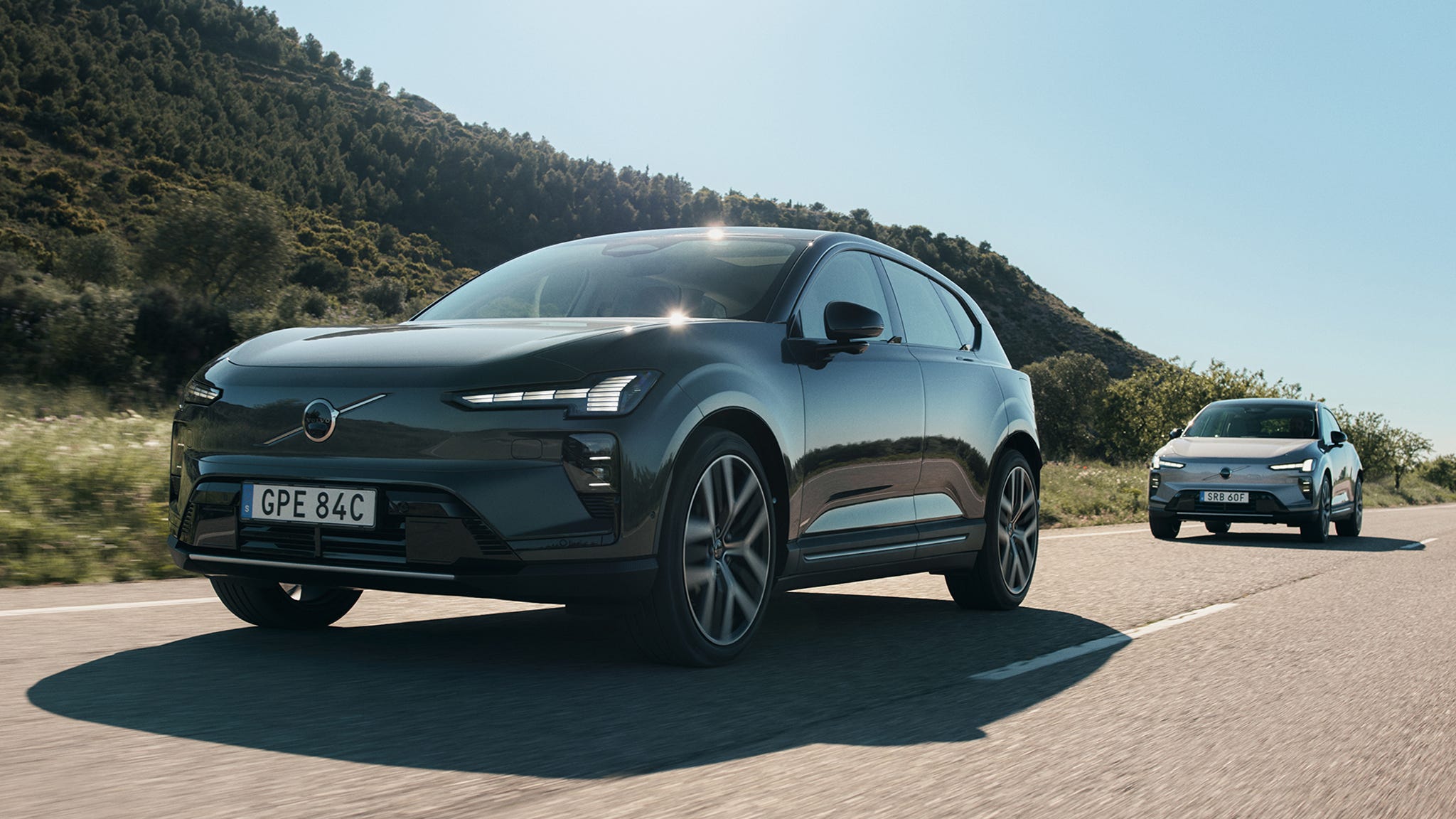
While other automakers have walked back their commitments to electrification, Volvo remains focused on transitioning its lineup away from gasoline and toward an all-EV model range. The road hasn’t been smooth; tariffs killed the subcompact EX30 for the U.S. and the otherwise impressive EX90 flagship SUV was marred by software glitches at launch.
That’s where the all-new 2027 Volvo EX60 comes into play. Volvo hopes to parlay some of the goodwill garnered by the gas-platform XC60, its bestselling vehicle of all time, into consumer interest in the all-electric EX60.
The EX60 is the first Volvo to receive the new SPA3 platform; the EX90, for example, is based on the prior SPA2 component set. Volvo took a different approach to manufacturing the EX60, as well. It uses megacasting, which reduces weight, carbon impact, and cost. Its ultra-powerful, in-house designed HuginCore computing system serves as the SUV’s digital brain, so the vehicle shouldn’t be burdened with the same software issues as the EX90.
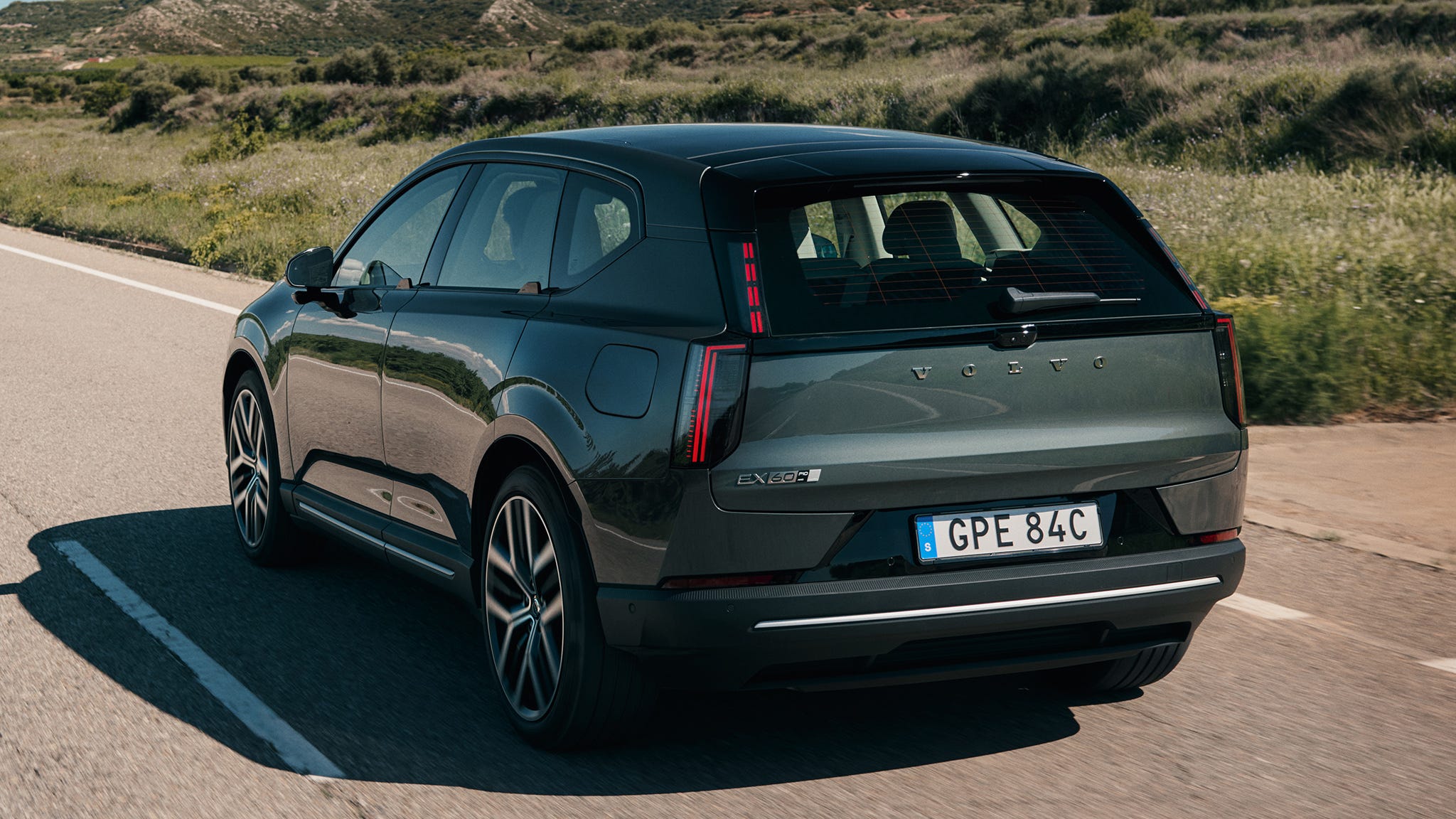
This SUV also represents another milestone for Volvo in its latest era: The EX60 is the first of the company’s EVs to be built at the Torslanda plant in Gothenburg, Sweden, and it was fully designed, developed, and built in the automaker’s home country.
At launch, the 2027 model arrives with RWD and AWD variants. The P6 has a single motor driving the back wheels to the tune of 369 horsepower and 354 lb-ft of torque, which should be good for a Volvo-claimed 0–60-mph time of 5.7 seconds. P10 models add a motor up front, bringing total output to 503 hp and 524 lb-ft. A range-topping P12 model arrives at the end of 2026 with dual-motor AWD, 670 hp, and 583 lb-ft.
Powertrains aside, the only significant difference between the P6 and P10 is the suspension setup. The P6 uses a fixed suspension with frequency-selective dampers; the EX60 P10 has an adaptive damper suspension allowing for three selectable settings.
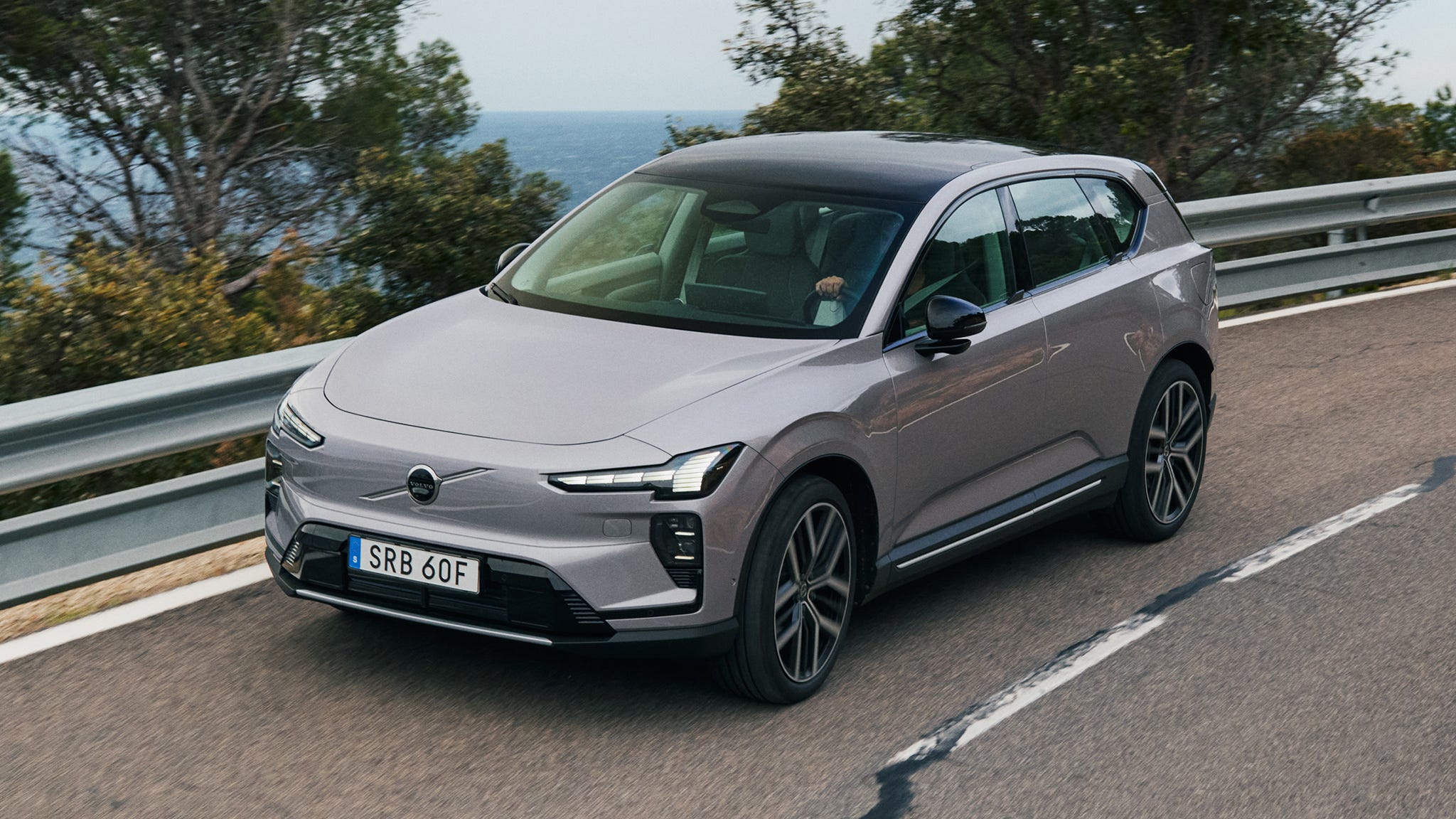
Getting started behind the wheel of an Aurora Silver EX60 P6, the single-motor version was appropriately quick for the compact electric luxury SUV segment. Power delivery is smooth and linear without unpredictable surging or freeway speed drop-off. Although the P6 felt plenty quick for real life, the P10 launched much harder and felt so quick that a P12 variant seems almost unnecessary. Of course, Volvo told us there’s plenty of demand for it, but you can outrun most traffic with the P10 dual-motor.
Volvo maintains efficiency by disengaging the front motor while cruising, but AWD is available immediately when a driver wants it. A Performance mode keeps the front motor active, which is handy for driving on twisty roads when you want snappy corner exits. It’s also intended to help with traction on dirt, in rain, or in snow.
Ultimately, there’s a marginal difference in feel between the two models. The P6’s fixed suspension irons out poor road surfaces well, though the P10’s adaptive setup is slightly more settled. The P6 has lighter steering with a smidge more numbness around center, though turn-in feels crisp and agile. P10 variants are downright plush with great body control in the most comfortable or standard suspension modes. Selecting the firmest profile buttons up the dampers, but the EX60 never felt too stiff for road use.
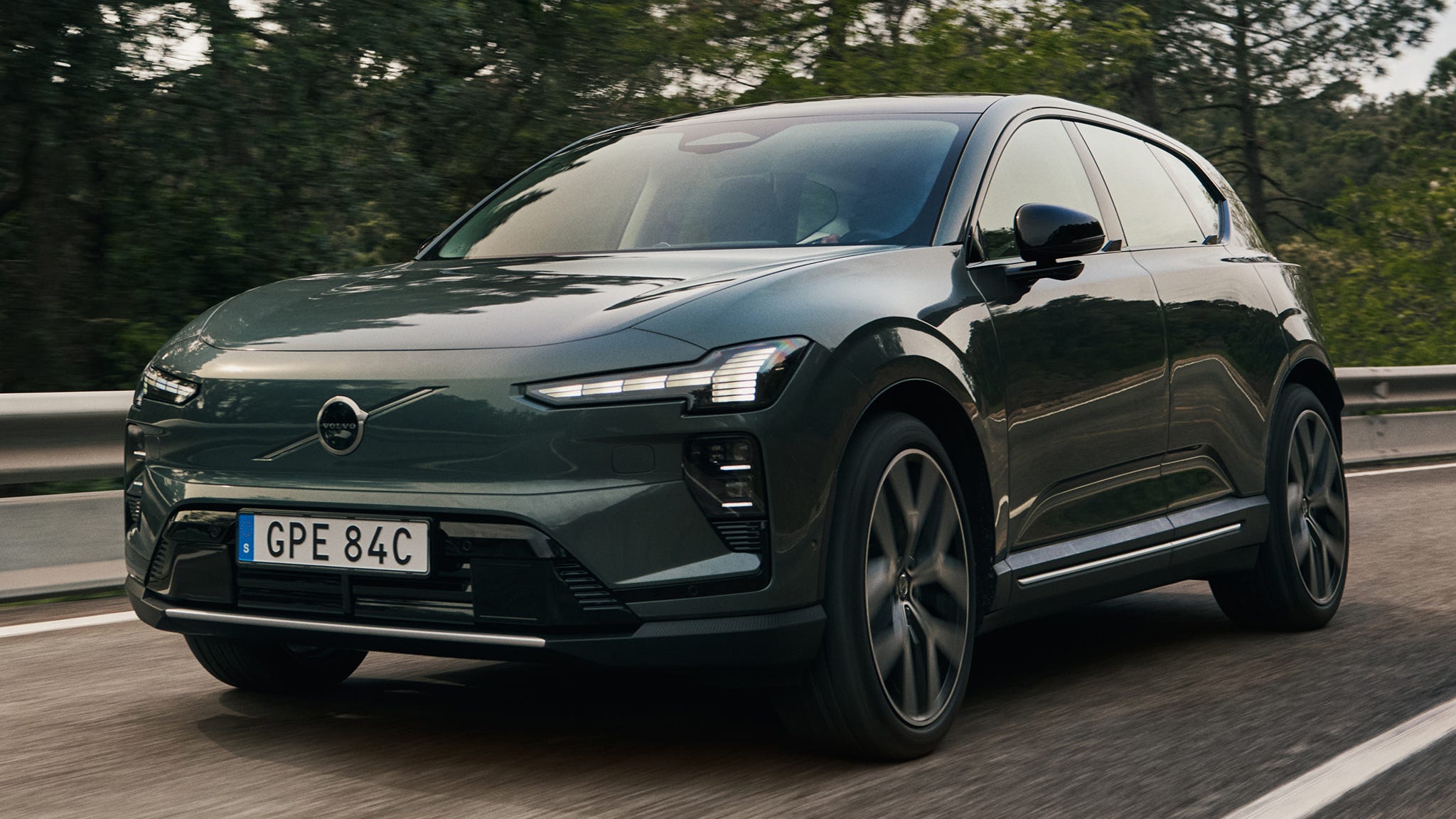
Volvo offers three one-pedal driving settings: High, Low, and Coast. High provides forceful regenerative braking on liftoff, while Low is easier to drive smoothly. The EX60’s coasting mode delivers an even more relaxed demeanor. When you do step on the brake pedal, stops are predictable and tidy. Both powertrains are entertaining when driving enthusiastically on a back road but are equally pleasant when you just want to enjoy the scenery. The cabin is remarkably quiet even at freeway speeds, even with all four windows open.
We didn’t get a chance to fast-charge the EX60, as the P6—equipped with an 83-kWh battery with 80 kWh usable—is good for 307 miles of range; the P10 gets a larger 95-kWh battery with 91 kWh usable and can travel 322 miles per charge. A three-hour P6 test drive from a full charge left it with a 70 percent charge and 236 miles of range. After nearly three hours driving the P10 at mixed speeds with a heavy dose of freeway, it still had 77 percent/292 miles remaining. In other words, our initial impressions are strong.
Regarding charging, Volvo says P6 models fast-charge at 320 kW, enabling a 10–80 percent charge in 16 minutes. P10 models charge at a blistering 370 kW, matching the P6’s 16-minute charge time despite its larger battery pack. An onboard charger allows for Level 2 charging at a rate of up to 19.2 kW.
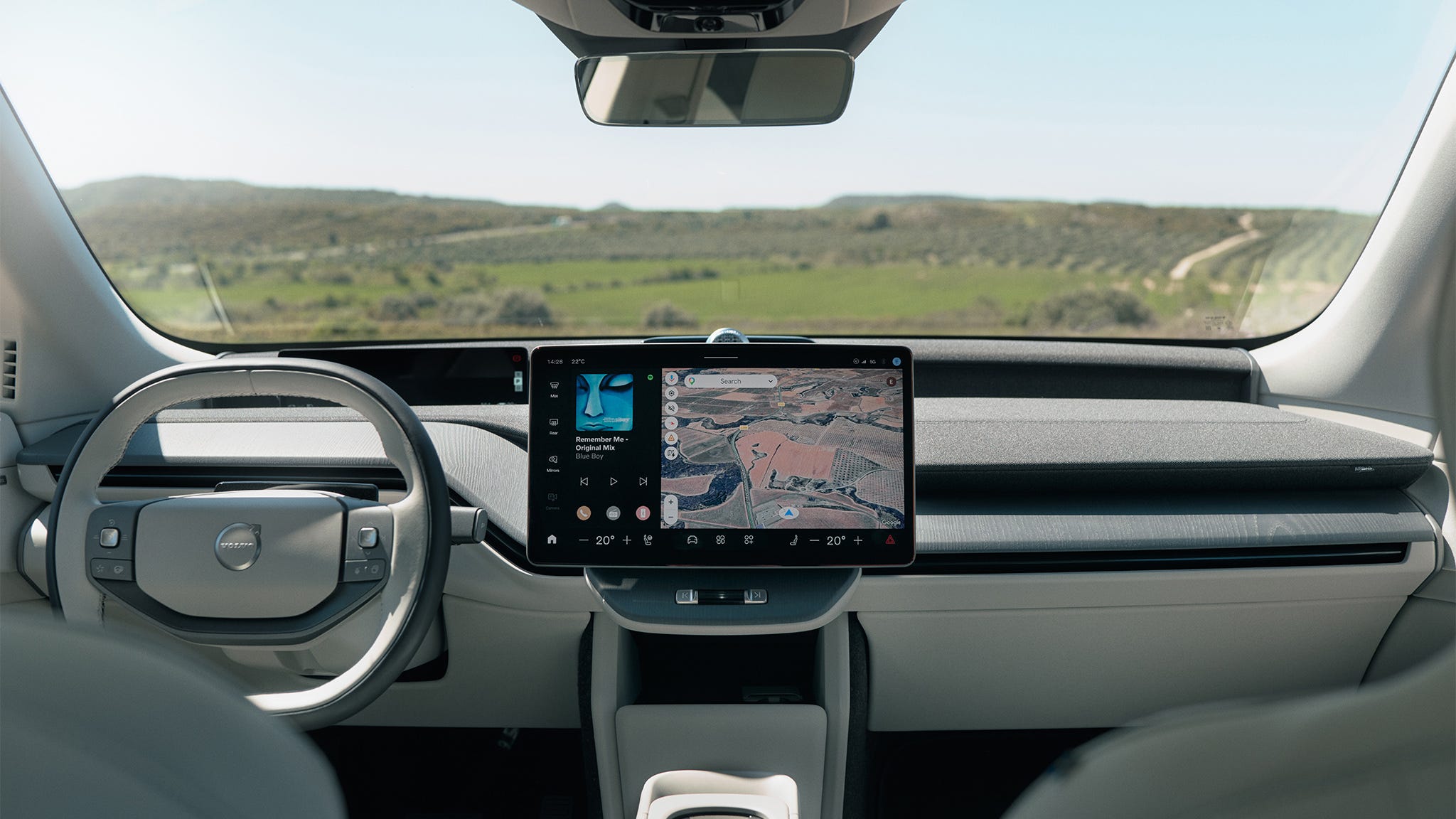
Inside, Volvo continues to refine its minimalistic interior design. Instead of the EX30’s and EX90’s puny digital driver instrument clusters, the 60 has a large 11.4-inch screen mounted high on the dashboard, eliminating the need for a head-up display. This panel is easy to read and can be configured to show multiple views, including a Tesla-esque rendering of the vehicle and its surroundings or Google Maps navigation.
A convex 15.0-inch infotainment touchscreen in the center runs a new infotainment system, which appears to be far more complete than the UI that launched with the EX30 and EX90. On the left of the display, there’s the “contextual bar” with hot keys for controls that need to be readily available. On the ceiling console, some of the most important functions have redundant hard buttons to comply with European regulations, to which we say, “Hurrah!” Volvo configured the EX60’s menu structure in order of frequency, bundling the most accessed items in the most surface-level tray and sticking set-it-and-forget-it functions like Bluetooth pairing at the very bottom of the list. The user experience is vastly superior to that of the EX30 and EX90, with snappier graphics and a far more coherent interface.
Volvo even manages to make AI useful with its integration of Google Gemini, which goes far beyond the capability of Google Assistant in its prior vehicles. You can make complex queries like, “Find a charger next to a restaurant that’s friendly to the needs of people with celiac disease.” You can even have Gemini provide a summary of the menu and reviews. From an entertainment perspective, you can banter with Gemini and hold prolonged conversations, which we did to hilarious effect.
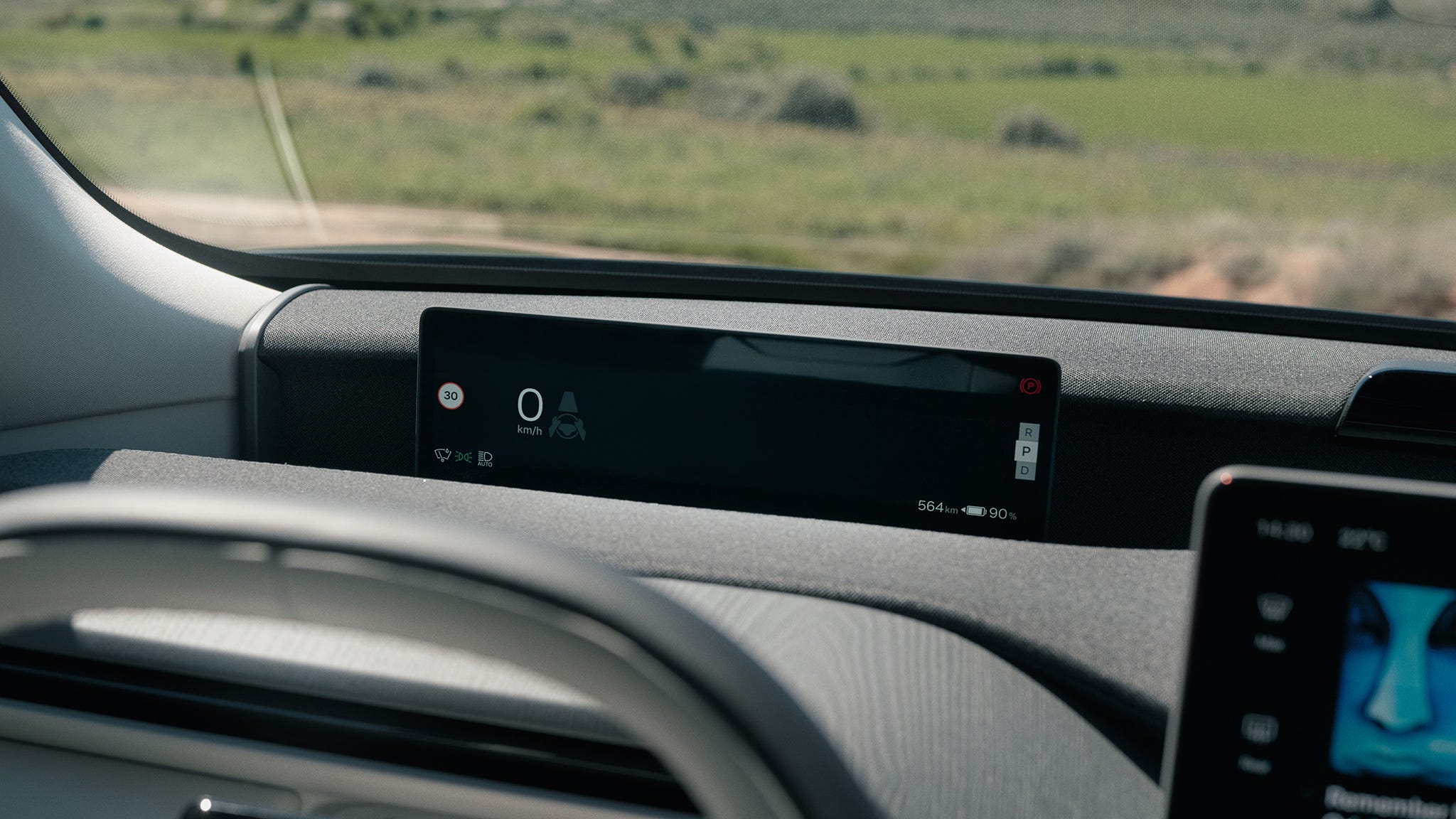
Volvo reduced some of its reductive design by adding hard buttons back to the steering wheel and providing menu-based vent controls. Moving the airflow direction via the screen works well, but it can be annoying if your passenger wants the vents adjusted and doesn’t know how to do it.
No surprise, the EX60 is just the latest evidence of Volvo’s commitment to safety. It comes with multiadaptive seat belts that use AI and sensors to literally size up whoever is sitting in the seat and the severity of a collision to apply one of 11 load settings to maximize protection. It’s also loaded with active safety technology, and the blind-spot monitor is shockingly nonintrusive. The EX30 and EX90 pepper the driver with annoying chimes and alerts, but our test cars didn’t intervene unless it was warranted.
Pilot Assist is the SUV’s biggest weakness. It’s meant to provide highway lane centering, distance following, and lane change assistance. However, Volvo won’t let you take your hands off the wheel without receiving a warning. The lane change functionality is so subtle it doesn’t feel like the car is doing anything autonomously while your hands rest on the rim, and Pilot Assist will give up on lane changes meekly and proactively out of an abundance of caution. Thankfully, the adaptive cruise control component is reliable and inspires confidence.
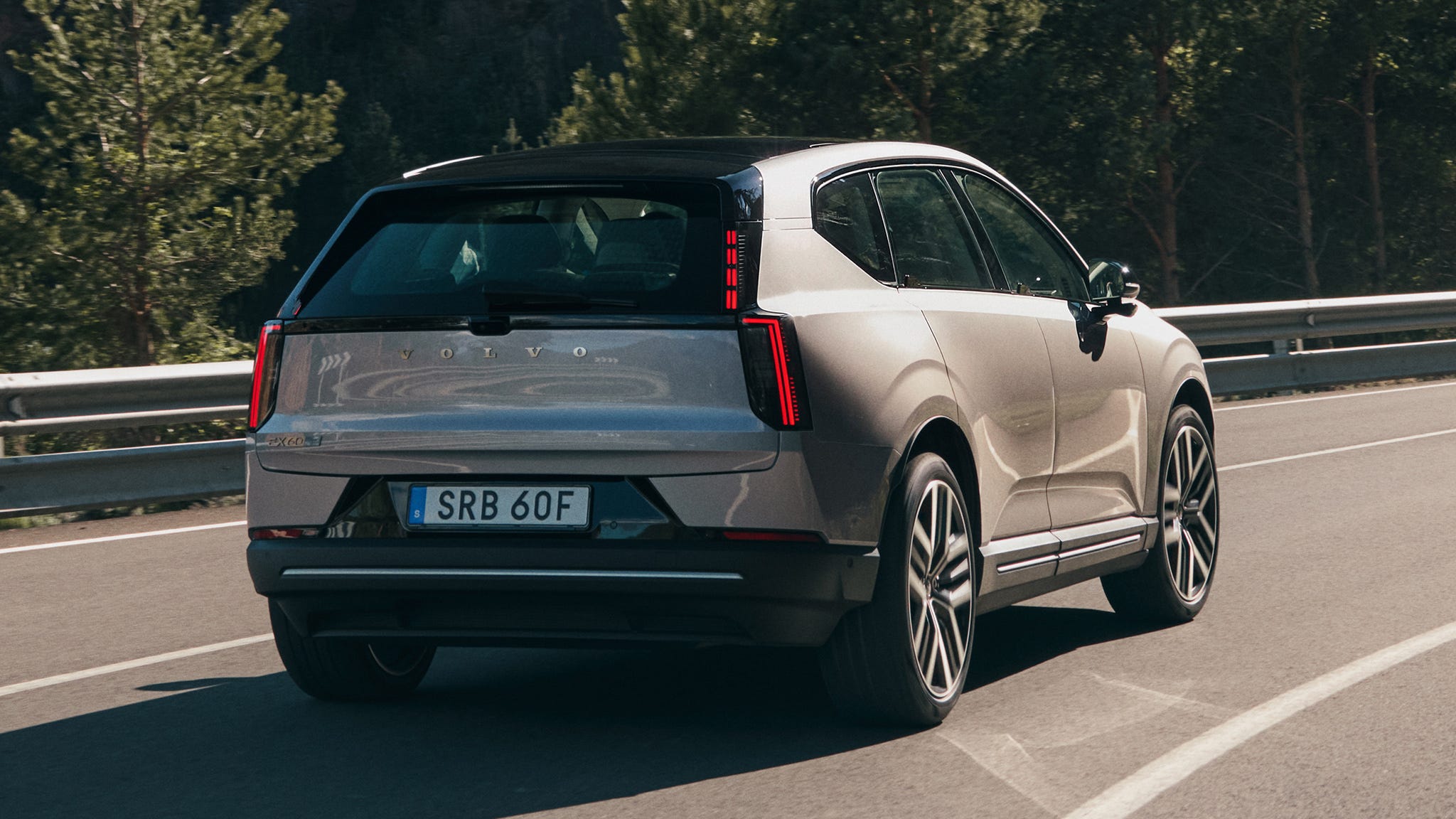
Volvo positions the 2027 EX60 to compete with luxury electric SUVs like the BMW iX3 and Mercedes-Benz GLC EV as well as luxury PHEVs. Its starting price of $59,795 for the entry-level P6 RWD Plus bundles world-class EV tech with an abundance of digital features. Stepping up to an Ultra model like the one in this review comes at a cost of $66,396 and adds appointments like a wonderful Bowers & Wilkins sound system with Dolby Atmos, an electrochromic roof, and perforated Nappa leather seating surfaces.
If you don’t need the fancy features, you can get a P10 AWD Plus for $62,145, a screaming value. The maxed-out Ultra model, the variant we sampled, sits at $68,745. Volvo has the pricing right, which is essential for this SUV to be a market success in the wake of the automaker’s recent difficulties. Order books are open right now, though if you want the Cross Country model and its height-adjustable air suspension, you’ll have to wait until 2027.
The 2027 Volvo EX60 isn’t just the best EV the company has ever made; it already seems like the best product the automaker offers. Much attention was paid to detail, making the package useful to owners in terms of charging, stowing items, and passenger comfort in both rows. It’s all exactly what Volvo needs as it continues down the path to full electrification.

Comments (0)