
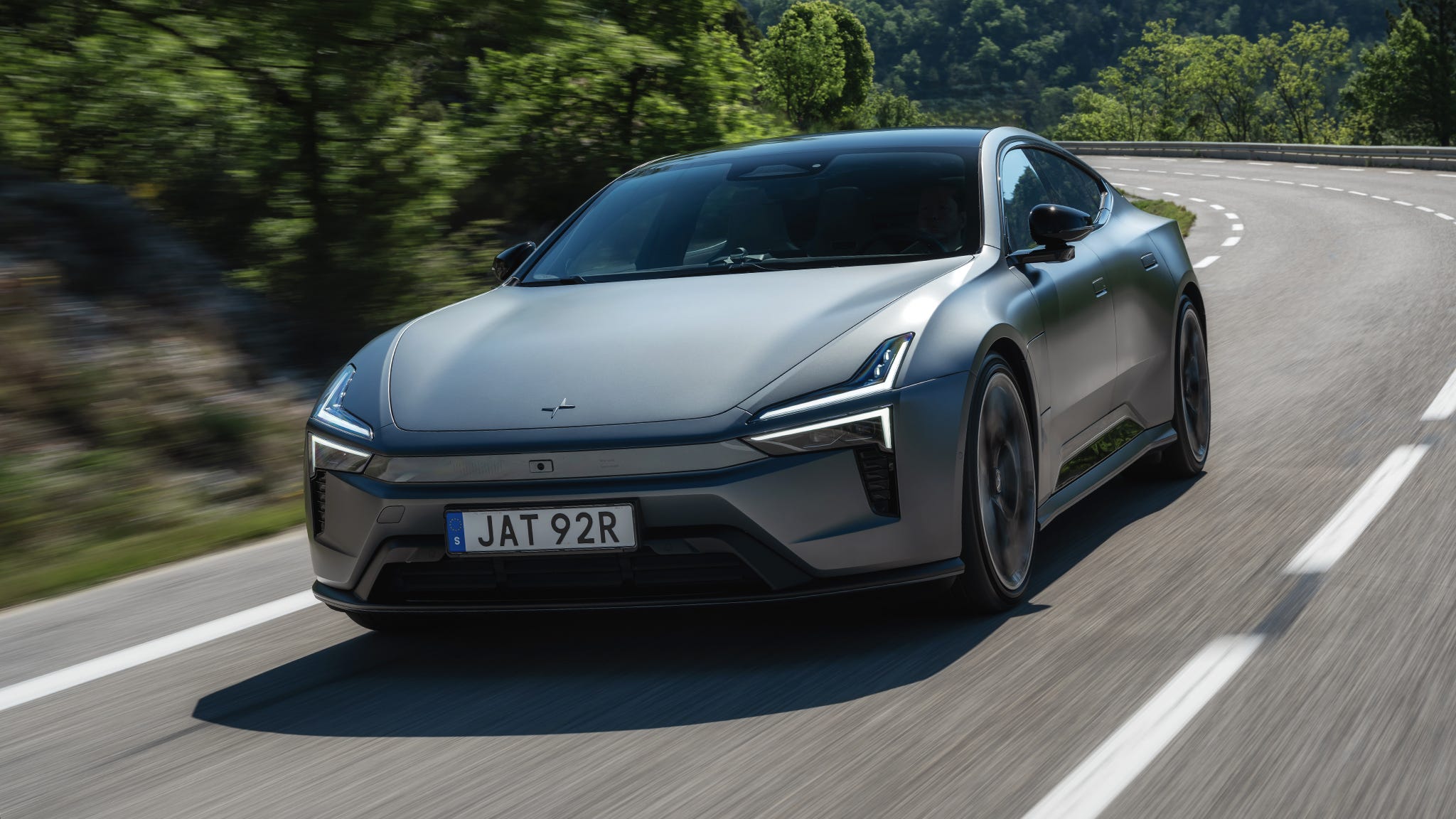
Cars don’t end up this way by accident. Crafted on a bespoke architecture, the Polestar 5 is fundamentally distinct from its brand counterparts built using shared platforms. This approach makes the 5 more complex and costly to build than other Polestar models. But it let designers and engineers at the Swedish-Chinese brand make the 5 exactly what they wanted— the car that epitomizes Polestar’s idea of high-performance electric luxury.
The 5’s story started with the Precept concept from 2020. Its design ethos moved into production, an outcome of Polestar’s intent to make the 5 its very own thing.
Sleek and striking from all angles, the 5 continues Polestar’s design divergence from its Volvo roots. On the road, the 5 has serious presence. Its low, sharp front clearly conveys sporty intentions. In profile, its elegant four-door silhouette transitions into robust rear haunches. A nonexistent rear window is the most notable detail; rear visibility is presented on a digital rearview mirror.
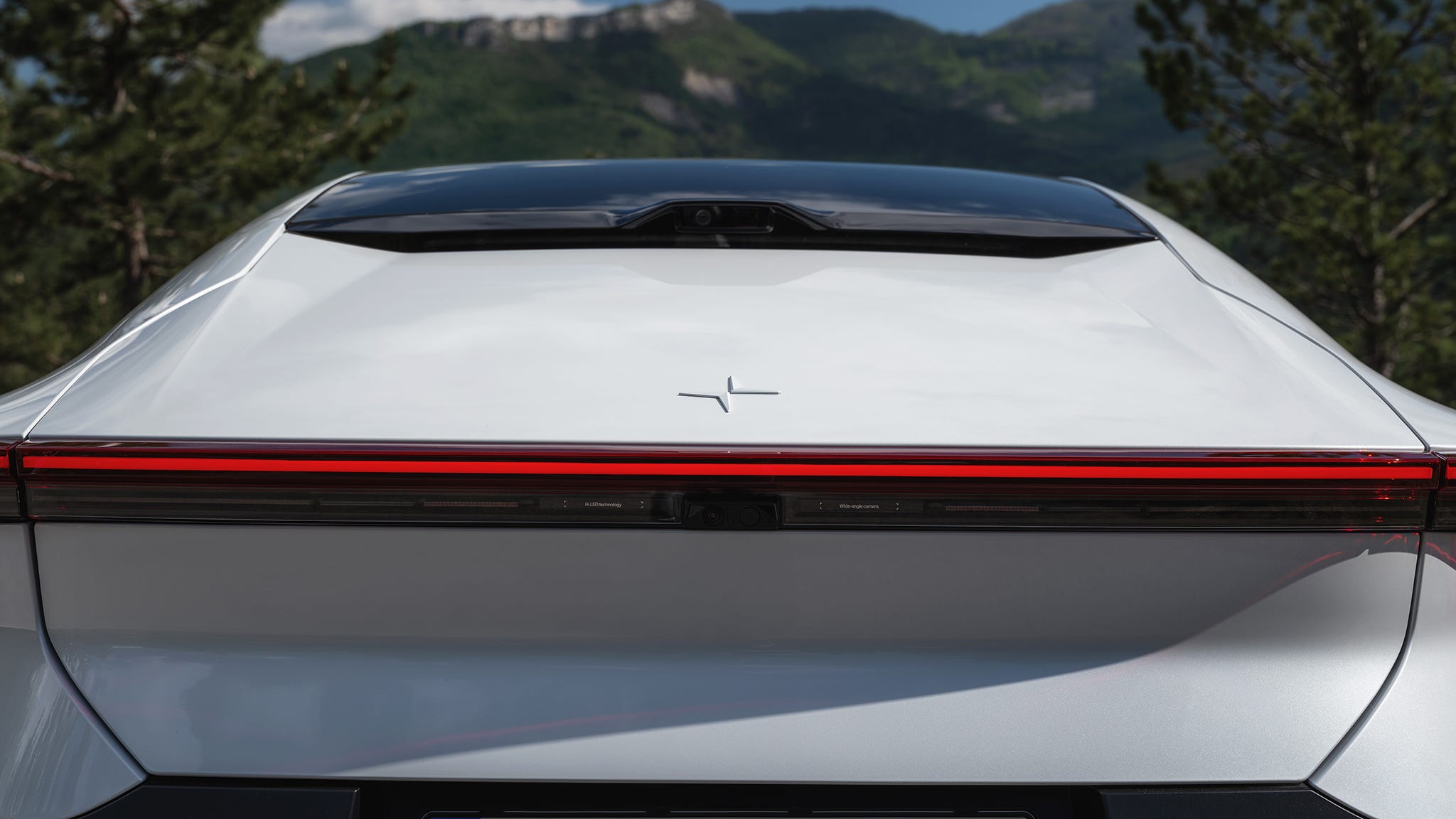
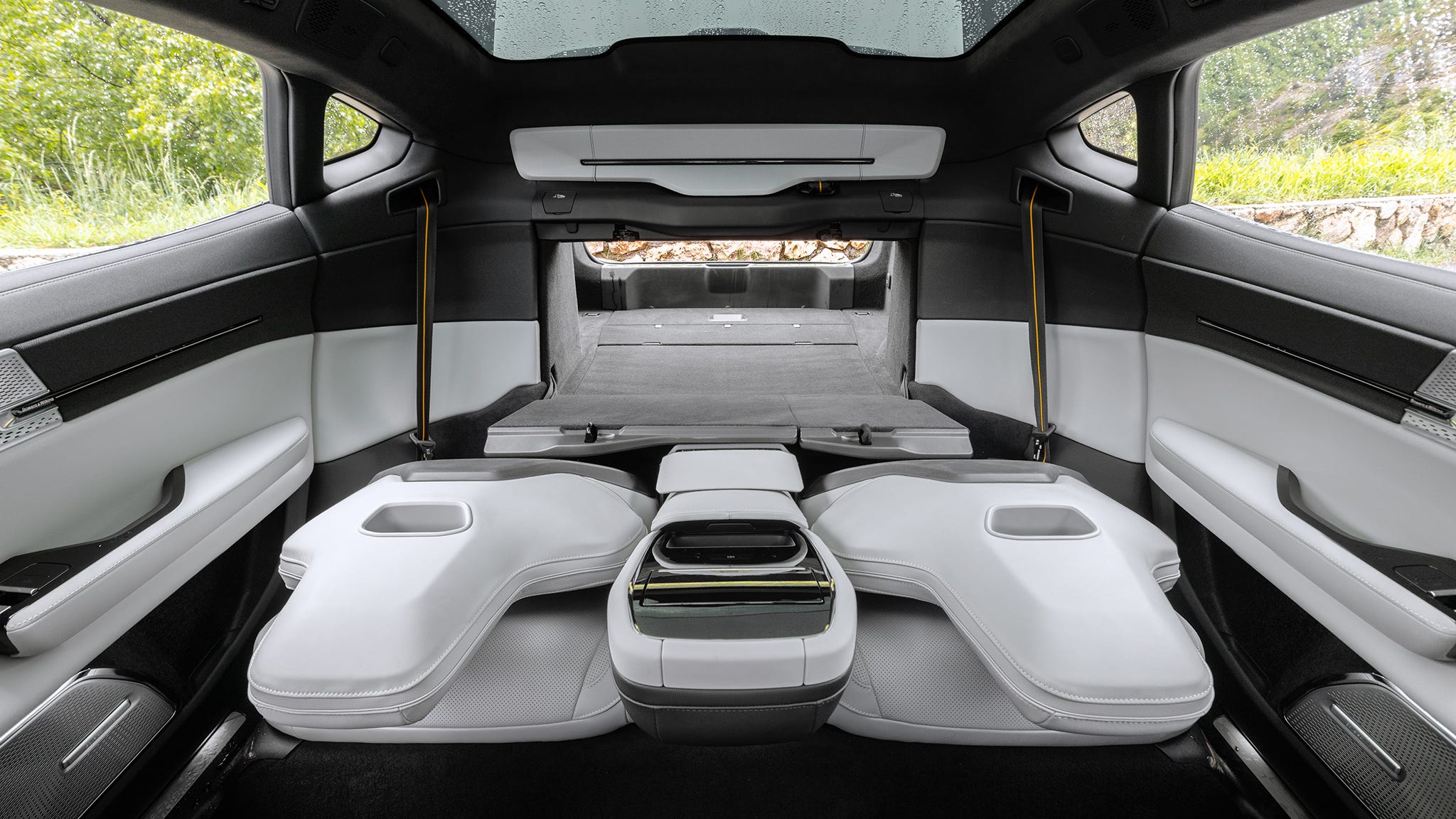
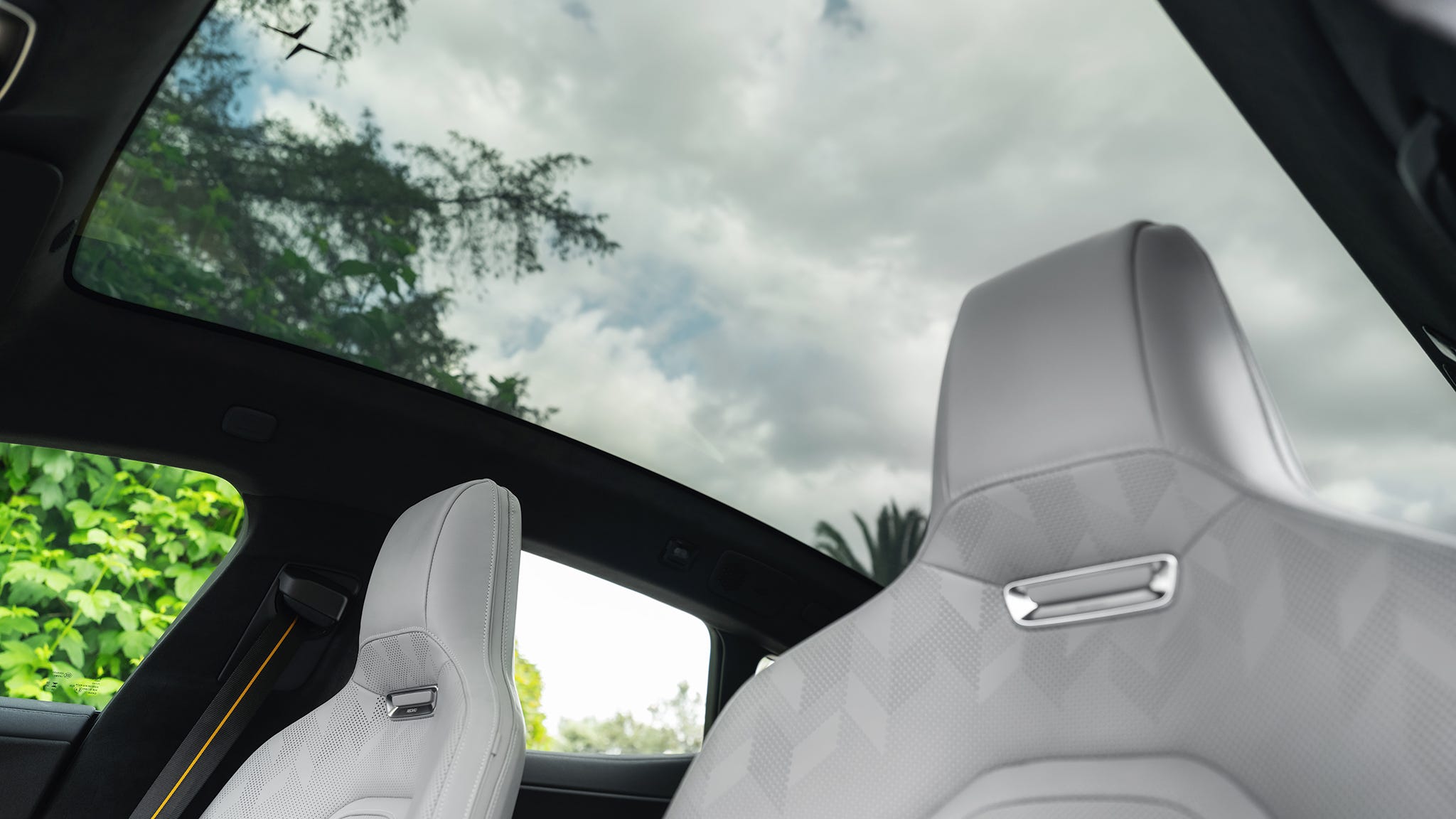
Eliminating the back glass is perhaps mostly a design statement, but Polestar infused function here, too. Structural bracing that would otherwise go across the top is worked into the newly covered area, allowing a huge glass roof to be installed instead. That allows an expansive view from inside the cabin, especially in the reclining, individually contoured back seats; the large rear center console can fold up to provide a place for a third rear passenger.
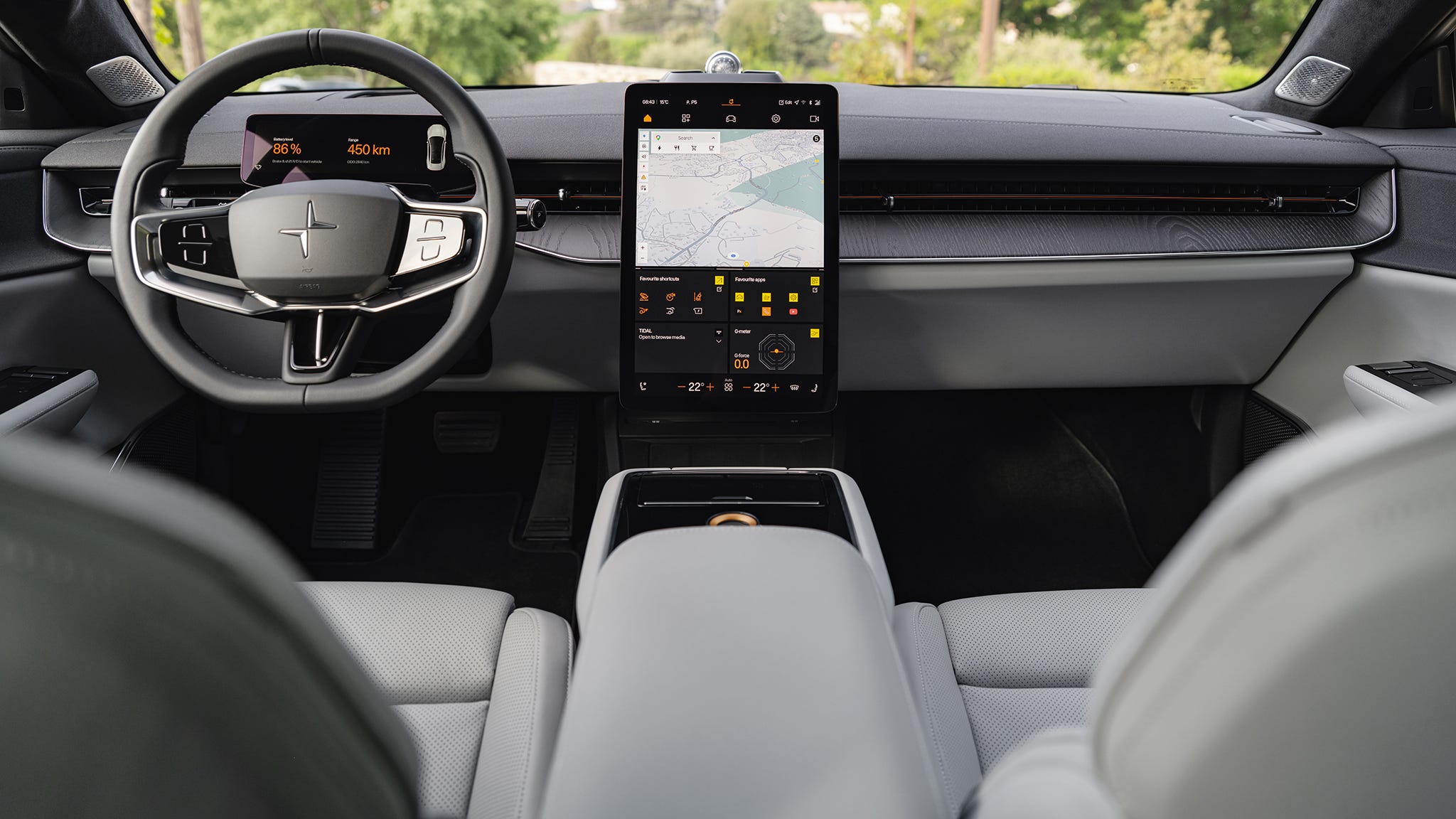
Elsewhere, features seen in other Polestar models are present, such as the 14.5-inch touchscreen running a familiar user interface built on Google apps, a slim 9.0-inch gauge display, and available premium audio supplied by Bowers & Wilkins.
Many of the 5’s core components were created for it and it alone. A 112-kWh lithium-ion NMC battery gives the 5 strong range for its power; estimates are at or above 300 miles on the EPA cycle. Charging tops out at an impressive 350 kW, for a best 10–80 percent charge time of about 22 minutes.
Polestar developed an electric motor specifically for the 5. Mounted at the rear axle, it produces up to 603 hp. A front motor shared within the Geely Group parent company is tuned differently depending on specification, giving the 5 prodigious output: 737 hp and 599 lb-ft in standard Dual Motor trim, and 871 hp with 749 lb-ft in the high-end Performance model.
The chassis, though, is the Polestar 5’s highlight. Developed by a skunkworks team in the United Kingdom, it’s assembled from bonded aluminum; Polestar says only 1 percent of this structure is welded. Relatively difficult to produce in volume, bonding enabled Polestar to hit its stiffness and weight targets better than conventional manufacturing methods. Passive dampers control the ride on the Dual Motor version, while MagneRide magnetorheological suspension is equipped on the 5 Performance. This bespoke architecture gives the Polestar 5 engaging, alluring driving characteristics.
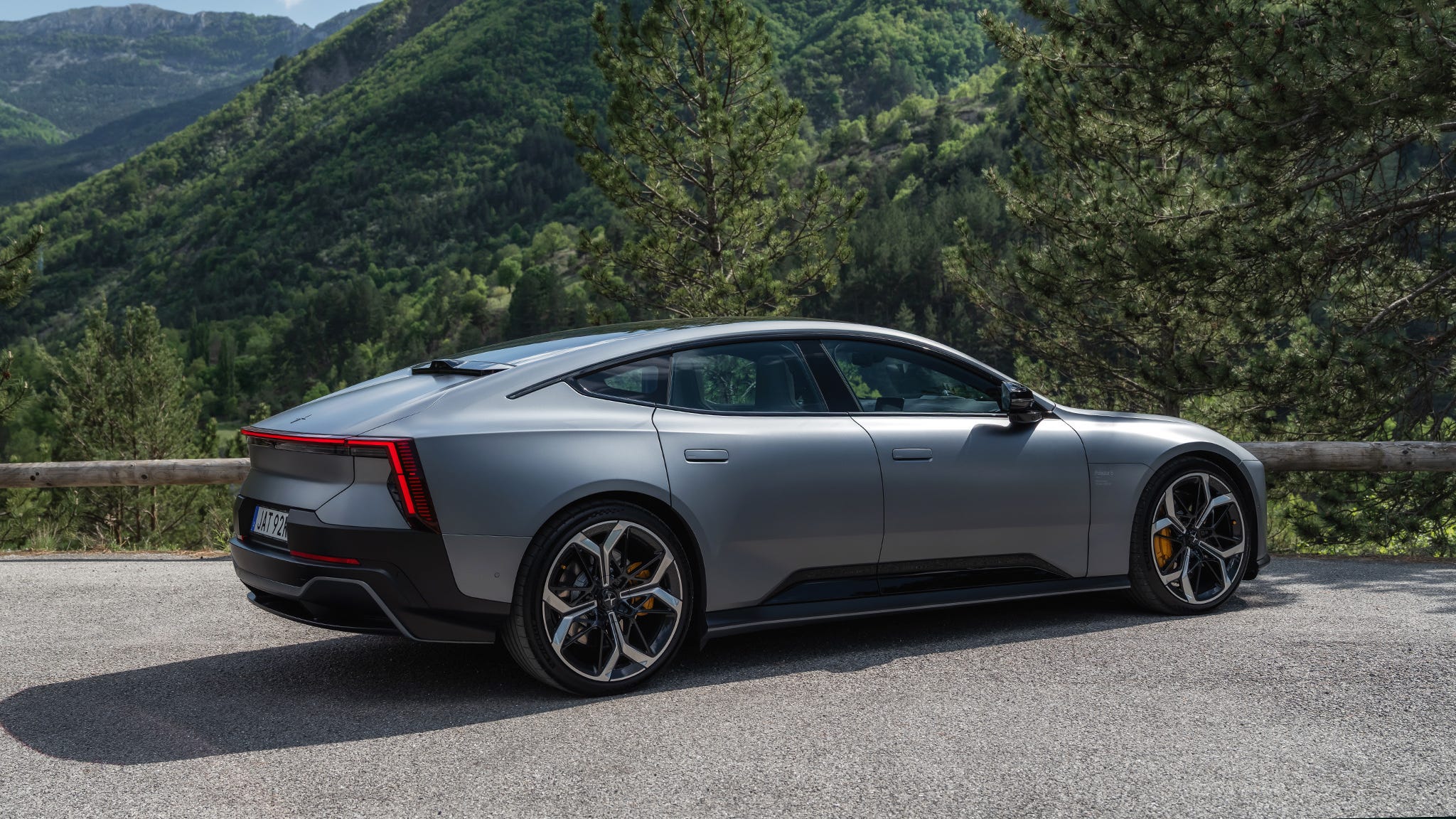
Power absolutely abounds. The strong Dual Motor version delivers great initial acceleration and charges assertively into higher speeds. The Performance model is even quicker, but its additional power and torque doesn’t greatly change the 5’s feel—the Dual Motor is rapid enough already. Traction is good, although at times it’s tangible how the tires strain against electronic intervention. Switch the stability control to Sport, though, and the 5 is more than willing to step its tail out as the front axle pulls reassuringly. Given the safety focus Polestar inherited from Volvo, this dynamic seems delightfully unhinged.
Wild acceleration is nothing special for an EV, though, and our drive route through the heart of France's Provence-Alpes–Côte d'Azur region was too tight and technical to make much of the power. What those roads offered, however, were countless curves and corners to exploit the remarkable handling.
This is what the 5 is all about. The chassis is superb. This unique architecture was clearly engineered with care and passion—like it was tuned by enthusiasts, for enthusiasts, and our conversations with Polestar engineers about their own cars and past projects validated the impression. Agile and balanced, the bonded structure’s rigidity is tangible. Everything remains cohesive as the 5 encounters endless changes in the road’s shape.
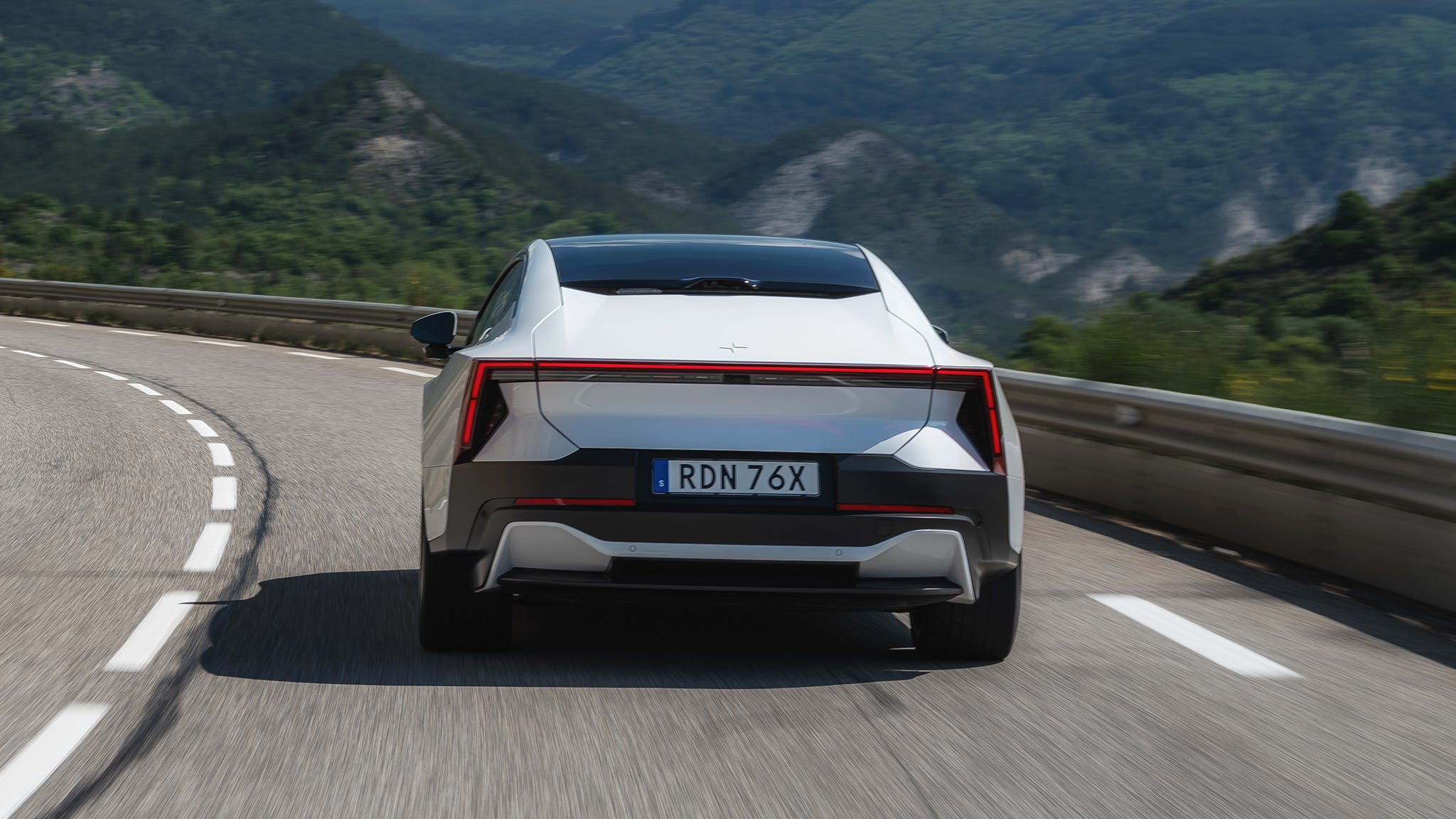
More than power output, suspension hardware defines the two versions. The magnetic dampers give the Performance model clearly better handling than the Dual Motor. Continuous sampling lets them adapt to the dynamic conditions, keeping the body level through corners and remarkably poised under braking. The ride is appropriately taut yet reactive enough to soften impacts before reaching the chassis.
Composure only lacks in the Dual Motor by comparison with the Performance model; it would be great if not for having sampled those trick magnetic shocks. More harshness, roll, and bounce are permitted by these passive dampers. They seem less able to cope with the car’s roughly 5,500-pound weight, while still demonstrating the chassis’ stiffness.
Not so much a flaw, the steering is more of a letdown. It sufficiently contributes to the 5’s charisma, but the feeling in the hands isn’t so satisfying. Although accurate and reactive, it reveals a somewhat gummy resistance, providing a sense of weight but vague feedback. Between the three firmness choices, the middle setting seems best by default. Maybe digital steering in such a software-defined car should be no surprise.
Stronger braking would also better match the 5’s performance potential. For a car that can accelerate so quickly, a more assertive and immediate initial braking response is warranted. Once under pressure, the pedal provides good modulation and feel. Ultimately, ample stopping force is available; both versions use Brembo hardware with four-piston calipers and 15.7-inch discs up front. They suffice for casual around-town driving, but the one-pedal driving function can handle most deceleration there. Like the friction brakes, the regenerative braking effect isn’t quite enough for fast driving.
Overall, the 5 experience is terrific. The grand tourer vibe Polestar aimed for is present. Rather than feeling visceral and taxing, the effortlessness in how it moves encourages driving for long stints behind the wheel until the state of charge sinks into single digits.
Fantastic front seats help with that; Polestar must have learned its seating craft from Volvo. Highly adjustable, they hold the body in a smooth, supportive curve. The feature-rich back seats, too, are lovely, with similar ergonomic consideration and upscale trimming as those ahead. However, the thick overhead rails/pillars slightly obstruct outward visibility and are a bonking hazard when climbing in or out.
A focus on recycled and sustainable materials adds to the 5’s conscientious appeal. Quality seems comparable to any of the 5’s impressive rivals, although a flagship like this deserves more design and feature distinction from lesser Polestar models. At least the Google-based infotainment is intuitive with its smartphone-like user interface, and responsiveness isn’t an issue. Like so many automakers, Polestar needs to employ more physical controls and rely less on the touchscreen.
If and when the Polestar 5 might come to the United States remains unknown. Tepid consumer interest in high-end EVs and tariff concerns tied to the 5’s Chinese manufacturing location combine to cast doubt on its business case. It would certainly be expensive: In Europe the 5 Dual Motor starts at around €120,000, and the Performance model goes for about €143,000. That pricing aligns with many other all-electric luxury sport sedans, though.
In that niche segment, there are truly compelling, great-driving vehicles, and the Polestar 5 belongs among them. It’s a worthy alternative to the Porsche Taycan, Lucid Air, and BMW i7. Beyond the striking design and fancy finishing, it has a captivating dynamic identity. Even if the 5 never arrives stateside, it gives a vivacious indication of what future Polestar models that do come here might drive like.

Comments (0)