
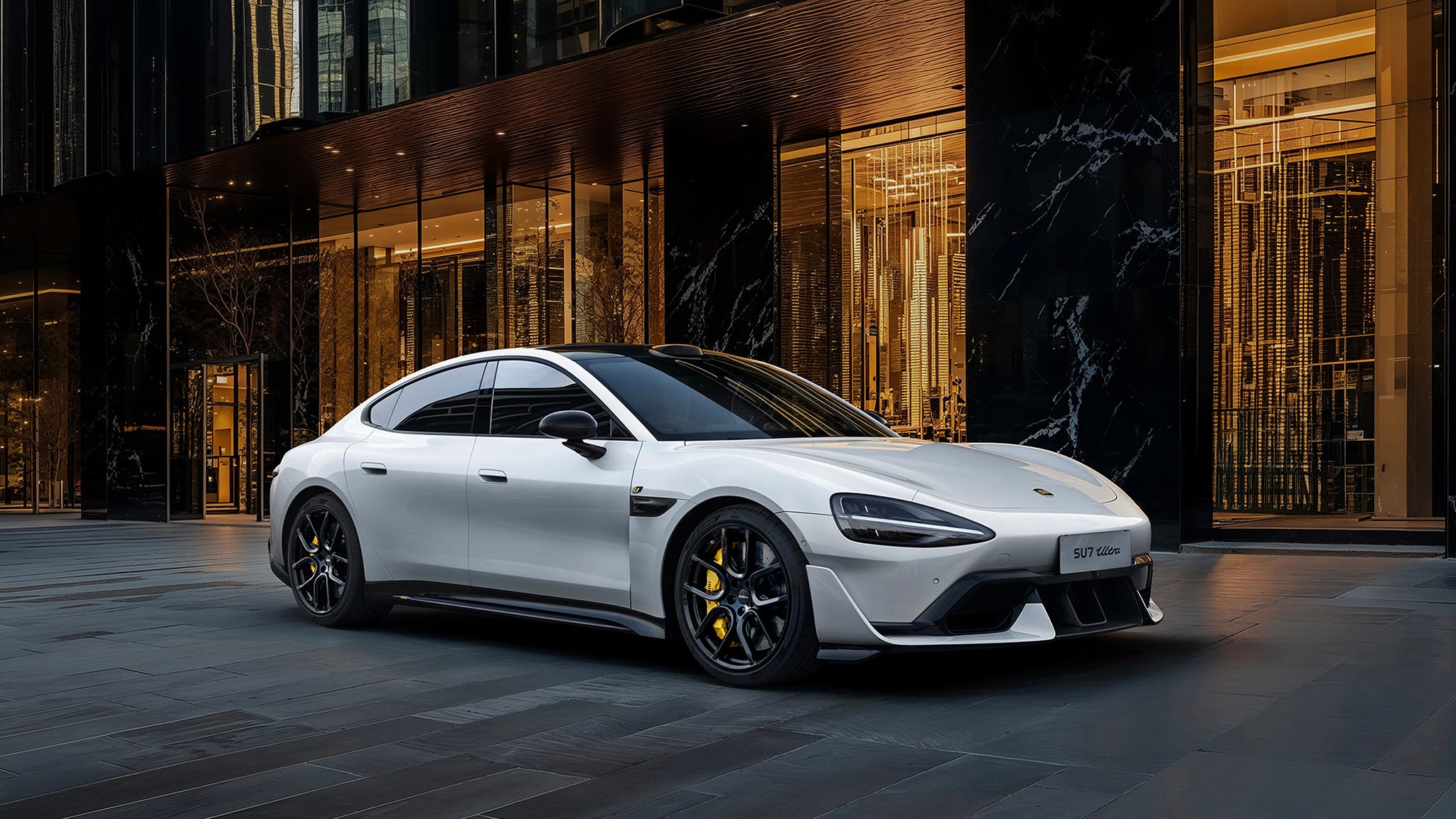
If you haven’t heard of Xiaomi before, you’re not alone. But it’s a name worth getting familiar with, because chances are you’ll be hearing a lot more about it in the coming years. Best known as a producer of smartphones and tablets, the Beijing-based tech giant is already the world’s third-largest phone manufacturer behind Apple and Samsung. Then in 2021, Xiaomi announced plans to enter the automotive industry with a line of electric vehicles. Just three years later, the Xiaomi SU7 arrived, and it immediately became a hit in China.
The high-performance SU7 Ultra later claimed the title of fastest four-door car around the Nürburgring, and the SU7 lineup recently received a midcycle refresh to stay competitive in China’s rapidly evolving EV market. While it might be easy to dismiss Xiaomi as just another Chinese company capitalizing on the EV boom, the brand is taking its automotive ambitions seriously. It opened an R&D center in Germany, recruited experienced engineers and designers from major European manufacturers, and set an ambitious goal of becoming one of the world’s top five automakers within the next two decades.
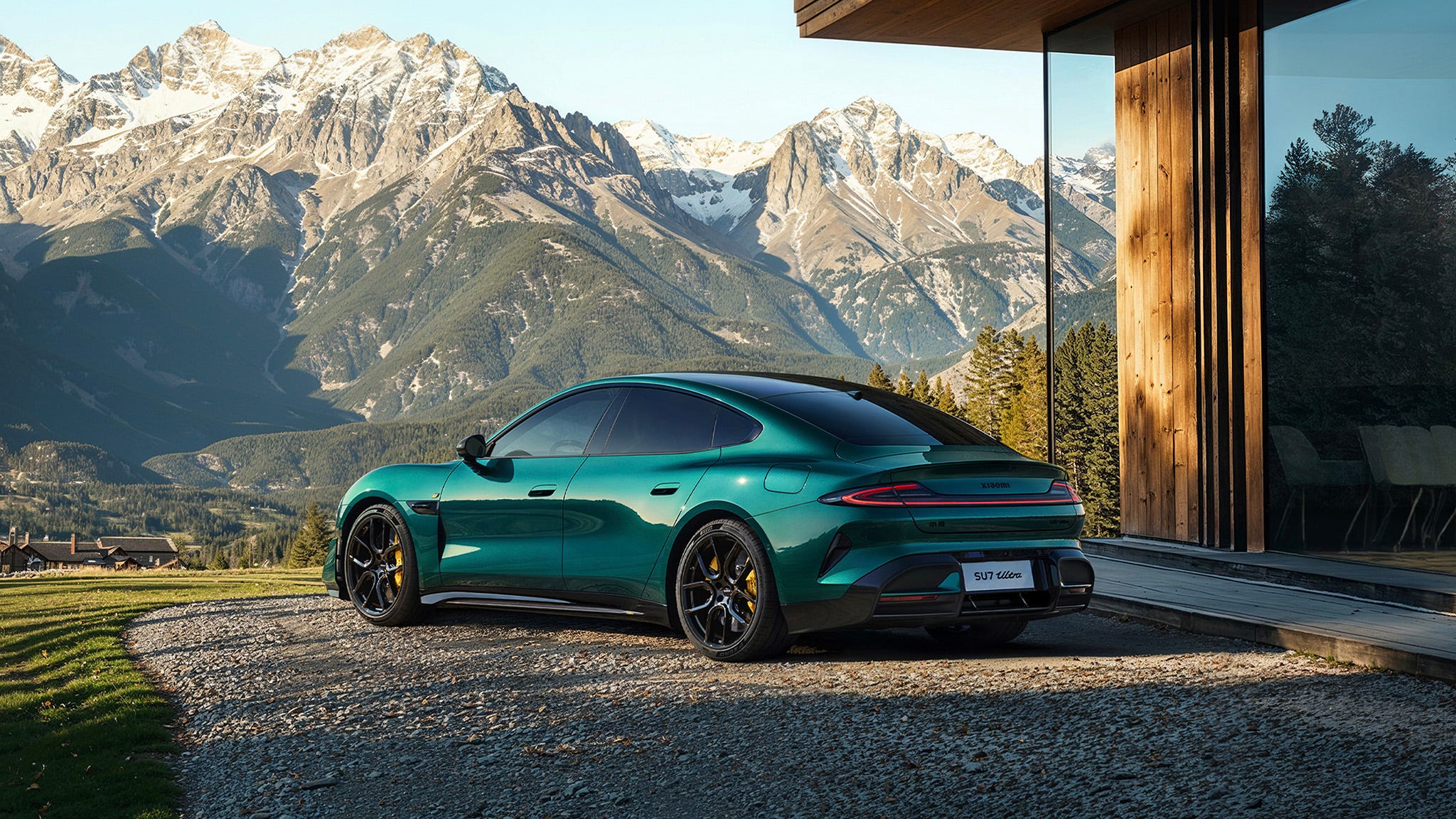
I spent much of my trip through China driving the updated 2027 Xiaomi SU7, and I came away genuinely impressed by what it delivers for the money. The SU7 isn’t trying to reinvent the EV or wow drivers with gimmicks no one else can replicate. Instead, it focuses on offering the kind of refinement, performance, and technology typically reserved for a small group of premium automakers at roughly half the price. Xiaomi clearly sees itself playing in the upper end of the market, and the SU7’s target is obvious from the moment you first gaze at it: the Porsche Taycan.
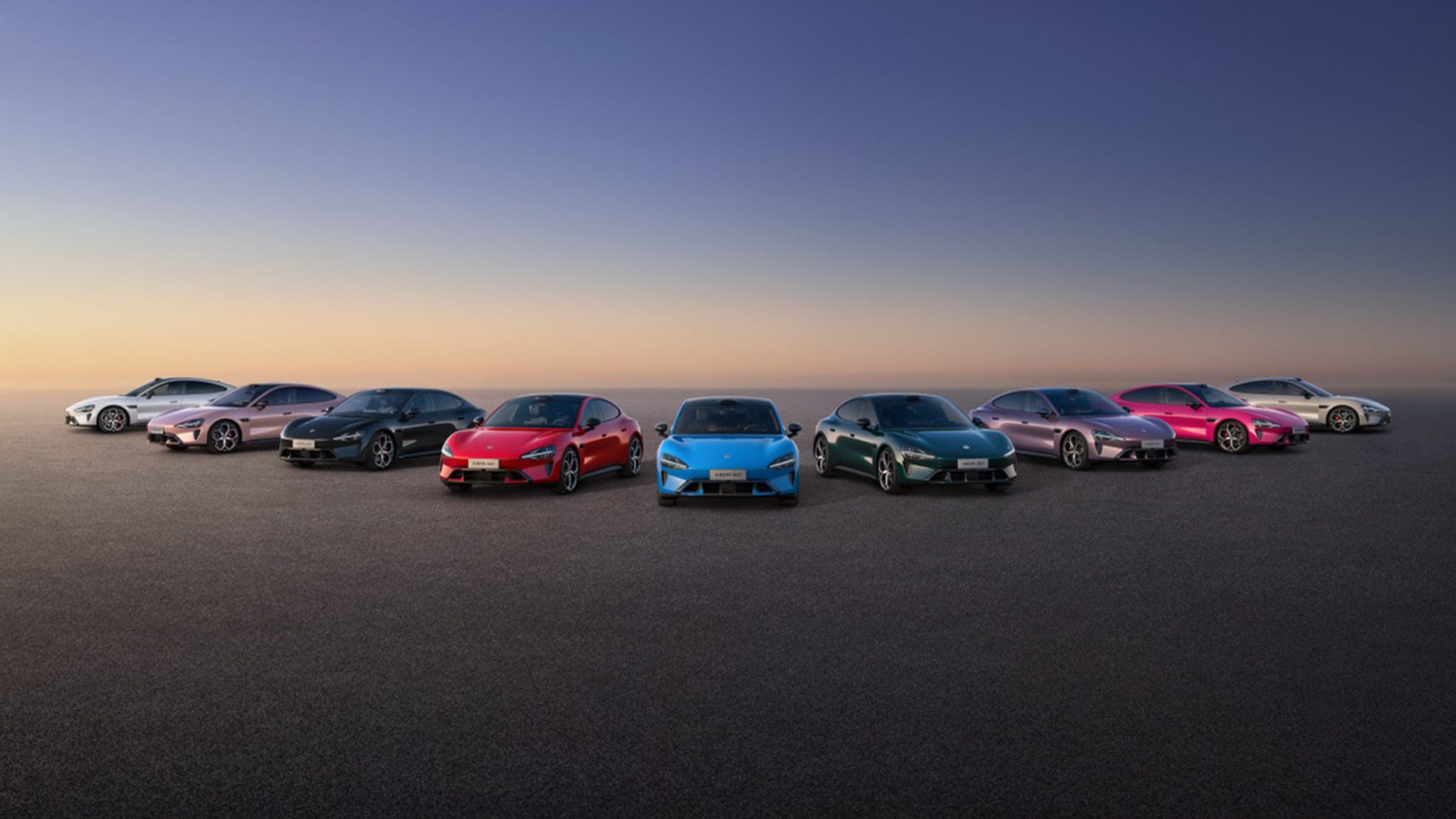
The Xiaomi SU7 lineup consists of four trims: SU7, SU7 Pro, SU7 Max, and the range-topping SU7 Ultra. Most of my time was spent behind the wheel of the SU7 Max, though I also got the chance to drive the Ultra on track, you can check out my stand-alone review on that.
Even the entry-level models put up respectable numbers. The rear-motor SU7 and SU7 Pro produce 315 horsepower and 372 lb-ft of torque. Step up to the dual-motor SU7 Max, and output jumps to 681 hp and 639 lb-ft. Then there’s the Ultra, which blows past everything else in the lineup with its three-motor setup and a staggering peak output of 1,526 hp and 1,305 lb-ft of torque.
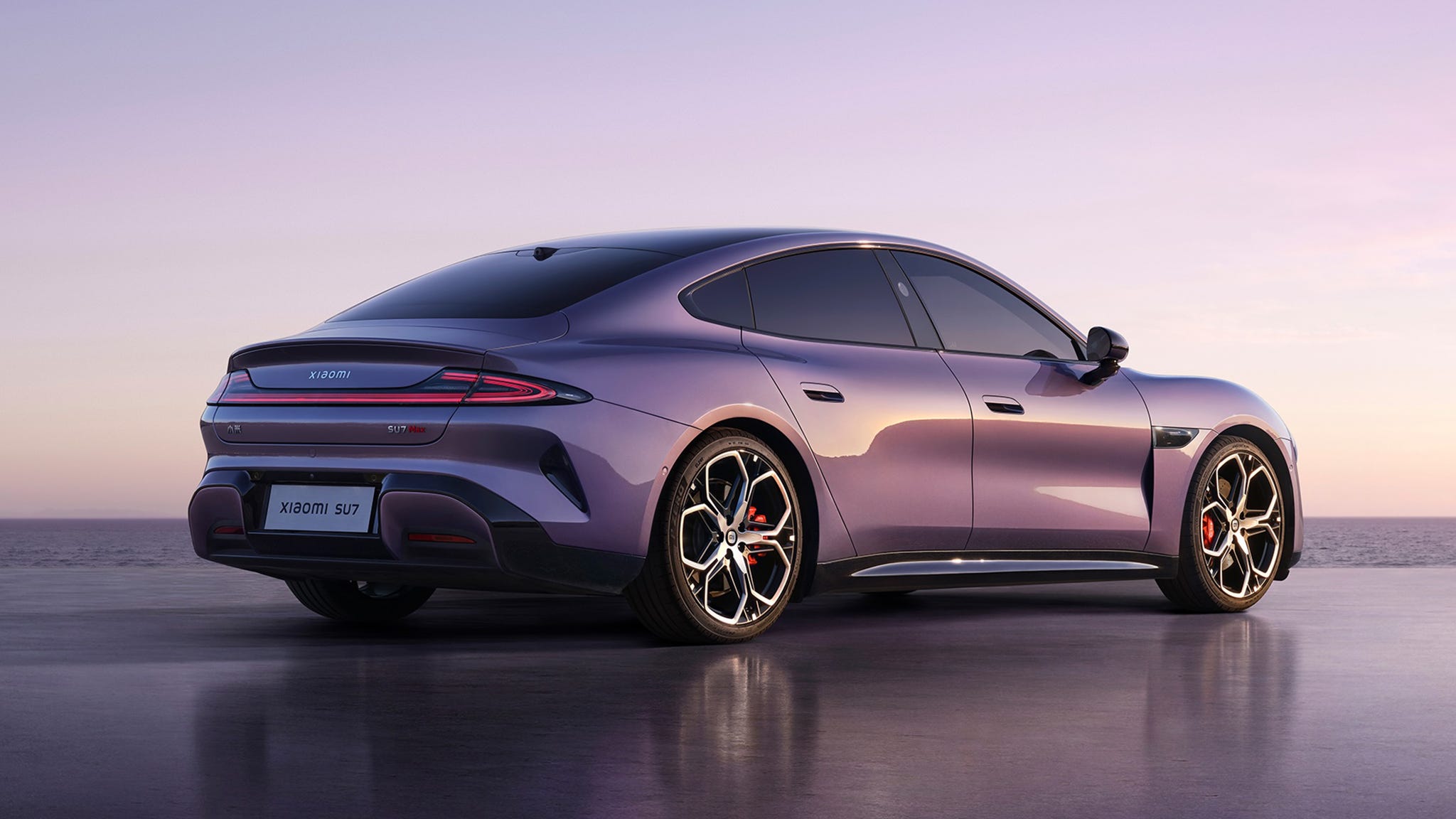
With such a wide range of powertrain outputs, the SU7 doesn’t slot neatly against any single competitor. The base, Pro, and Max models are most often compared to the Tesla Model 3 and Model 3 Performance, while the extreme SU7 Ultra lands much closer to the Porsche Taycan in terms of its performance envelope and upscale ambitions.
Price is one area where Xiaomi has been especially aggressive. China’s EV market is intensely competitive and heavily driven by value, so Xiaomi launched the SU7 at roughly $3,000 less than a comparable Model 3. Move up the range, and the gap grows even larger, with the SU7 Max undercutting the Model 3 Performance by around $5,000.
But it’s against the Taycan that the SU7 Ultra really begins to make its case, and not just because of the performance figures. The Ultra starts at roughly $73,000 in China, while the Taycan Turbo—the most powerful Taycan currently sold there—costs around $230,000. That’s a massive price gap, and considering the SU7 Ultra delivers an extra 654 horsepower at max output, it’s a big part of why Xiaomi has captured so much attention.
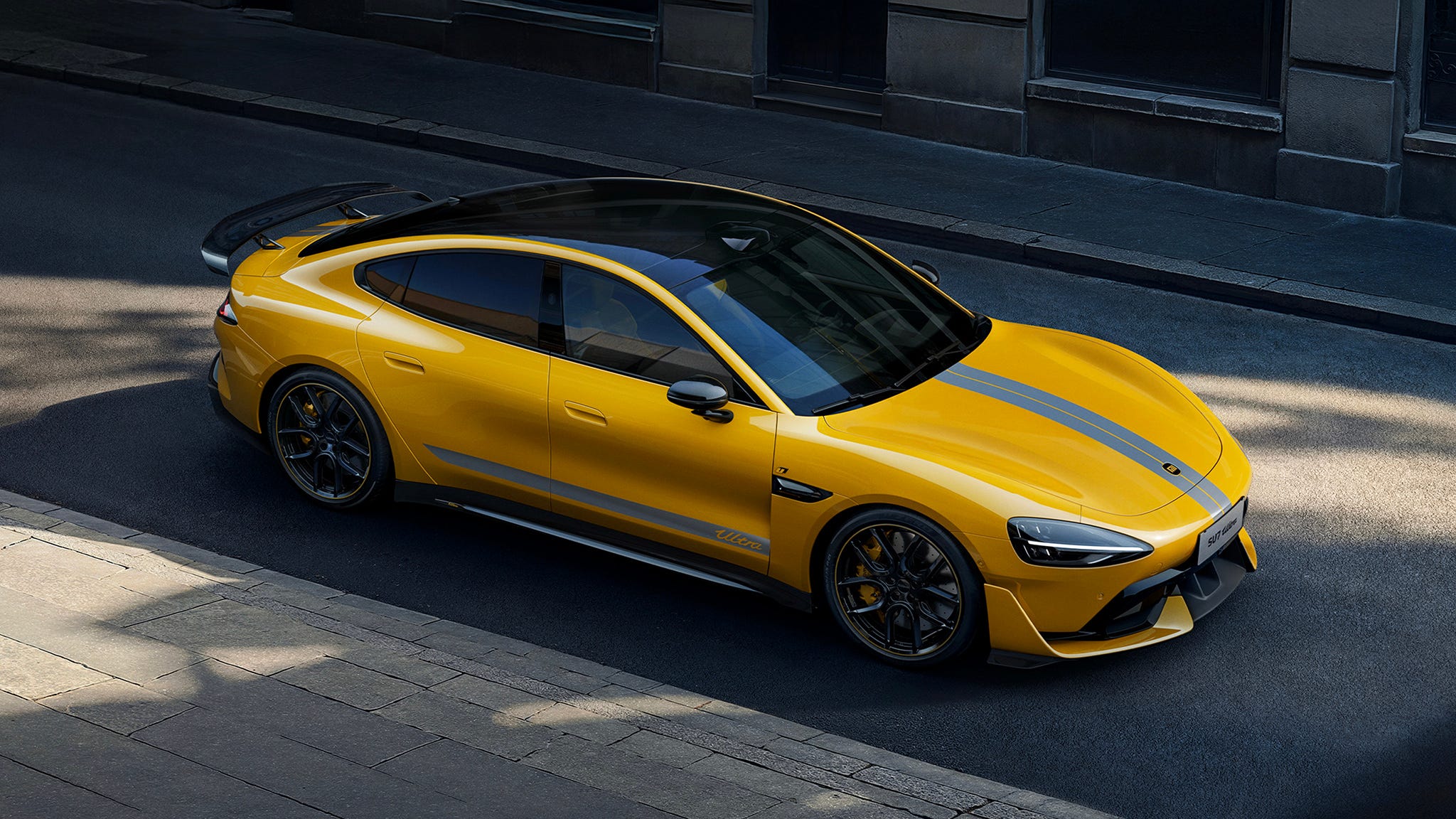
Putting pricing aside, the Xiaomi SU7 stands on its own merits as an impressively well-rounded car. Driving through Beijing’s city streets and highways, we found the SU7 to be surprisingly polished from behind the wheel, thanks in large part to its air suspension, which did a solid job of isolating the cabin from road imperfections. Overall, it felt comfortable, composed, and premium in its execution, though the Chinese roads we traveled on were generally smooth enough that we didn’t encounter many harsh bumps or broken surfaces to truly stress-test the ride quality.
Power delivery in the SU7 Max is smooth and immediate without feeling overly aggressive. Dip halfway into the throttle in Sport or Sport Plus mode, and the car responds with enough force to pin you firmly into the seat, with Xiaomi claiming a 0–62-mph time of around 3.1 seconds for the updated model. Switch over to Normal or Eco, however, and the Max takes on a completely different character. Throttle response softens considerably, turning the otherwise potent sedan into something far more relaxed and subdued.
One area where the SU7 could use some improvement is its steering feel. While the rest of the car comes across as sharp and well-sorted, the steering itself is overly light and somewhat disconnected. It’s quick and responsive enough, but it lacks the kind of feedback that helps build confidence and emotional connection behind the wheel. A little more communication through the steering would go a long way toward making the driving experience feel more engaging.
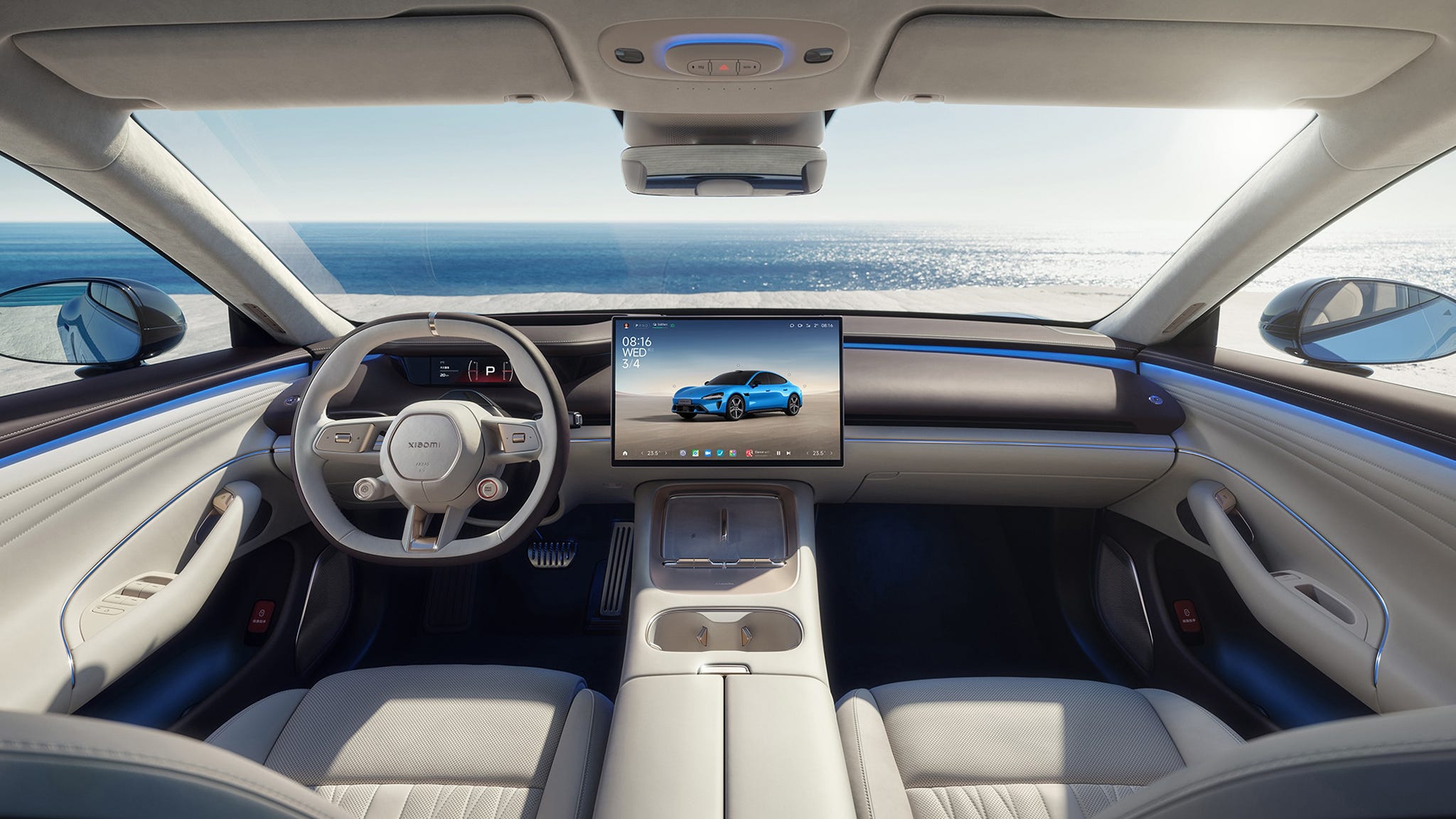
Xiaomi’s engineers also devoted significant attention to cabin refinement and noise isolation. Road and wind noise are kept impressively low thanks to extensive NVH work, and conversations between front and rear passengers could be held comfortably even at highway speeds. The cabin consistently feels calm and insulated, reinforcing the SU7’s premium ambitions.
The SU7 Max’s massive 118.1-inch wheelbase also allows Xiaomi to package a large 101.7-kWh battery pack, which the company says can deliver roughly 500 miles of range on China’s notably optimistic testing cycle (maybe as much as 380 miles in EPA ratings). In real-world driving, the efficiency we experienced was solid. Over the course of about 70 miles, most of it on the highway with some traffic on the return trip, the battery dropped by roughly 20 percent by the time we got back to the hotel.
Charging performance is another area where the SU7 makes a strong impression. Xiaomi says the CATL-sourced battery can charge from 10 to 80 percent in around 12 minutes (averaging 330kW at a tower rated for upward of 500kW). We didn’t have the opportunity to test those claims ourselves, but if the company’s figures hold up, that’s an impressive number for any EV, regardless of where it’s built.
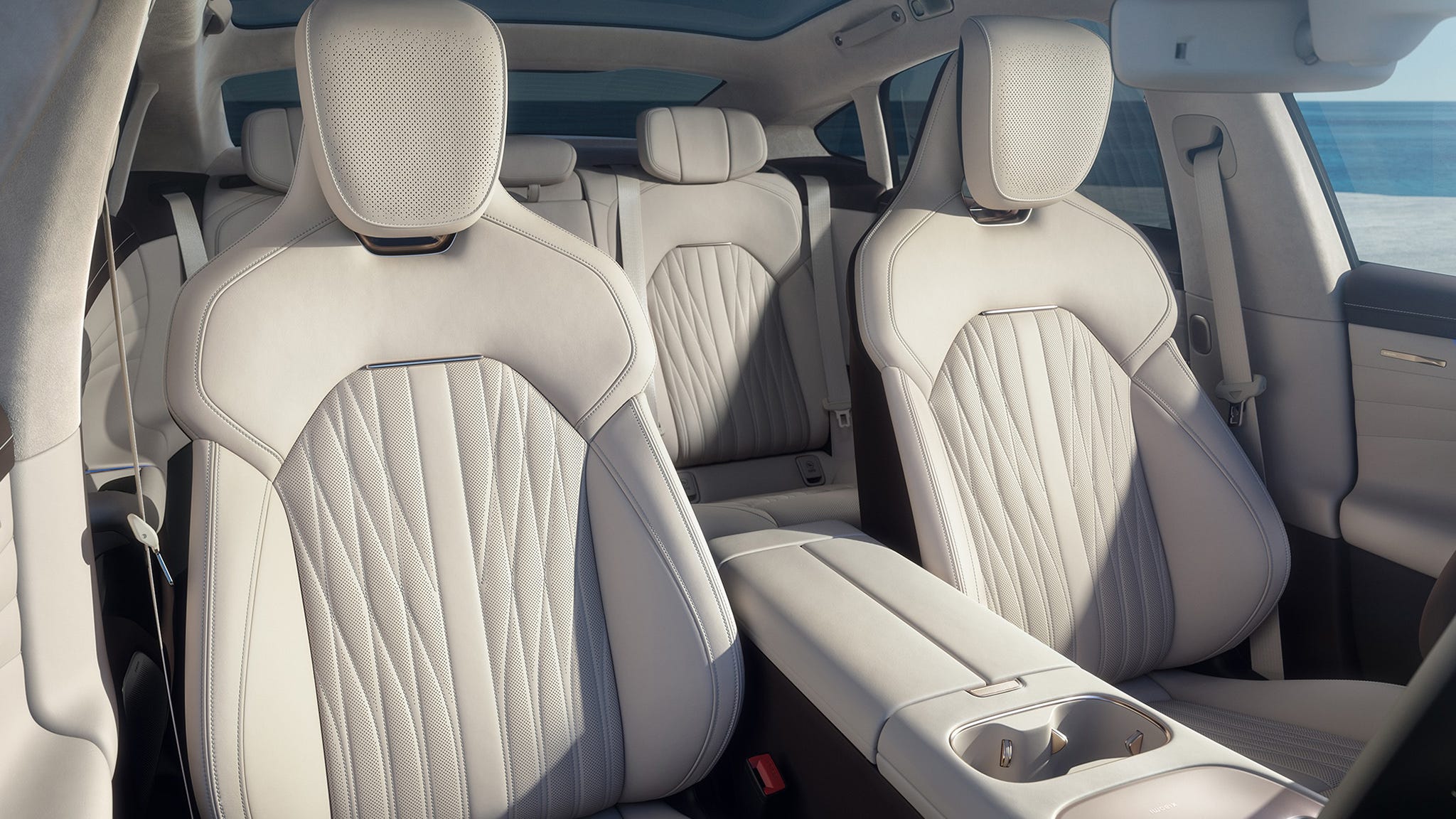
Step inside the SU7 and there’s little to suggest this is a bargain-priced alternative to established luxury brands. In fact, the opposite is true. Nearly every surface you touch feels genuinely premium, and the cabin strikes a tasteful balance between sophistication and restraint without leaning too heavily into minimalism.
The horizontal dashboard layout works especially well, with the air vents neatly integrated between the trim panels to create a clean, cohesive look. The lines flow naturally throughout the cabin, the stitching on the door panels looks and feels upscale, and the panel gaps are consistently tight. Altogether, the SU7 delivers the kind of fit and finish expected from far more expensive cars.
Xiaomi has taken a Tesla-like approach to the cabin layout, meaning physical buttons are kept to a minimum, and most functions are controlled through the 16.1-inch infotainment display, one of the SU7’s highlight features. The screen responds quickly, the menus are easy to navigate, and the graphics look crisp and modern.
Apple CarPlay and Android Auto are a standard, while Xiaomi’s built-in AI assistant can understand basic English voice commands. Its capabilities in English are still somewhat limited because Xiaomi currently sells its vehicles only in China, but that’s expected to improve as the company prepares to enter the European market sometime in 2027.
A big part of the SU7 experience extends beyond the car itself and into Xiaomi’s broader ecosystem. If you own a Xiaomi phone, for example, you can tell it to turn on the car’s air conditioning before you leave, so the cabin is cool when you arrive. You can also use the car to control smart home devices, like opening the blinds before you get home. Its AI assistant, unlike Siri, understands these commands the first time you say them.
It’s a level of integration that feels like Apple’s ecosystem, where devices seamlessly communicate with one another—you can reply to texts from a MacBook or continue editing a note started on an iPhone. That interconnected experience is Xiaomi’s real differentiator. Because the company spent years building smartphones, tablets, and smart-home products before entering the auto industry, the ecosystem already feels mature and cohesive. More important, Xiaomi says it’s open to supporting other platforms in the future, meaning there’s hope that iPhone users may eventually be able to access the same connected experience with the car.
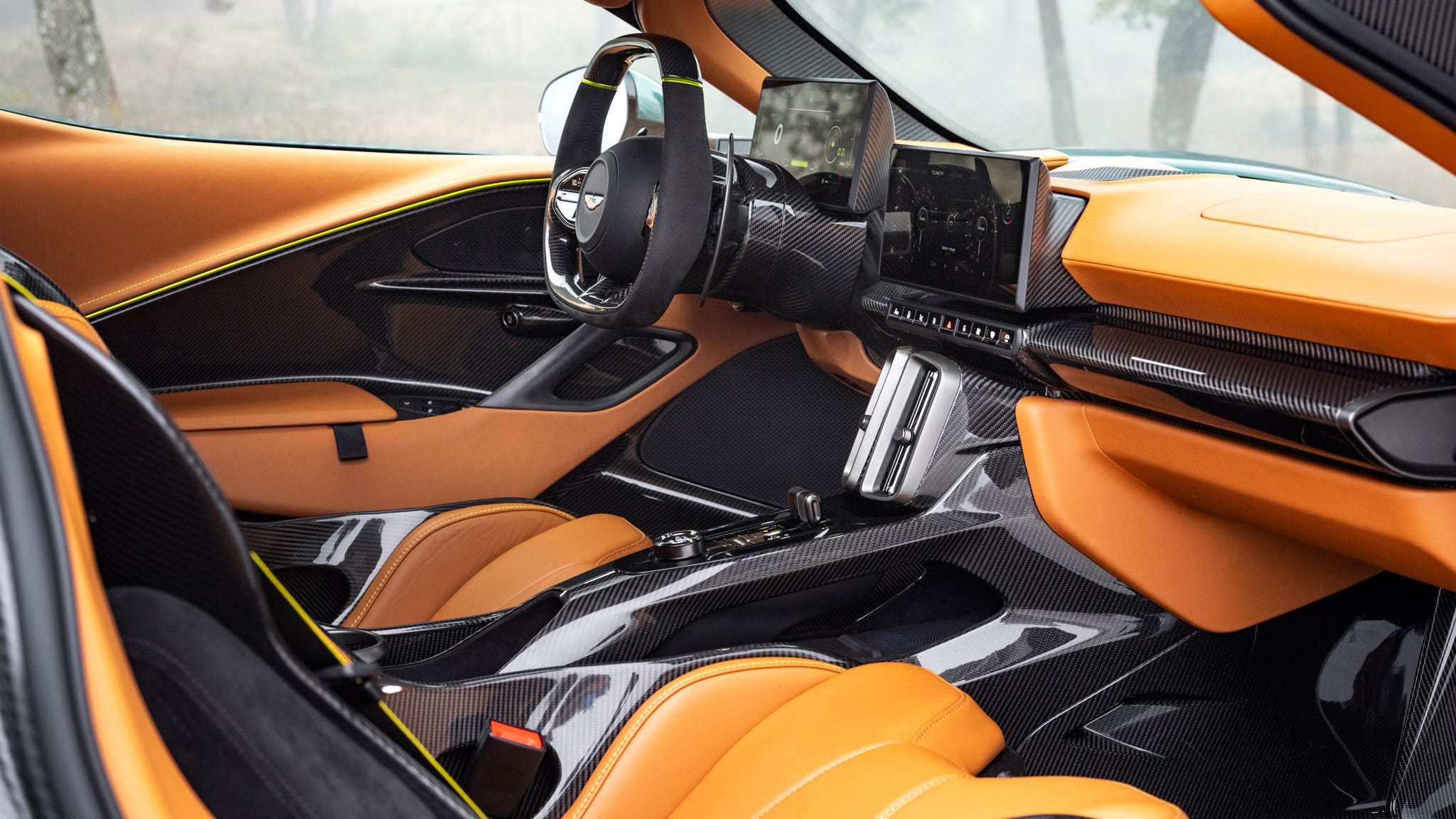
After returning from China and reflecting on everything I had learned about Xiaomi, I kept arriving at the same conclusion: The SU7 feels like the car Apple never managed to build. Apple reportedly spent billions developing its own vehicle before ultimately canceling the project, with reports suggesting the company was chasing ideas that were perhaps too ambitious or too different to bring to market. Xiaomi took a far more grounded approach.
In a relatively short amount of time, Xiaomi has managed to build a genuinely compelling car without trying to reinvent the automobile. The SU7 isn’t groundbreaking because it does things no one else can. It’s groundbreaking because it delivers many of the qualities found in far more expensive EVs—performance, refinement, technology, and ecosystem integration—at a lower price—far, far, lower in the case of the SU7 Ultra. That doesn’t make the SU7 cheap. It simply means you don’t have to spend supercar money to get a genuinely enjoyable and well-executed EV.
Unfortunately for American buyers, the Xiaomi SU7 will remain forbidden fruit for the foreseeable future. Xiaomi currently has no plans to enter the U.S. market, and ongoing geopolitical tensions and restrictions on Chinese vehicles in the United States mean there are still major hurdles to clear before a SU7 could legally roll onto American roads.
Comments (0)