
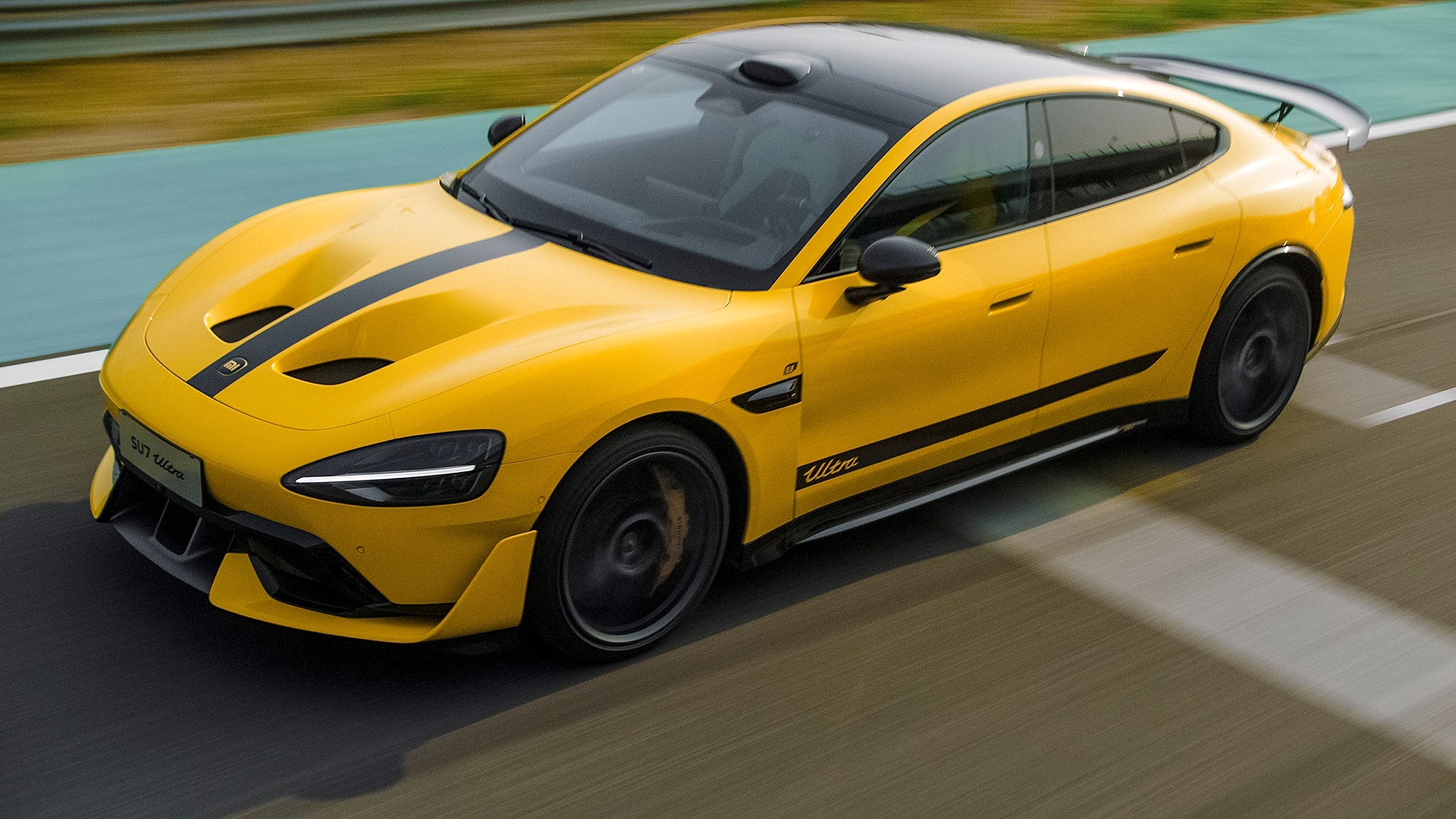
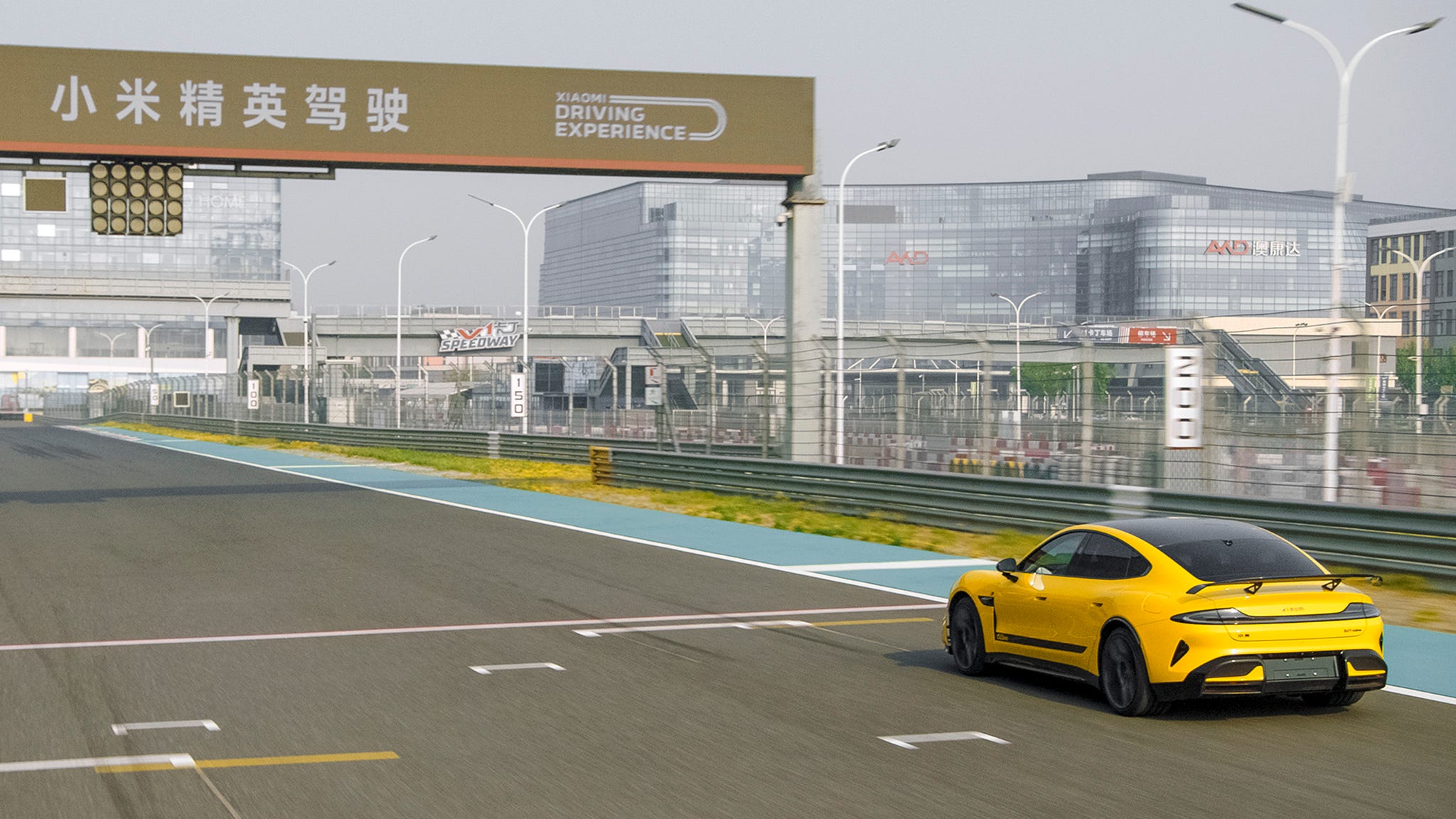
I’m riding shotgun in the 2027 Xiaomi SU7 Ultra at Tianjin’s V1 Automobile World track outside of Beijing as a professional driver barrels down the main straight at full tilt. Suddenly, the infotainment display transforms into a giant performance meter, glowing bright yellow as the speed climbs rapidly in the center of the screen: 190 kph, 209, 230, 267. Upon reaching the braking zone, the massive six-piston calipers clamp hard ahead of a tight, right-hand hairpin. My heart is racing; my jet lag has completely disappeared, and the goosebumps running down my arms are the strongest I’ve felt in recent memory.
Just minutes earlier, I had been behind the wheel of the SU7 Ultra myself, attacking the same circuit—though the long straight had been off-limits to journalists because of the lack of runoff area. Even without it, the 2.3-mile layout and its 15 turns were more than enough to reveal what Xiaomi’s performance sedan is capable of. The first things that stood out were the Ultra’s brutal power delivery, razor-sharp steering, and impressive body control through fast corners.
In the short time it’s been on the market, the SU7 Ultra has already become one of the world’s most talked-about performance cars. It holds the Nürburgring lap record for the quickest production four-door vehicle, and with 1,526 horsepower and 1,305 lb-ft of torque, it ranks among the most powerful production cars ever built.
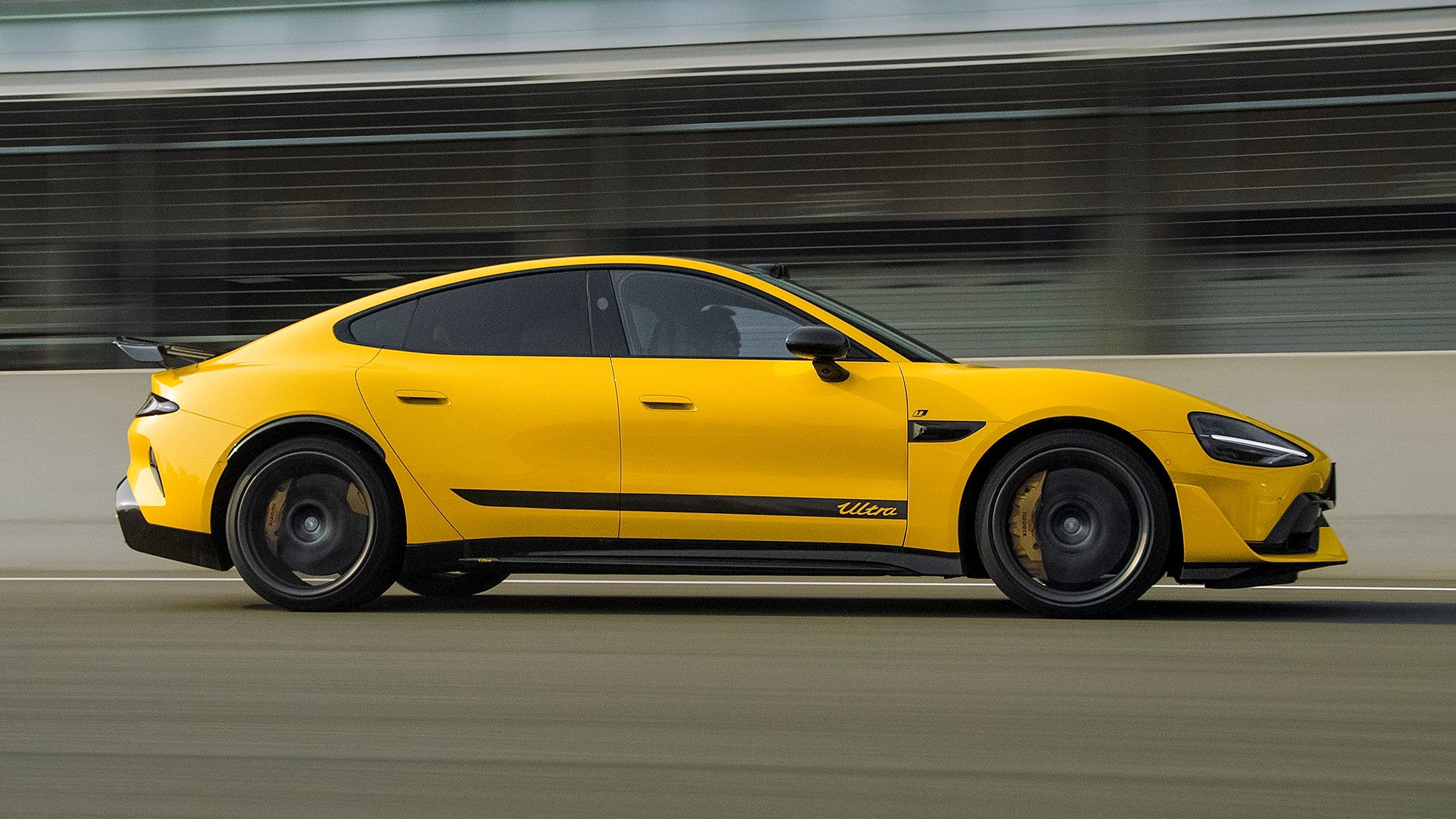
What makes those numbers even more remarkable is the fact that this is, at its core, Xiaomi’s first car. Before entering the automotive world, the company built its reputation by making smartphones, tablets, and smart-home products. Xiaomi launched the standard SU7 in China in 2024, and the sedan has already received a midcycle refresh as the company pushes to stay competitive in China’s brutally fast-moving EV market.
Once strapped in and ready for my track session, I twisted the drive mode dial over to Sport Plus to unlock everything the SU7 Ultra had to offer. Power comes from a tri-motor setup—two motors at the rear and one up front—that launches the Ultra to 62 mph in a claimed 1.98 seconds. That’s less than a tenth of a second slower than the almighty acceleration-record-setting Porsche Taycan Turbo GT Weissach we tested , despite the two cars being separated by more than $180,000 in price.
The moment I exited the pits, the SU7 Ultra unleashed its power with shocking force, instantly sending a rush of adrenaline through my body. During the opening lap, the carbon-ceramic brakes and Pirelli P Zero Trofeo RS tires were still getting up to temperature, but once everything was warm, I began pushing harder into the corners, and the Ultra responded confidently every time.
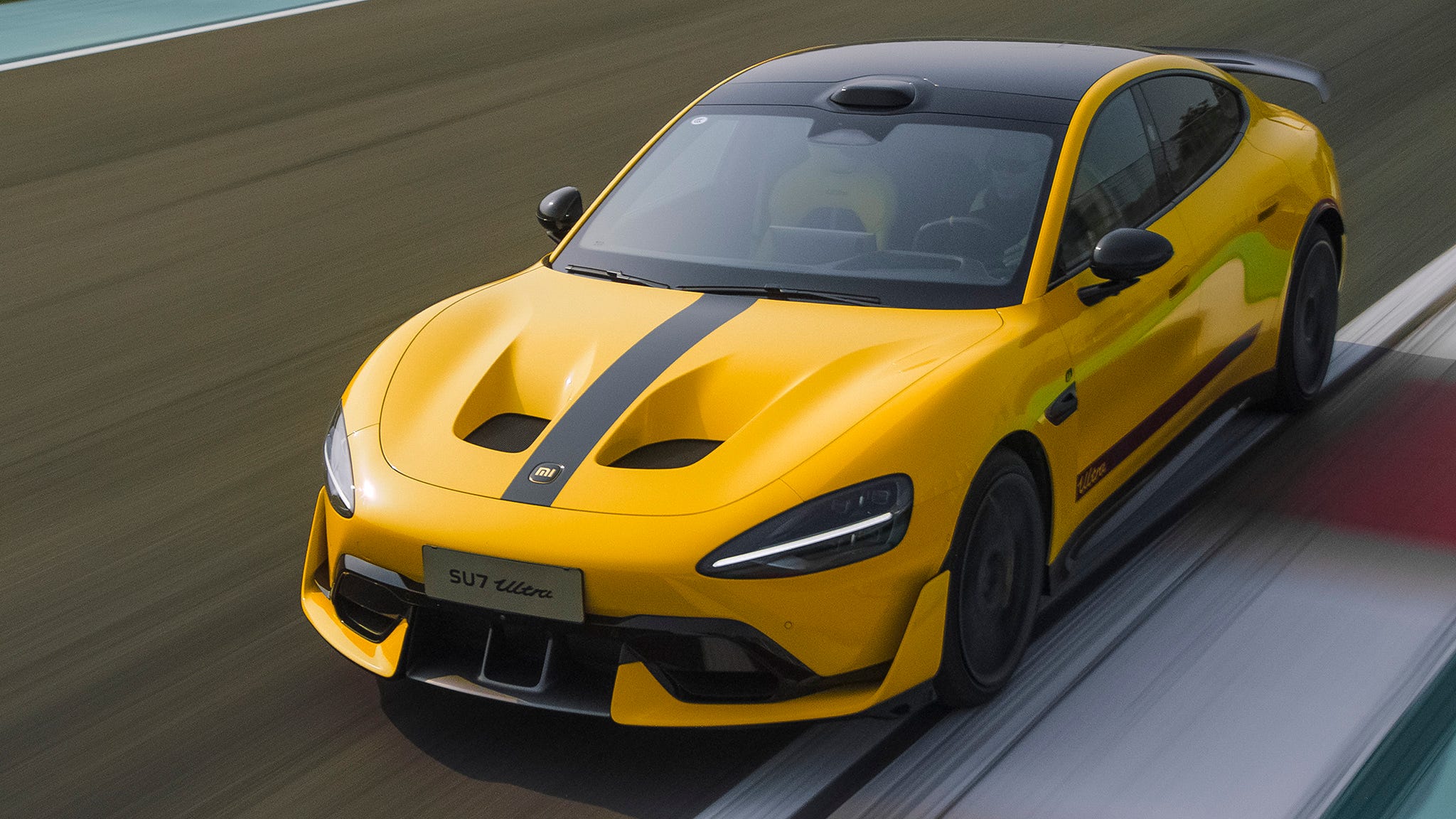
The SU7 Ultra’s handling is simply superb. Even charging into corners at high speed, the car remains composed and surprisingly forgiving, whether you brake a touch too early or slightly too late. The six-piston front brakes and four-piston rears deliver tremendous stopping power, but what stood out most was the pedal feel, as it’s easy to sense exactly how much braking force is being applied as you approach a corner.
The adaptive suspension also deserves a lot of credit. Under heavy braking and through tight hairpins, the SU7’s body stayed remarkably controlled, helping the Ultra feel planted and inspire confidence despite its immense power.
Steering feel is one area that still needs improvement. While the steering is quick and precise, it doesn’t communicate much about what the front tires are doing. The setup leans more toward comfort than outright feedback, which slightly dulls the connection between driver and vehicle when pushing hard on the track.
Regardless, the moment you get back on the power, the cabin fills with artificial engine sound pumped through the speakers—a feature that seems more gimmicky than necessary. The actual acceleration, however, needs no enhancement. The tires do an impressive job putting down all that power, limiting wheelslip and allowing the Ultra to rocket out of corners without hesitation.
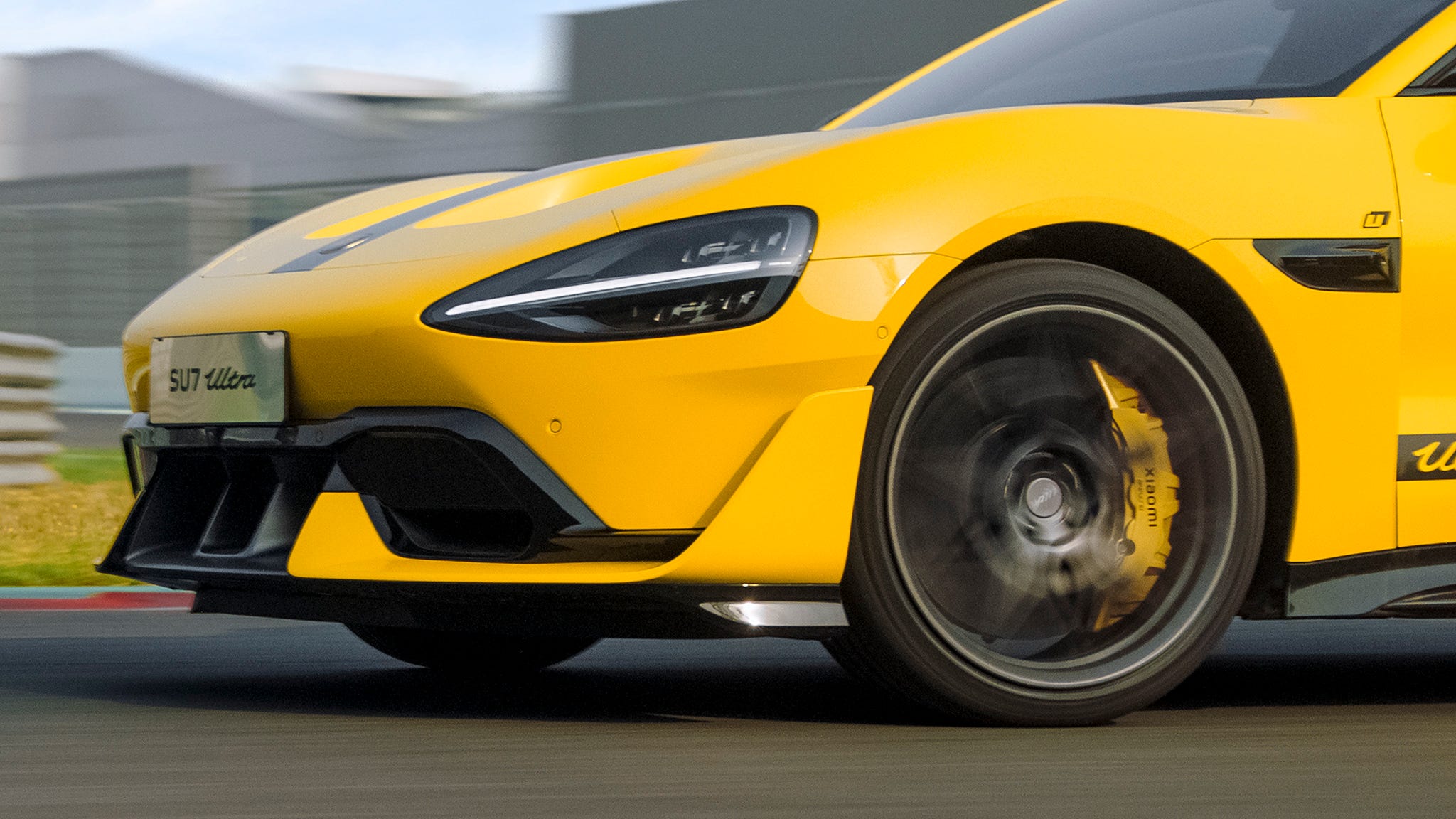
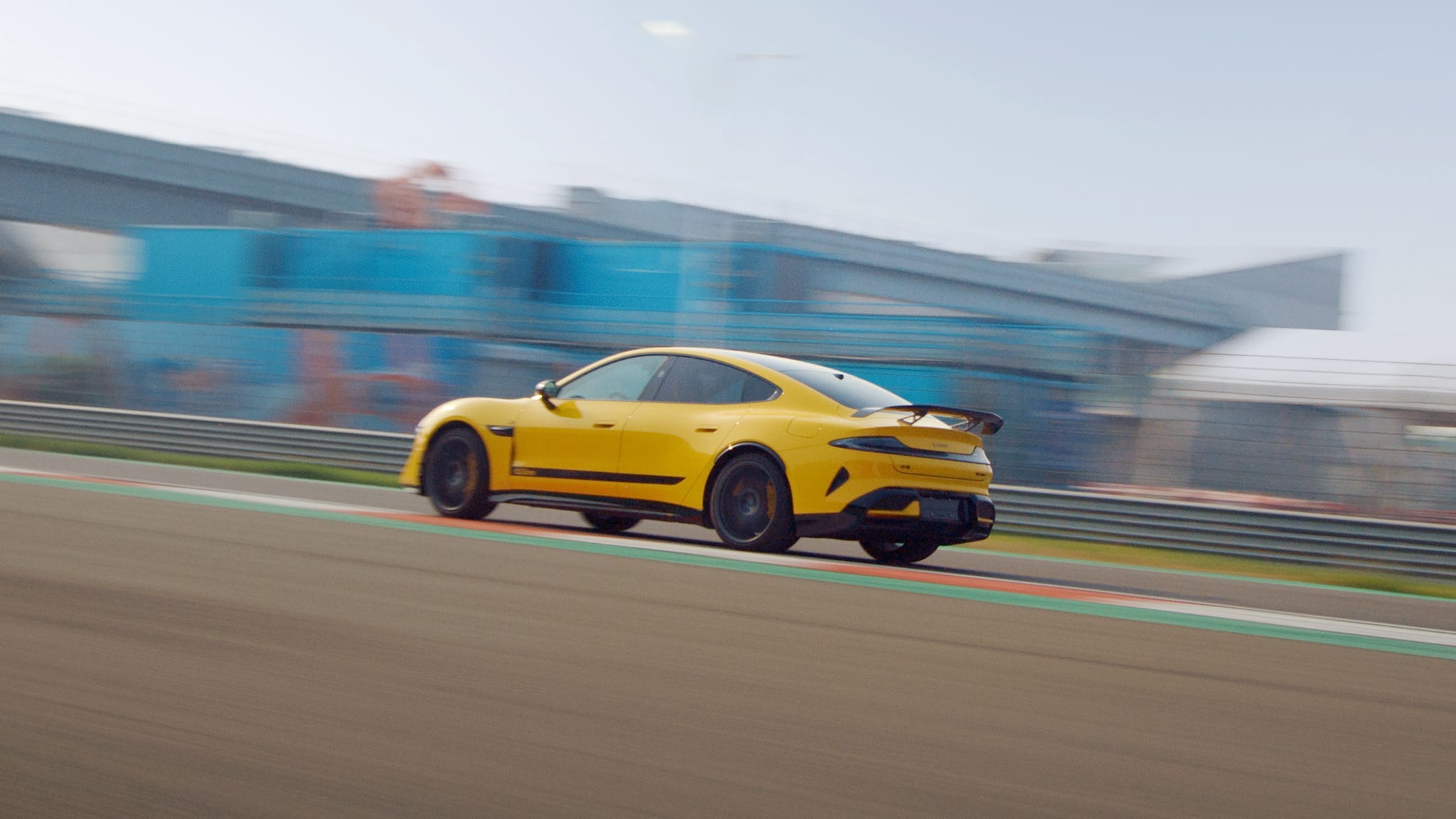
As the ultimate performance version of the SU7 lineup, the Ultra receives a dedicated Track package designed to sharpen its capabilities even further. The car we drove at the circuit came equipped with it, adding 21-inch U-spoked forged aluminum wheels, Pirelli P Zero Trofeo RS tires, Bilstein dampers, a carbon-fiber roof, and carbon-fiber rear wheel arches.
Every SU7 Ultra also features a much more aggressive aerodynamic package than the standard version, including a massive rear wing, larger rear diffuser, revised front aero, and functional side vents designed to help cool the electric motors, battery pack, and radiators during hard driving.
Despite its hardcore performance focus, the 2027 Xiaomi SU7 Ultra still works surprisingly well as an everyday EV. Its 93.7-kWh battery is rated to deliver nearly 400 miles of range on China’s optimistic testing cycle, though spirited driving will naturally cut into that figure quickly.
Charging performance remains impressive, however. Xiaomi says the Ultra can recharge from 10 to 80 percent in just 11 minutes, helping make up for its appetite when driven hard. Top speed is electronically limited to 217 mph, largely because of the tires’ limits. We didn’t come anywhere near that number during our time in Tianjin, but after experiencing how violently the Ultra accelerates, it’s difficult not to wonder how much faster it could go without the limiter in place.
In China, where regulations are far more relaxed than in the U.S. and many other markets, Xiaomi allows drivers to completely disable the SU7 Ultra’s electronic stability control. It’s not something you can accidentally deactivate, as you must dig through a few menus first, but once everything is turned off, the car lets you experience its full performance potential without electronic intervention stepping in to save you.
We wish cars like the 2027 Xiaomi SU7 Ultra were available on our side of the world. A premium sport sedan with more than 1,500 horsepower and 1,300 lb-ft of torque for less than $75,000 sounds too good to be real.
Of course, if the Ultra eventually makes its way to the U.S., we highly doubt it would arrive anywhere near that Chinese-market-matching price point. Still, after experiencing what Xiaomi has built, we hope American buyers eventually get access to EVs that combine this level of performance, technology, and refinement without requiring the kind of coin that something like Porsche’s top-dog Taycan does.
While this review focuses specifically on the Ultra and what it’s like to experience Xiaomi’s wildest performance car on the track, be sure to check out our full SU7 standard edition first drive for a deeper dive into the SU7’s interior and technology.
Comments (0)