
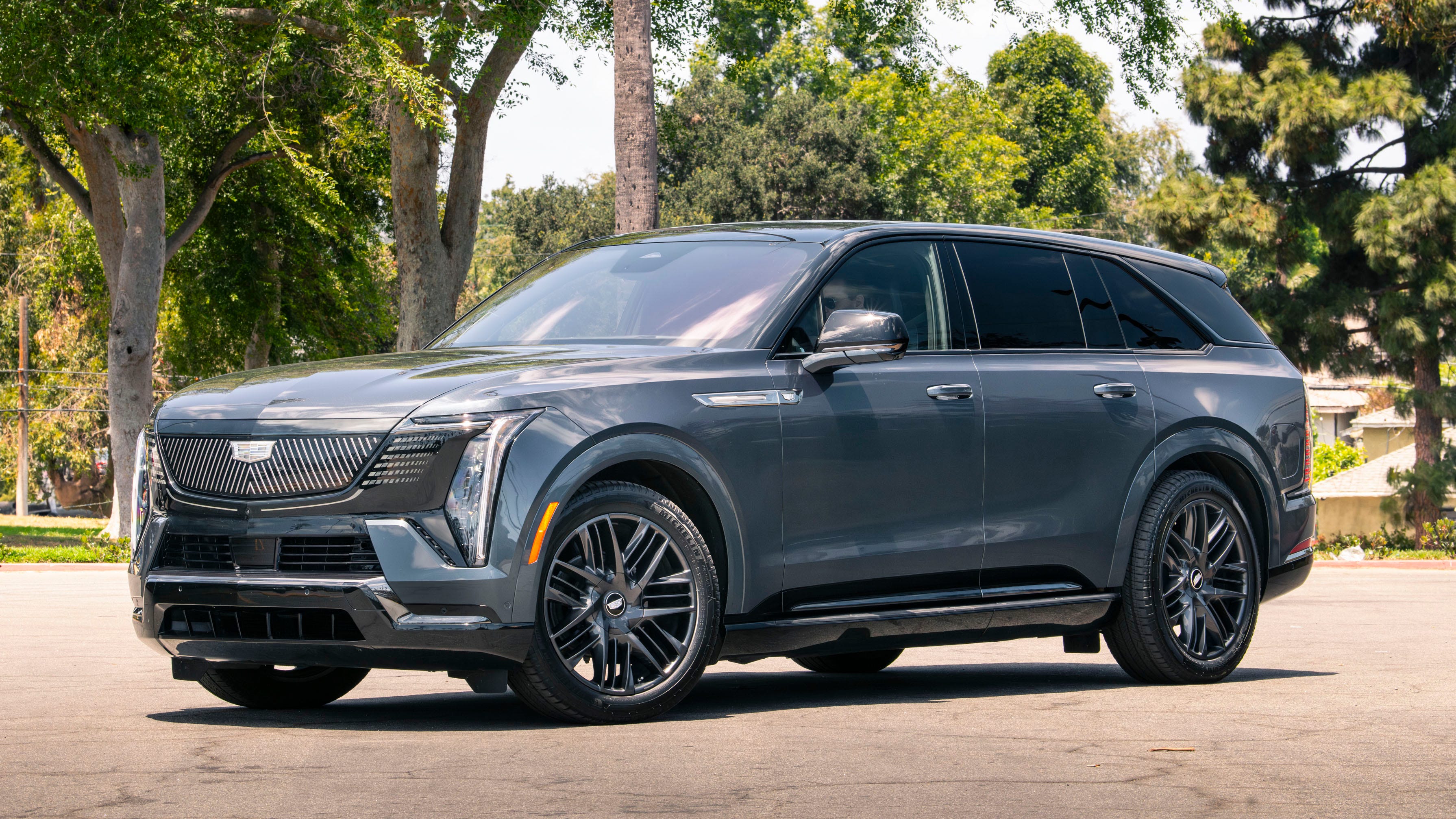
The concept of a “halo car” isn’t rigidly defined, but it’s generally understood to be a vehicle that’s low-volume and very expensive, one that will draw dreamers into showrooms where a salesperson can steer them toward a model they can afford. Sometimes they’re supercars, and sometimes they’re ultra-luxury cars, but they serve the same purpose. Other times, they’re just a bit more attainable. Case in point: the 2026 Cadillac Escalade IQ, one of which just joined our long-term test fleet coming off its SUV of the Year win.
You might be tempted to say the ultra-luxury Celestiq sedan is Cadillac’s halo, but we’d argue it’s more of a statement piece, the ultimate expression of what Cadillac is capable of. Hand-assembled and built to order, it’s a car that will never be seen in showrooms and will barely be seen at all by most people on the road. No one is walking into a Cadillac dealer because the Celestiq exists.
The Escalade, on the other hand, has been the brand’s flagship for nearly three decades and continues to be its true halo. The Escalade IQ (and even larger IQL) are the tip of the spear, the most technologically advanced and luxurious Escalades of them all. Escalades get people into Cadillac dealers and move more affordable models off lots.
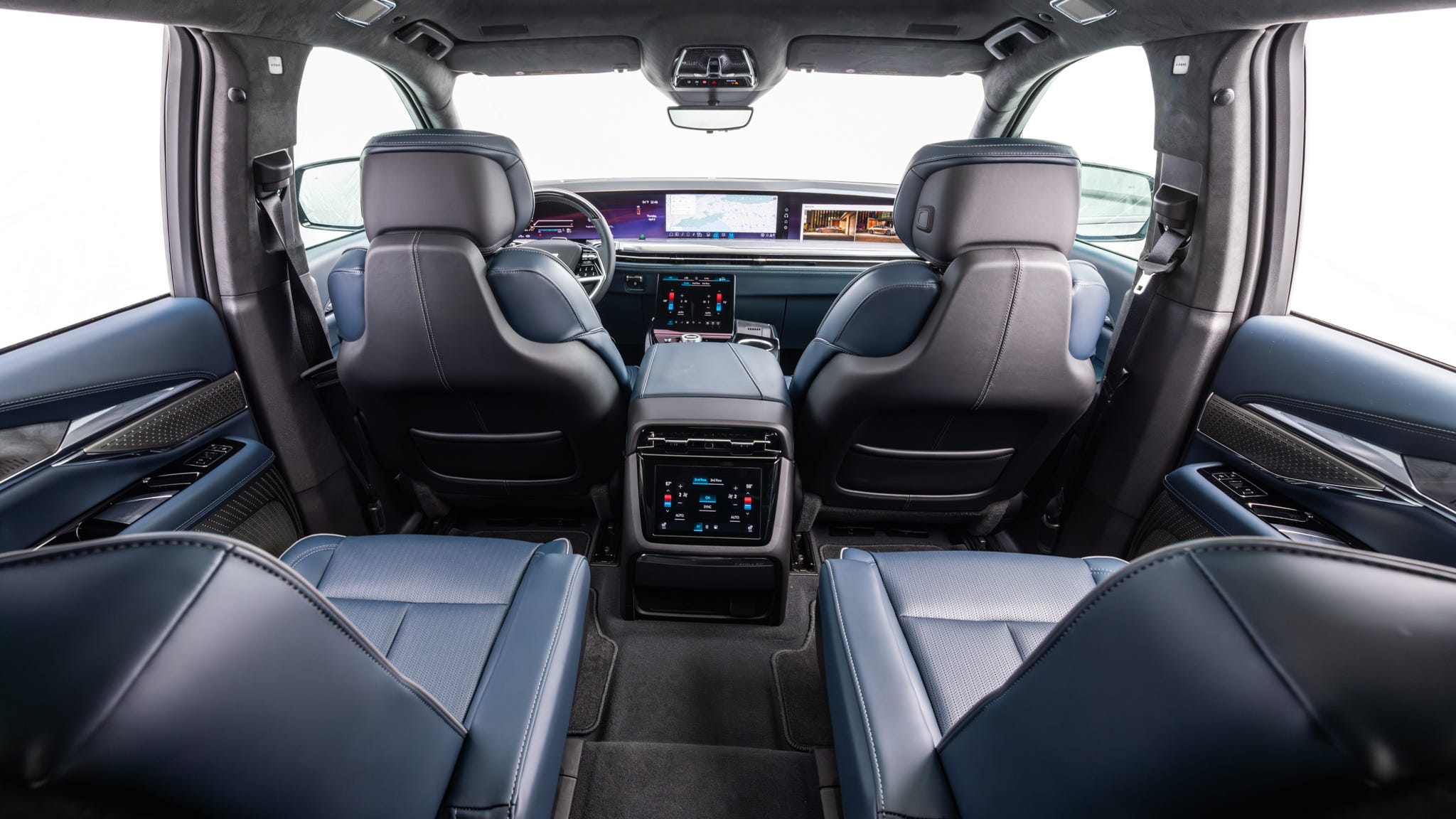
The Escalade IQ didn’t win SUV of the Year just because it’s rad, but that certainly didn’t hurt. It won because it’s the most luxurious mass-market vehicle Cadillac has built in decades. It won because it’s loaded with the best and most advanced technology in its class. It won because it solves practical, real-world problems like range anxiety, charging anxiety, and EV towing anxiety. That was our impression at the end of our 2026 SUV of the Year competition, anyway, and now we’ll have a year to put every one of those solutions to the test.
Spending a year with the Escalade IQ is hardly a burden, even less so after we decked this thing out. Sure, we could’ve kept the price down and just got a regular IQ Luxury trim and had most of the key features we intend to test. We wanted the full experience, though, so we went for the IQ Premium Sport in Deep Space Metallic green-grey, a $625 option. The standard 24-inch wheels are fine, but we liked the space theme, so we opted for the $4,295 Onyx package, which includes the 24-inch Deep Space directional alloy wheels with package-exclusive blacked-out center caps. It also includes puddle lamps in Cadillac’s Mondrian pattern and “Hudson Metallic” (black) badges on the tailgate. We finished the exterior design off with the $1,100 black-painted roof option.
As we plan to do a lot of road trips with this monster, we got a couple things for ourselves. First was the $1,750 console refrigerator to keep our extra drinks cold. Then we added the $275 CCS-NACS charging adapter, which will let us plug in at the far more numerous Tesla Superchargers along the way.
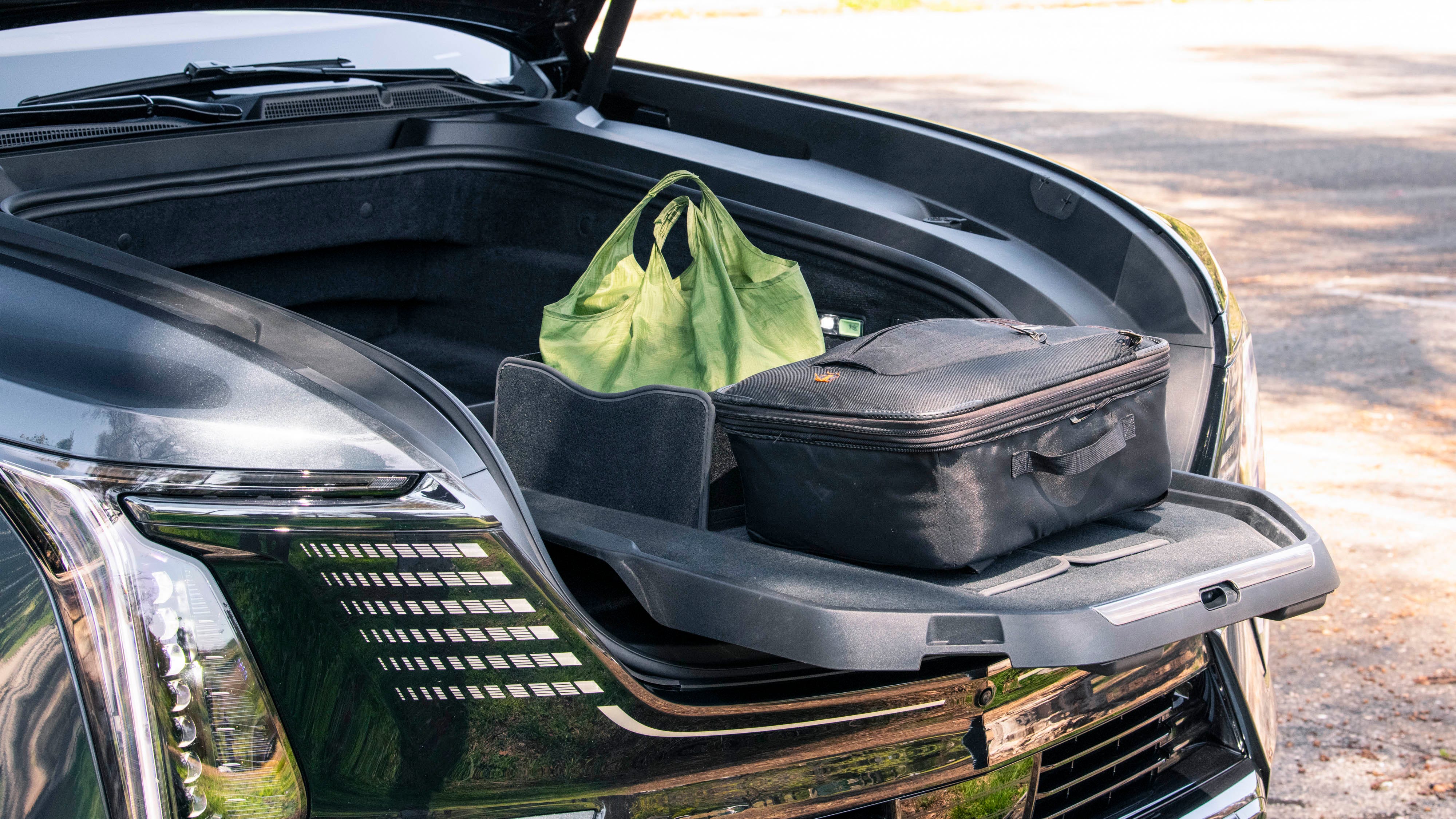
Finally, a few miscellaneous items. For practical matters, the $995 eTrunk Organizer package with the slide-out tray and pop-up organizer for the front trunk. The former makes it a lot easier to access the front trunk’s full capacity without having to climb in to reach stuff in the back, and the latter keeps smaller items from rolling around in there and falling out when you open the hood. The $650 illuminated door sill plates, meanwhile, are just for fun, and the 38-speaker AKG Studio Reference stereo is standard.
We did think long and hard about the $7,500 Executive Second Row Seating package but decided against it both for practical reasons (we wanted to ensure we could regularly use the third row) and to keep the price from getting any higher. With its starting price of $150,595 and $9,705 in options, we’re already at $160,300 as tested, and that seems like more than enough.
All Escalade IQ trims are mechanically the same, but we’ll give you a refresher on the details. An enormous 205-kWh battery provides a Cadillac-estimated 465 miles of range, which came out to 395 miles in our Road-Trip Range Test (a constant 70 mph until the battery drops from 100 percent to 5 percent). Charging it back to 100 percent, power peaked at 348 kW while replenishing 137 miles of range in 15 minutes and 220 miles in 30 minutes.
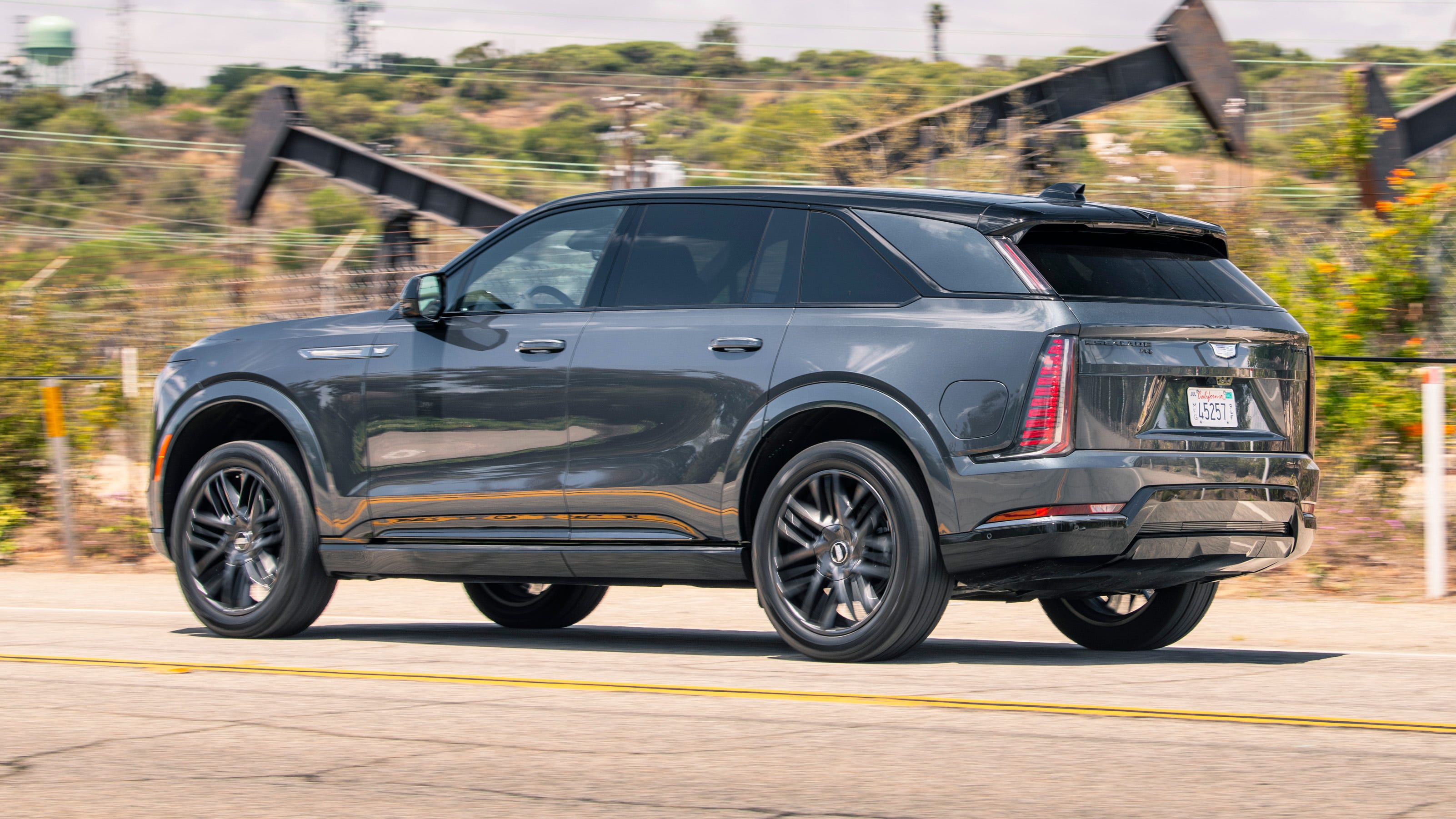
That battery powers a pair of electric motors that make a combined 750 hp and 785 lb-ft of torque. That’s enough to get this thing to 60 mph in 4.6 seconds despite weighing more than 9,000 pounds. After, you can stop without ever touching the brake pedal thanks to regenerative braking and the one-pedal driving mode.
Hell, you don’t even have to touch the pedals–or even the steering wheel–if you use Super Cruise. It’s standard for the first three years and lets you take your hands off the wheel on most highways as long as you keep your eyes on the road. Absolutely clutch on long road trips.
Also clutch: the standard air suspension and Magnetic Ride Control adaptive dampers that make this monster ride like a classic Cadillac, curb weight be damned. Outboard of them and just as handy is four-wheel steering, which makes it turn like a midsize SUV.
We weren’t kidding about road trips. It went on its first one just two weeks after arriving and has since been on four more. Did Supercharger access make a difference? Have we actually used the fridge? Is not having CarPlay and Android Auto driving us insane? We’ll have a lot to say about this big money luxury barge in the coming months.
Comments (0)