
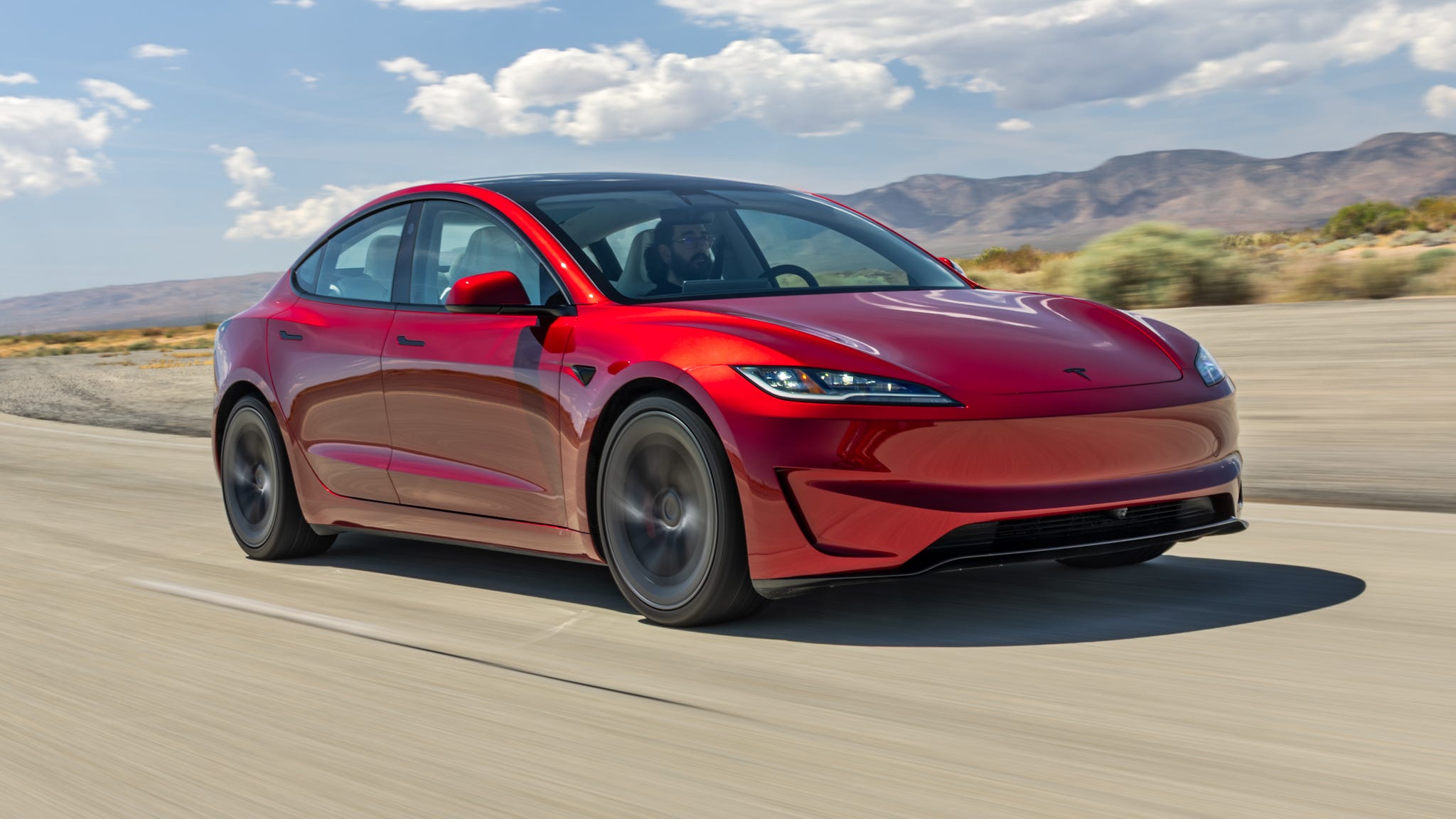
American car enthusiasts have an unquenchable thirst for cheap speed, but in these post-pandemic days it feels farther away than ever as the average price of a new car reaches all-time highs. An unexpected champion of attainable performance has arisen, hailing from a company that just put its quickest and most powerful car out to pasture and insists the future is full autonomous driving. Yes, the best bang-for-your-buck speed today can be found in the 2026 Tesla Model 3 Performance.
Going fast in a straight line is as much America’s pastime as baseball, and so is saving a buck. We all love a supercar, but a muscle car the average American could realistically afford is a cultural landmark. Showing your working-class taillights to Richie Rich and their expensive exotic is a time-honored tradition. Today’s champion, though, isn’t a V-8 muscle car or even a turbocharged import, but an all-American EV.
Get this: 2.9 seconds. That’s how quickly the new Model 3 Performance gets to 60 mph. Spend all the time you want scouring MotorTrend test results, but you won’t find another car that quick for anywhere close to the price. That’s because the Model 3 Performance starts at $56,380, and almost everything else as quick is several times more expensive. The only cars that get close are the Hyundai Ioniq 5 N, which costs another $11,000, and the Chevy Corvette, which starts more than $15,000 higher than the Tesla.
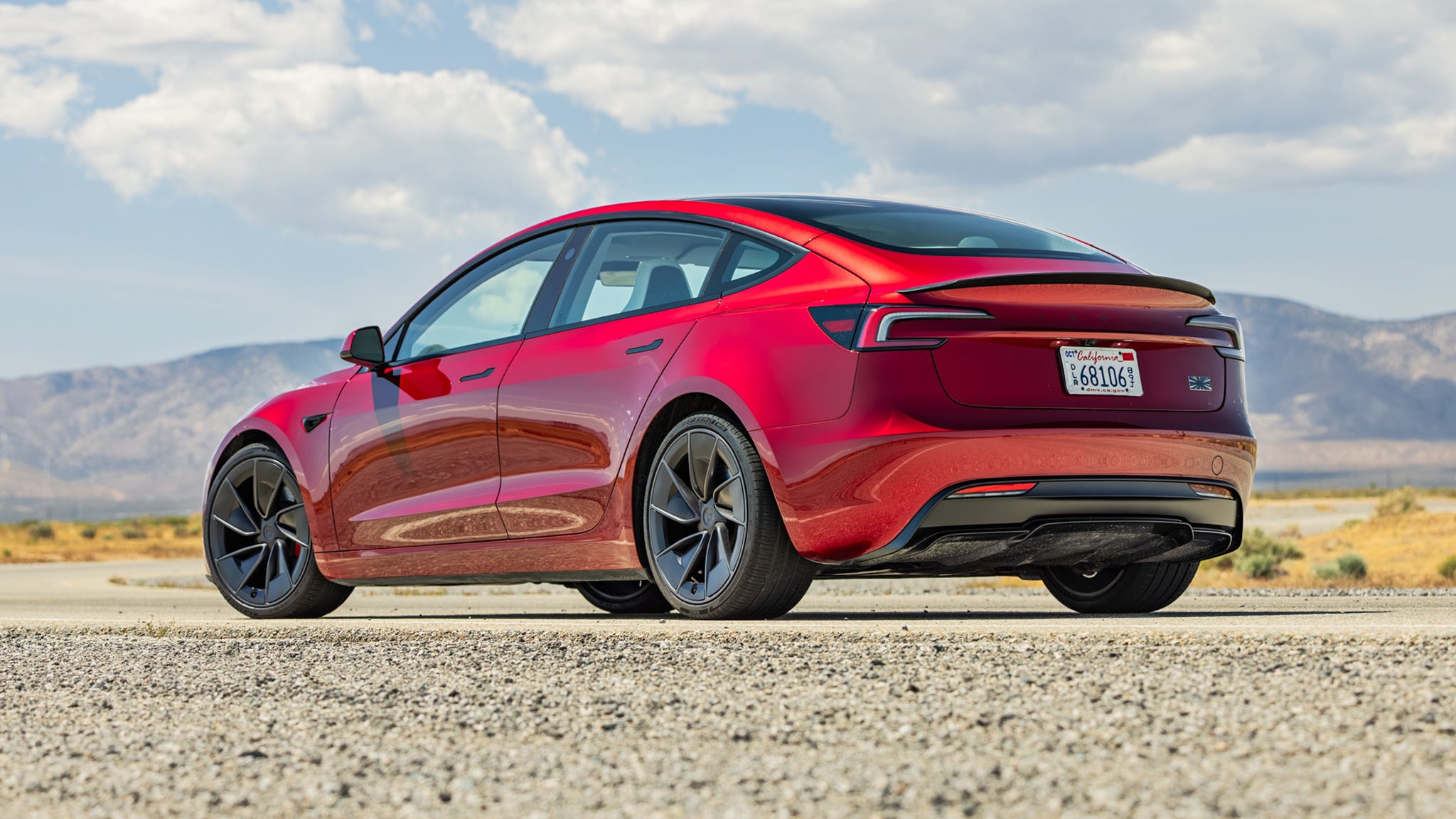
Now, we’re not necessarily calling the Tesla “cheap speed” because $56,000 is more than the average price of a new car. We’re classifying it as affordable or attainable speed, because for the price of a midsize family SUV you can have a sport sedan that will take six-figure cars to Gapplebee’s at any stoplight. It might be a bit of a stretch for the average person, but it’s hardly expensive by performance car standards.
It’s not just quick off the line, either. The Model 3 Performance runs an 11.1-second quarter mile at 123.2 mph. Here, again, the only other cars running low 11s for anywhere close to the same money are the Ioniq 5 N and the Corvette. Anything else spitting distance from being a 10-second car is way more expensive.
Well, there is one other car that kinda fits the bill: the old Model 3 Performance. That one would hit 60 mph in 3.2 seconds but slacked off to an 11.7-second quarter mile at 115.7 mph. It also cost $10,000 more than today’s model, and that’s before you account for inflation, which brings it to the equivalent of $86,000 today.
Surprisingly, the delta in other metrics between the old and new cars falls to parity or worse for the 2026 model. Braking from 60 mph takes 116 feet, a staggering 17 feet longer than the old one. Similarly, the new car pulls 0.93 average lateral g to the old model’s 0.94. The new one also came up short in our figure-eight test, putting up a 24.6-second lap at 0.82 average cumulative g when the old one did a 24.3-second lap at 0.84 g average.
How’d that happen when the new car has an improved chassis, new active dampers, and a far more sophisticated track mode? We’re blaming the tire choice. The previous model’s Michelin Pilot Sport 4S summer tires were far stickier than the new one’s Pirelli P Zero MS high-performance all-season tires, which were fitted to our test car. Give the new car its optional summer tires and we’d expect to see a substantial improvement.
Why would Tesla send us a Performance model on all-season tires? An oversight, possibly. Those tires are no doubt offered for customers who live places with bad weather, and they do give you reasonably good performance, particularly in a straight line. Plus, they squeak out an extra five miles of range by Tesla’s estimate. Us, we’d give up the five miles for better performance.
We suspect real-world range is the reason, though. (And of course, we’d ask Tesla, but it doesn’t employ a PR department.) We never range-tested the old Model 3 Performance ourselves, but based on non-Performance Dual Motor Model 3s from the same time versus those from today, real-world range has improved dramatically with the new generation. Even still, our Real World Road-Trip Range test returned just 265 miles at a constant 70 mph, 16 percent off the EPA rating, a typical result for current Tesla products.
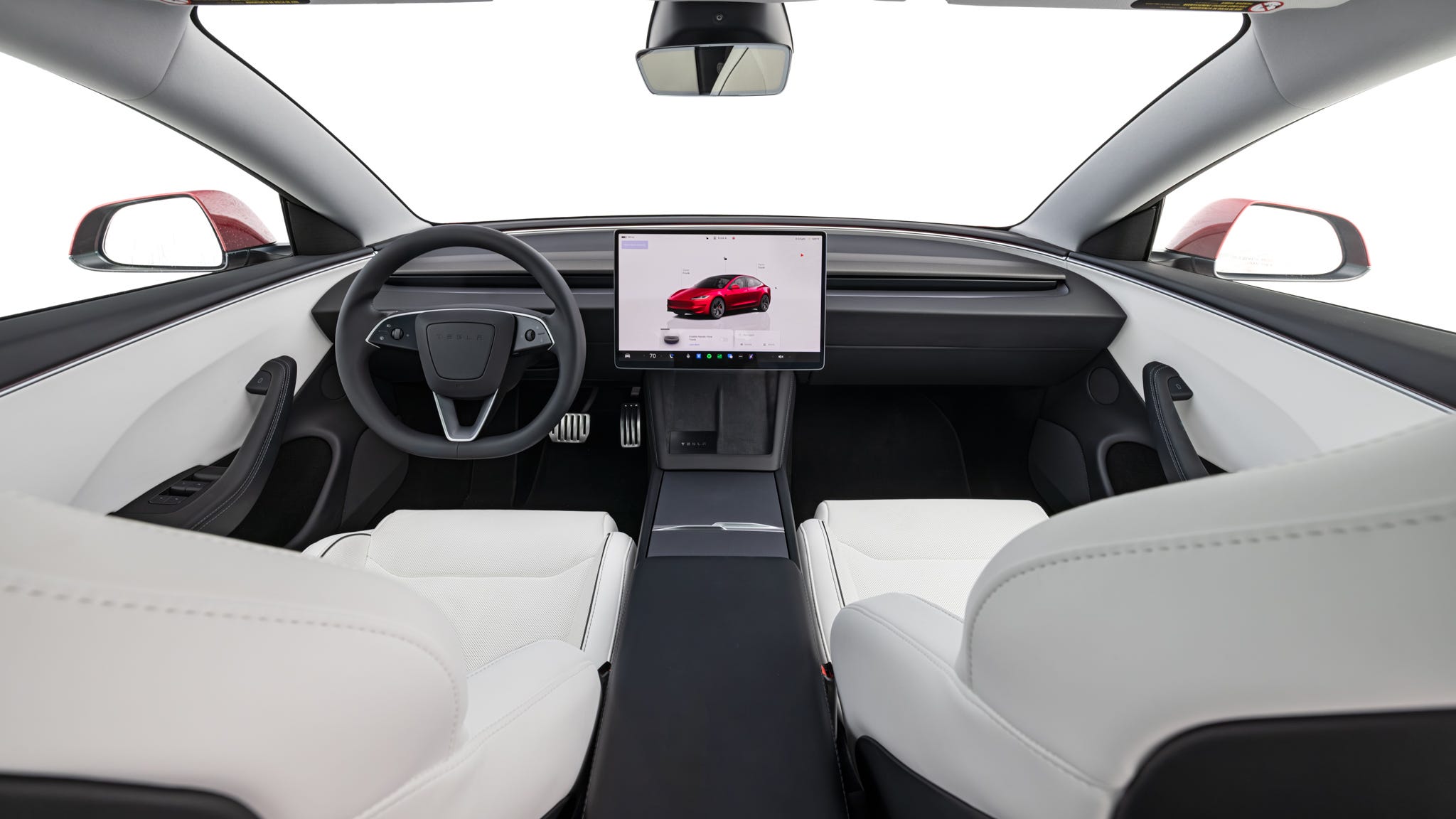
From the driver’s perspective, it still feels like a more mature and sophisticated sport sedan. The old car always felt a bit like a work in progress, partly because Tesla invited us and our resident pro driver, Randy Pobst, out to a racetrack to help develop it well after the other Model 3 variants went on sale.
This time, it feels like Tesla planned to do a Performance model right from the start. Indeed, Track mode is now on its third official software version, and it’s more user-friendly than ever. The slider bar on the screen works as promised, allowing you to adjust from the baseline neutral handling toward more understeer or more oversteer as you like. Each notch on the bar makes a perceptible difference in limit handling, allowing you to pick your personal favorite setting. Unexpectedly, we got our best figure-eight lap with a decent amount of understeer selected, demonstrating tangible performance differences between the settings.
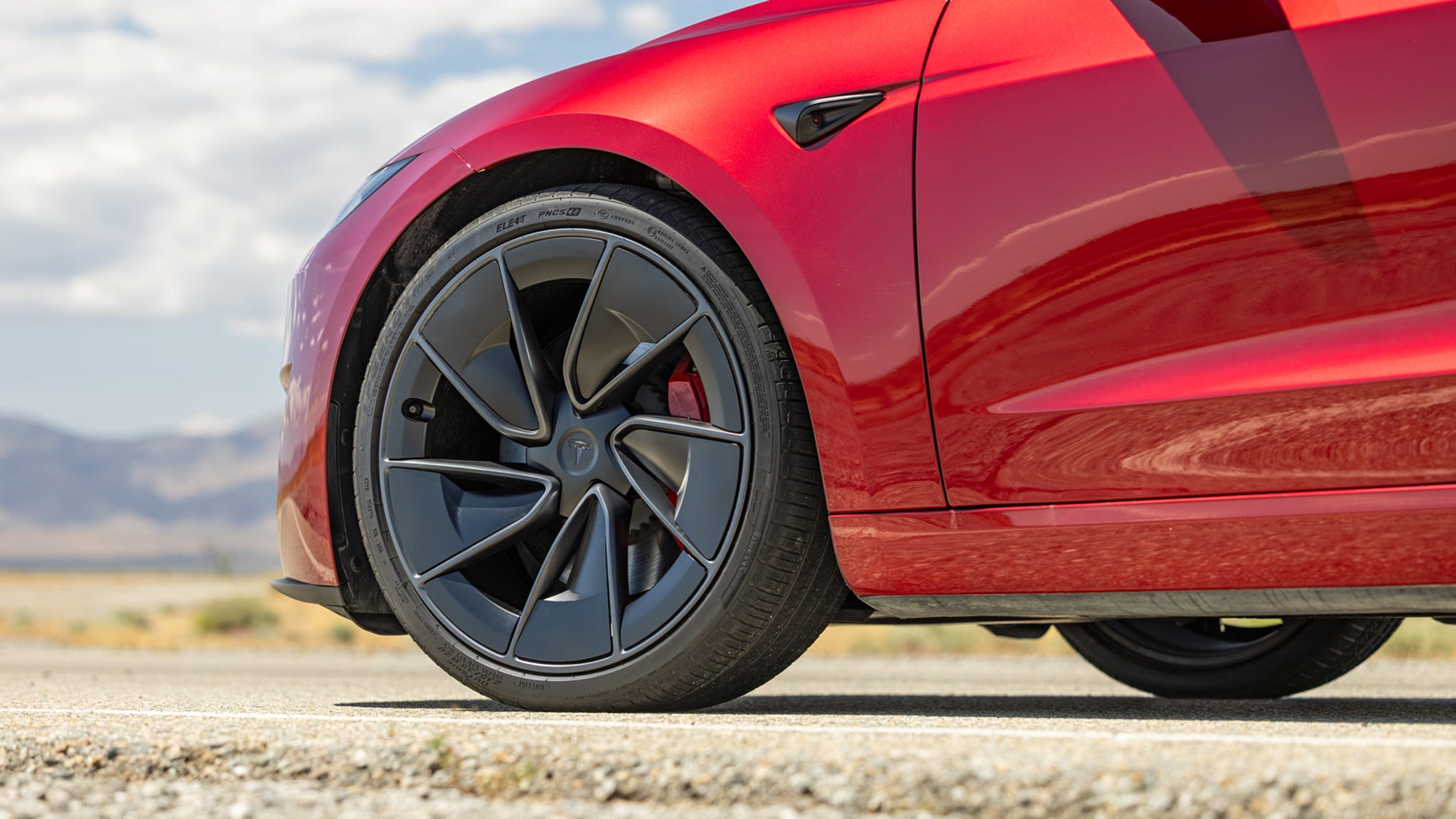
While the all-season tires are fine on the test track and in the world, we can’t help but want more. The braking power feels damped by the relative lack of grip versus what the brakes are capable of. Both in straight-line stopping and during lapping, we kept wishing for more tire so it would stop shorter and grip harder. The summer tires are a no-brainer for anyone who wants the most performance out of their Performance model.
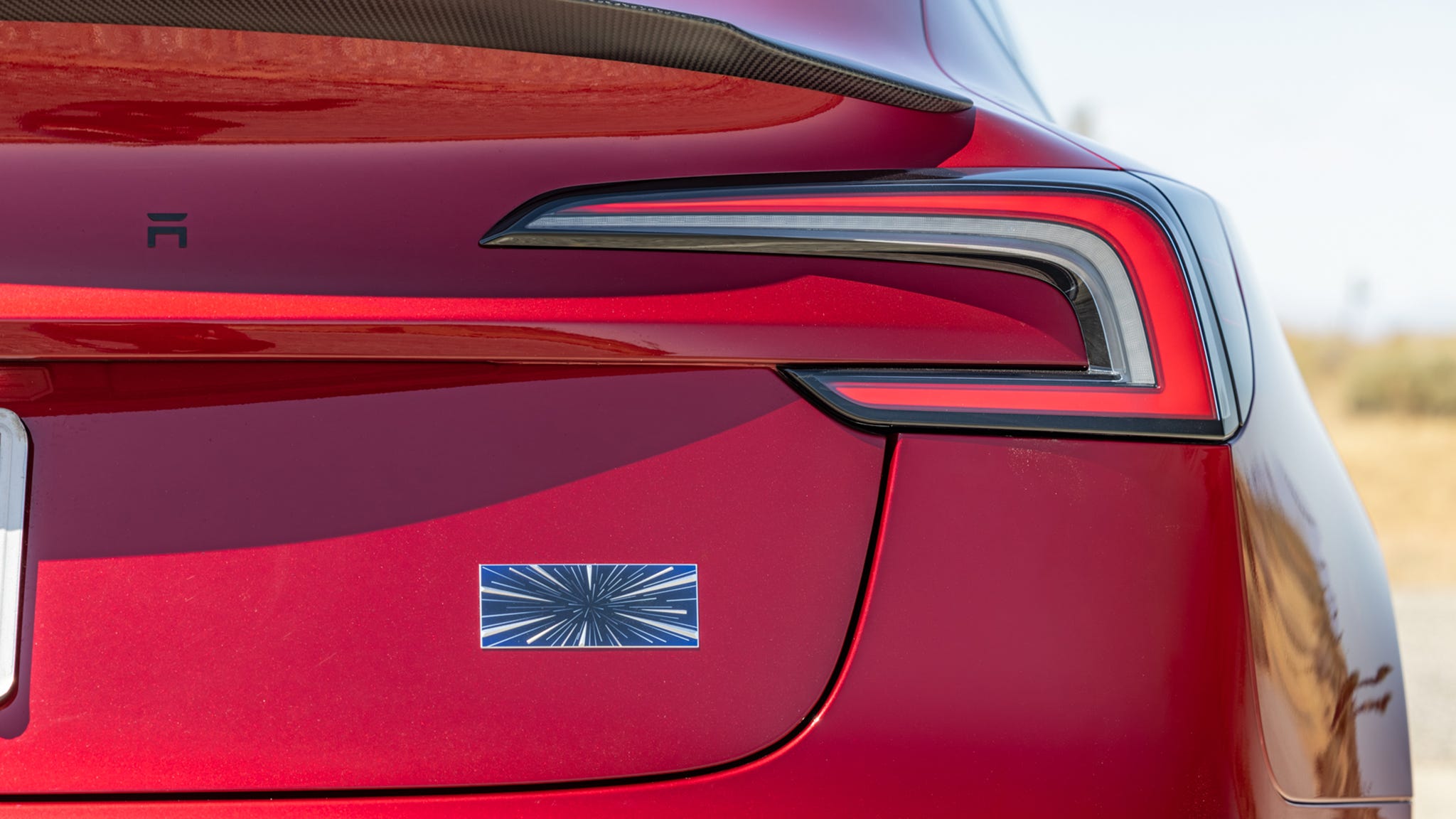
While we’re making suggestions, we’re also hoping for a little more flash from this performance car. The Model 3 Performance is a Q ship for sure, and while we’re not necessarily against that, it’s also not great when it’s hard to tell your high-performance model from all the other Model 3s at the Supercharger.
American car culture was built on cheap speed, and it was measured on the boulevards and dragstrips across the country. Times have changed, and if you want to win that stoplight drag today on a working person’s salary, you’d better bring a Tesla. Wanna really rub it in? Let the car semi-autonomously self-drive to the starting line.
Comments (0)