
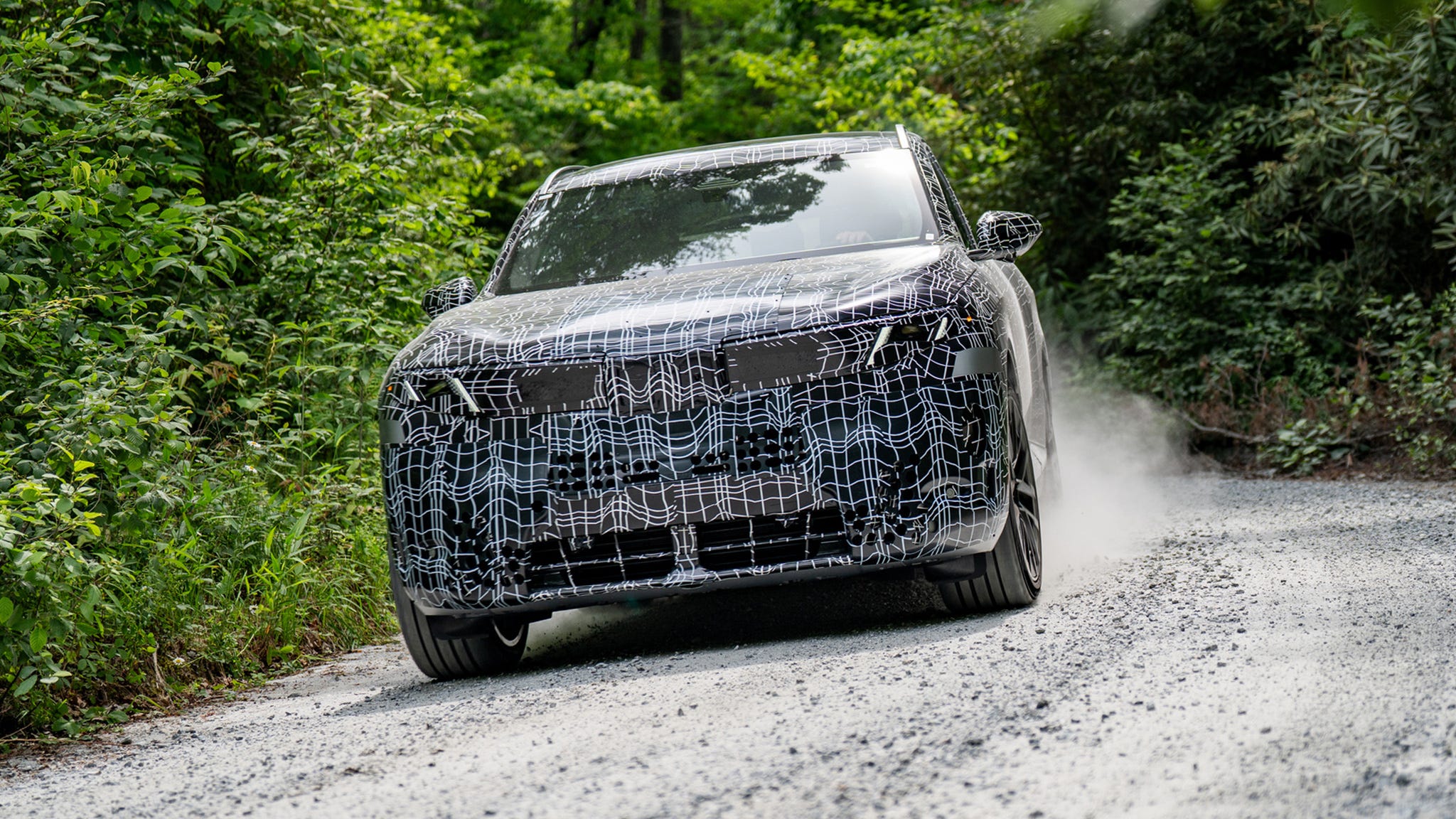
BMW’s first X car, the X5, arrived at the end of the last millennium. That South Carolina–built SUV will enter its fifth generation late this year, and we just drove prototypes of the three powertrains the 2027 BMW X5 will launch with: two 3.0-liter turbo inline-sixes augmented with mild and plug-in hybridization in the 40 and 50e xDrive models, and a fully electric iX5 60 xDrive. Here’s what’s new:
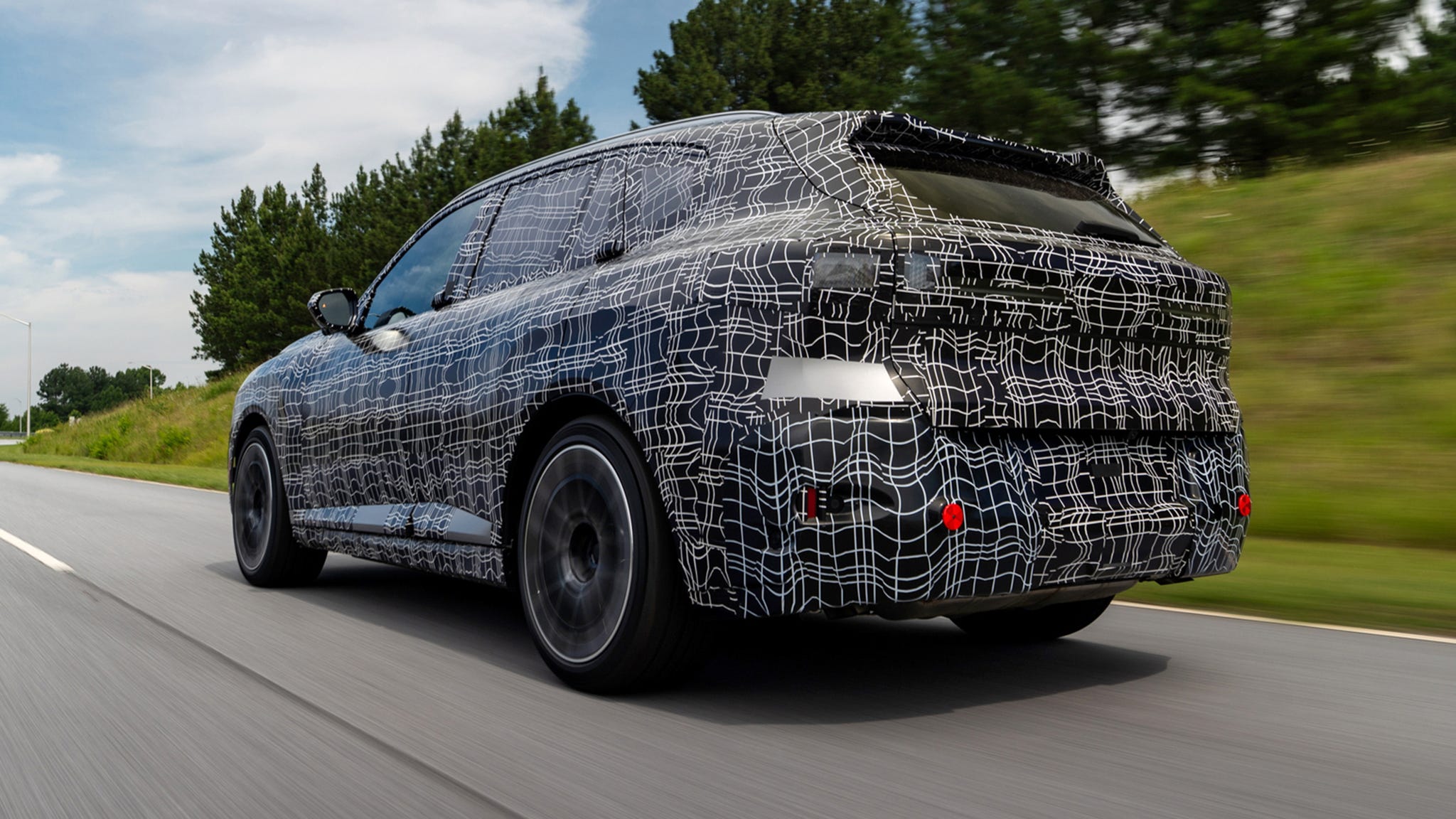
The basic building blocks of the X5’s current MittleKLasse (MKL) CLAR bones are rearranged to stretch the wheelbase 2.4 inches and overall length by 2.6 inches (width and height shrink fractionally). It’s modified to accommodate either an underfloor battery pack with front and rear motors or the traditional layout.
Front suspension mounting points are all shared, as are the mounts for the rear suspension/differential carrier or the rear electric drive unit. The floorpan is common; the electric battery pack remains slightly visible on the iX5 (standard air suspension improves ground clearance when needed), while the PHEV’s pack fills the area under the rear seat and partially under the footwell and its gas tank packages above the rear axle.
All X5s will get adaptive damping matched with steel or air springs, while electromechanical roll-stabilization and rear steering are optional. One big revision: formerly concentric rear spring/damper units are now separated, with dampers mounted just outboard of the springs. (They remain concentric in front.) This allows for greater volume in the air spring to improve comfort and support greater mass.
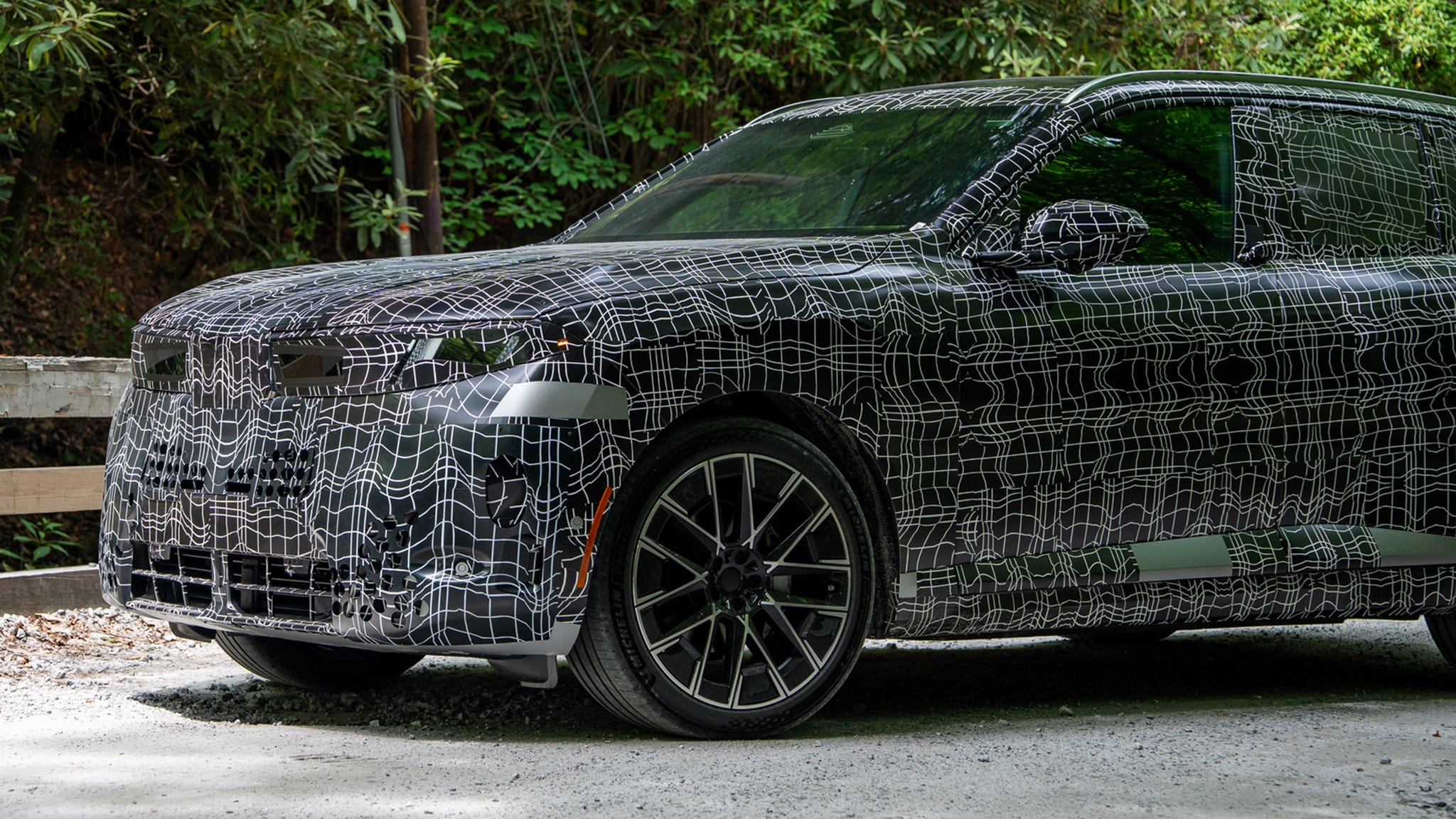
Another handling upgrade: every new X5 variant gets a staggered wheel and tire fitment befitting the near neutral weight balance and natural rear-biased torque distribution of every model. Side-to-side torque biasing is entirely up to the brakes for now, but future M variant(s) will likely change that.
Globally, the X5 will launch with five powertrains. The two we aren’t getting include a diesel hybrid 40d xDrive and an M60e xDrive that ditches the V-8 for a more powerful (569-hp) B58 I-6 engine married to our 50e’s PHEV gear. Some markets will eventually get a hydrogen fuel cell variant, and we’d be shocked if base rear-drive, an M60e, and a V-8-powered M model didn’t arrive here within a few years. For now, we get a powerful engine and light-duty hybrid motor in the X5 40 xDrive (394 hp combined), and a modestly tuned engine helped by a motor powerful enough to drive the vehicle all by itself with the 50e xDrive (483 hp combined). The power play for now is the iX5 60 xDrive, which pulls with 245 hp in front, 325 in back for 570 total.
We’ve covered the Neue Klasse ( BMW i3 / BMW iX3 ) extensively, and its zonal architecture and low-latency computing power will underpin all new X5 models, while its Gen 6 battery chemistry and motor tech drive the iX5. Taller cylindrical batteries (relative to those in the i3/iX3) with similar cell-to-pack construction comprise the iX5’s 141-kWh pack. It operates at 800 volts and charges at 450 kW or better.
EPA range numbers are still TBD but should approach 400 miles. And all X5s get a very Neue Klasse cockpit appearance, headlined by the pillar-to-pillar reconfigurable Panoramic iDrive and 17.9-inch “Free-Cut” design infotainment screen, optionally augmented by a 3D head-up display.
Performance seems surprisingly similar, which is to be expected if preliminary Euro specs are correct. Each model carries roughly 11 pounds per horsepower and per lb-ft of torque, give or take a pound with the iX5 the predictive drag-race winner by maybe a car-length. BMW’s performance estimates for all three roughly align with current-gen X5 40i and 50e test results. Of course, weight-to-power jumps to about 29 lb/hp when driving the 50e PHEV on electricity alone (during which, patient souls may squeeze about 60 miles out of the battery at speeds up to 87 mph).
The X5 50e and iX5 60 mostly manage to conceal their respective 600- and 1,150-pound weight increases relative to the 40. With rear steering reducing the amount of yaw for a given maneuver, active roll stabilization limiting body roll, and BMW Lateral Dynamics Management calling the electronic shots (BMW’s “Heart of Joy” philosophy applied to non-EV fitments), the heftier X5 50e seemed to scoot around corners as willingly as a base X5 40 on the same staggered 275/40 front, 315/35 rear 22-inch Michelin Pilot Sport 5 Energy tires (21- and 23-inch fitments will also be offered). The PHEV offers a strong regen mode that may annoy EV fans, as there can be a delay between lifting and feeling the retardation. Our test sample featured an M-branded steering wheel with no 12- or 6-o’clock spokes and unique thumb rests that just felt better in the hands.
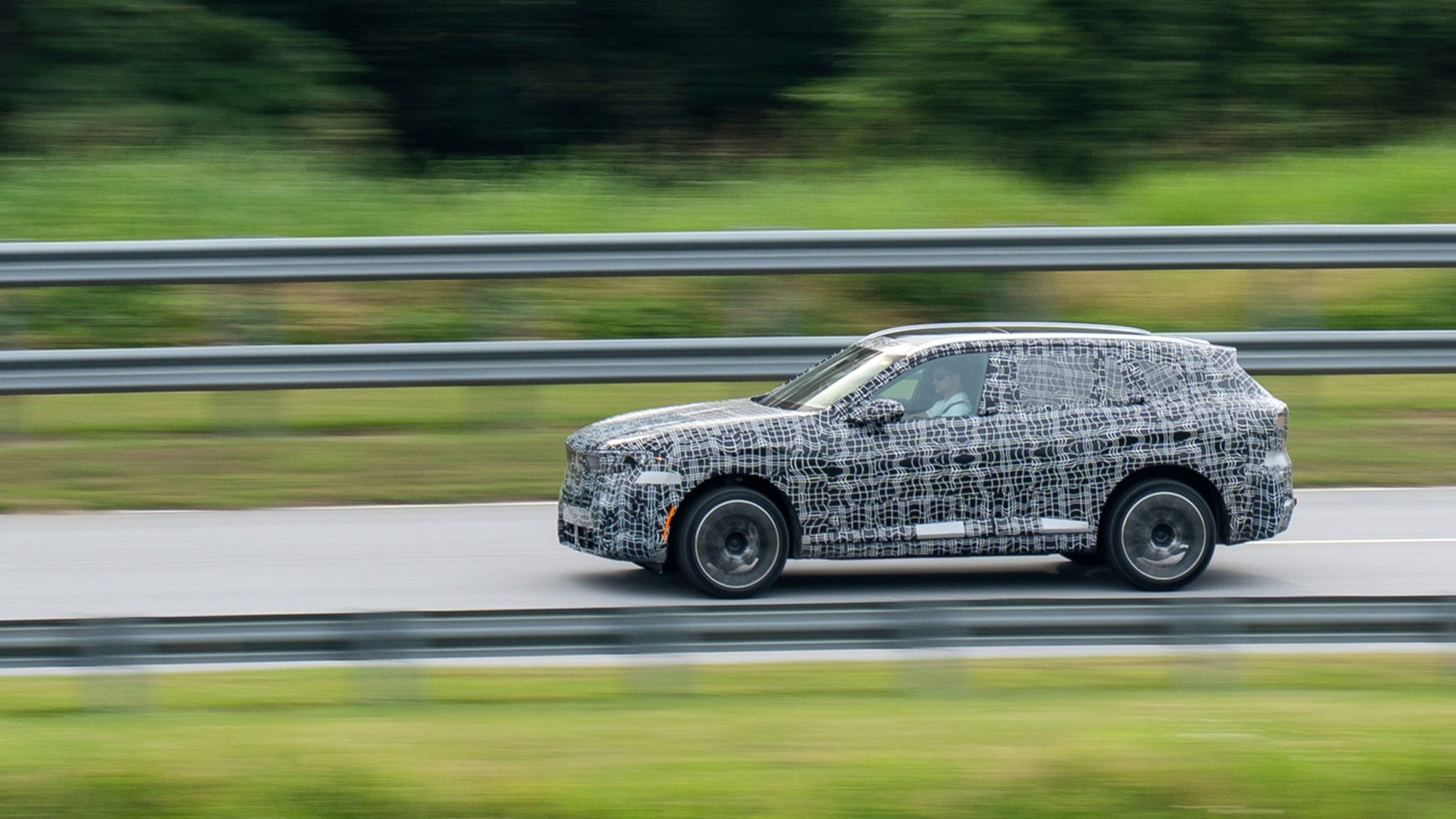
Our iX5 60 prototype lacked the rear steering option, but its Heart of Joy computer wields greater dynamic control with authority over acceleration and regenerative braking, so it can better assess and exploit micro-differences in tire contact-patch grip levels to deliver highly impressive acceleration-braking-cornering transitions. It also performs the same sublime soft-stops we adore in the iX3.
But of course, there’s no escaping the laws of physics, and hence no denying the X5 40 feels lightest and nimblest (not to mention simplest) of them all. It arguably accelerates plenty fast and it will feel the most familiar to owners of current mainstream X5s. The steering precision and weight, and basic brake feel were largely unassailable in all three models, but they’ve seriously whet our appetites for M versions that drop that weight to power figure back into the single digits where we like them.
Each model starts up in Personal mode, with Sport and Efficient modes available by touching the three-dash icon on the screen. Each can tailor the Panoramic iDrive content (or not). This screen also enables the PHEV’s fully electric “MyMoments” mode, which provides an option to preserve battery energy for later use in a combustion-free city center (regulations now prevent modes that actively recharge the battery while driving).
Various modes allow further customization of characteristics such as regenerative braking level, chassis stiffness, steering feel, and whether the optional seats increase lateral support when cornering. Another screen tailors stability control to Dynamic Traction Control and “Off.” Launch Control requires engaging Dynamic Traction Control in Sport mode, pressing the brake hard and flooring the accelerator. The screen confirms launch control, you release the brake, and off you go.
Sound character can also be tailored, and all models feature sound enhancement. It can be turned off, or set to “subtle, balanced, or present” levels of volume. It accentuates the nicer frequencies of the B58 engine where present, and presents a plausible, unobjectionable tone in the EV.
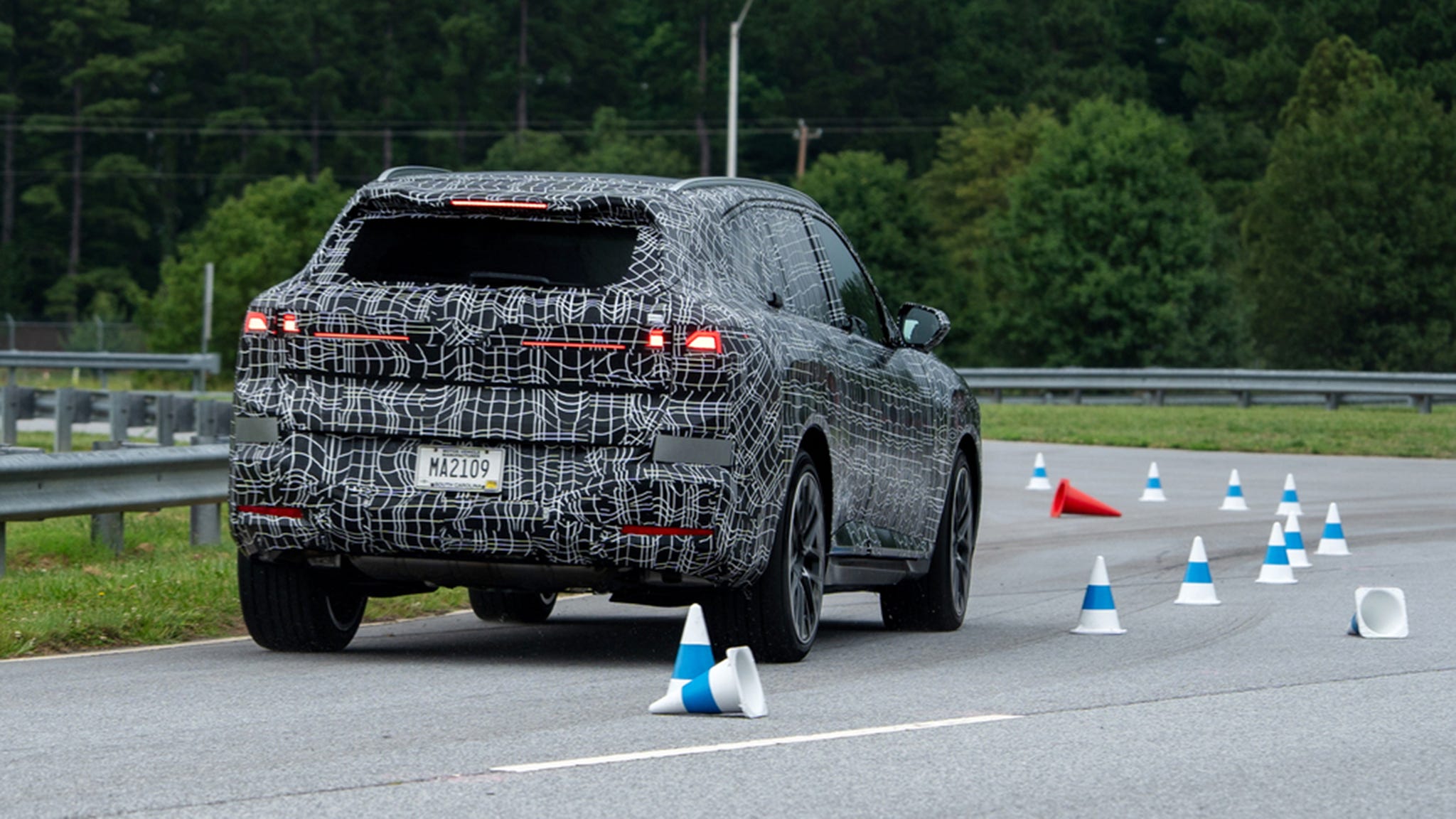
The differences in chassis behavior between the various modes were quite noticeable, with the dynamic roll control intervention varying between roughly what you’d expect from a comfort-optimized steel suspension to a very flat experience that still permits sufficient roll to satisfy your inner ear. On BMW’s high-performance test track, an abrupt change of direction exercise in the 50e model with roll-stabilization and rear steering demonstrated how the amount of understeer also varies noticeably in the different modes, with the tires being pressed to the pavement harder and less weight transfer in Sport mode.
All the collaborative driver-assist features we raved about in the iX3 are here—the adaptive cruise control that doesn’t cancel when you brake lightly or steer for yourself through a narrowing lane or to maintain a safe distance from a weaving driver, the ability to approve a suggested lane change just by glancing at the mirror, etc.
Tesla-FSD-rivaling Highway Assistant (on-ramp to off-ramp) and City Assistant (address-to-address) cruise-control with eyes-on/hands-off steering support will eventually arrive on both the iX3 and X5/iX5 in the U.S. and German markets Green LEDs on the steering wheel indicate when steering support is active. At launch this will only happen when using Parking Assistant Professional (auto parking that activates with just two steering-wheel-button clicks) and when executing programmed maneuvers (like the path up a driveway and into a garage).
A neat combination of these features will allow memorization of a path throughout an entire parking structure, and then the X5 driving itself (maxing at 6 mph), assessing available parking spaces until you okay one, and backing in (or pulling in head-on) automatically. Cameras and AI determine the eligible parking spaces, interpreting any sort of demarcation (black lines, dots, bricks, etc.).
There’s also a Reverse Assistant that always remembers the last 600 feet of maneuvering to retrace its steps back out with you managing the speed. When maneuvering autonomously, the system brakes for anything crossing its path, and is now sophisticated enough to deviate slightly to avoid recently placed stationary objects that might have stymied the earlier system.
This software-defined, electronically enhanced, and powered-up fifth-generation model of BMW’s perennial bestseller in the U.S. is likely to look and feel big to devotees. But it’s also likely those folks will find it feels familiar, drives smaller than it is, and provides welcome technological upgrades. And the most affordable model may be the brightest spot in the initial lineup. Color us cautiously optimistic about this Klassier Neue X5.
Comments (0)