
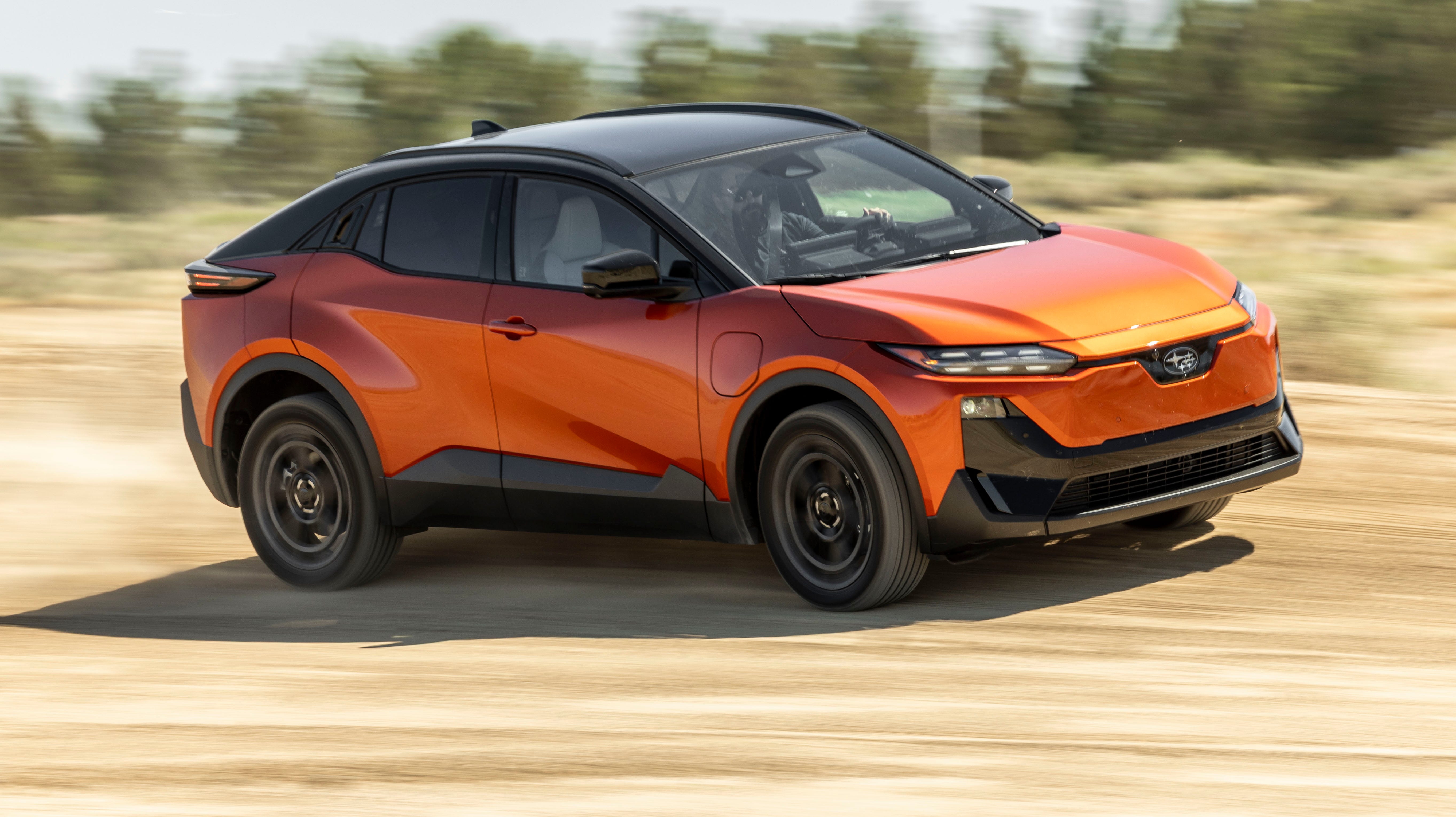
There’s always a risk when an automaker cherry picks another’s design to make a vehicle under its own banner. Sometimes a given manufacturer’s essence is baked so deeply in a vehicle’s bones that it’ll never feel like it belongs, like when Saab tried passing off a Chevrolet Trailblazer as the 9-7X. Other times it’s a net benefit to both manufacturers, such as when Toyota and Subaru tag teamed the BRZ and GR86 sports cars.
Beyond the “Toyobaru” coupes, Subaru and Toyota have been making a go at EVs together, too, with some mixed results. We were lukewarm on the initial Toyota bZ/Subaru Solterra SUVs but have so far been pleased with the bZ Woodland/ Trailseeker pseudo wagons . As for the sportier C-HR and its new 2026 Subaru Uncharted GT sibling? Well, the picture isn’t as rosy.
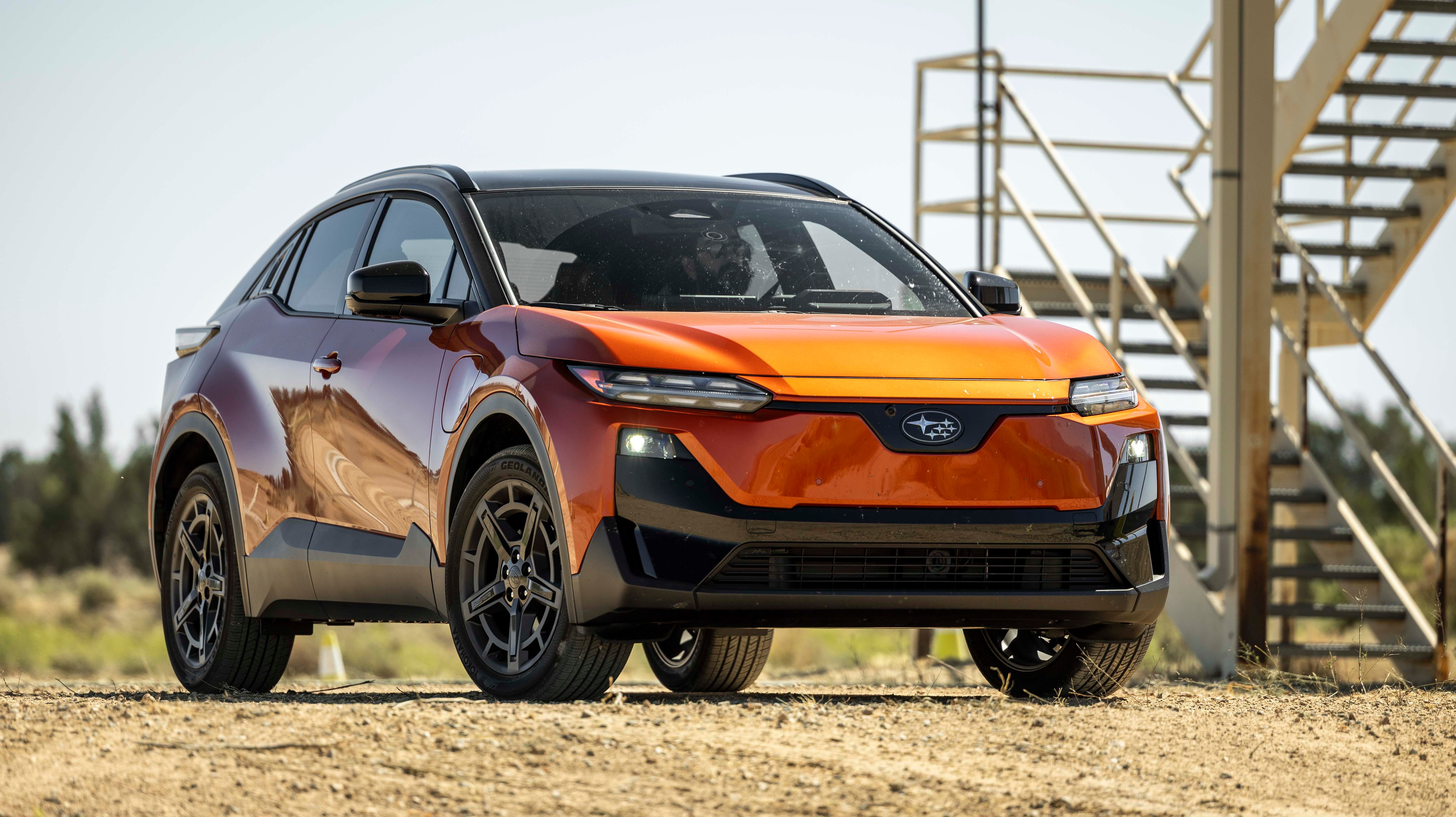
The Subaru Trailseeker and upcoming three-row Getaway (the company’s version of the new Toyota Highlander EV) might chart their own paths in the company’s EV lineup, but there’s some undeniable overlap between the Uncharted and Solterra. Both sit at the compact end of the SUV spectrum, competing against the likes of the Hyundai Ioniq 5 or Tesla Model Y, but the Uncharted is positioned as the slightly smaller, more affordable, and sportier option compared to the more practical Solterra. Despite riding on the same Toyota-developed platform and sporting the same 74.7-kWh battery pack as the Solterra, the Uncharted is 6.8 inches shorter, 0.5 inch narrower, and 1.2 shorter than the Solterra, and it rides on a wheelbase 3.9 inches shorter versus the Solterra’s.
Starting at $36,445, the Uncharted appears cheaper, too, though that’s only because the base Uncharted is front-wheel drive (making it, alongside the BRZ, one of the few vehicles in Subaru North America history to not feature standard all-wheel drive). You’ll pay at least $41,245 for an Uncharted with dual-motor all-wheel drive, while stepping up to the loaded Uncharted GT you see here will add 20-inch wheels, a panoramic glass moonroof, heated and cooled front seats, and heated rear seats, for a cool $45,245 to start or $46,215 as-tested. Total system output for the two-motor Uncharted is 338 hp, and the EPA rates the GT for 273 miles of range. We saw 236 miles in our 70-mph Road-Trip Range test.
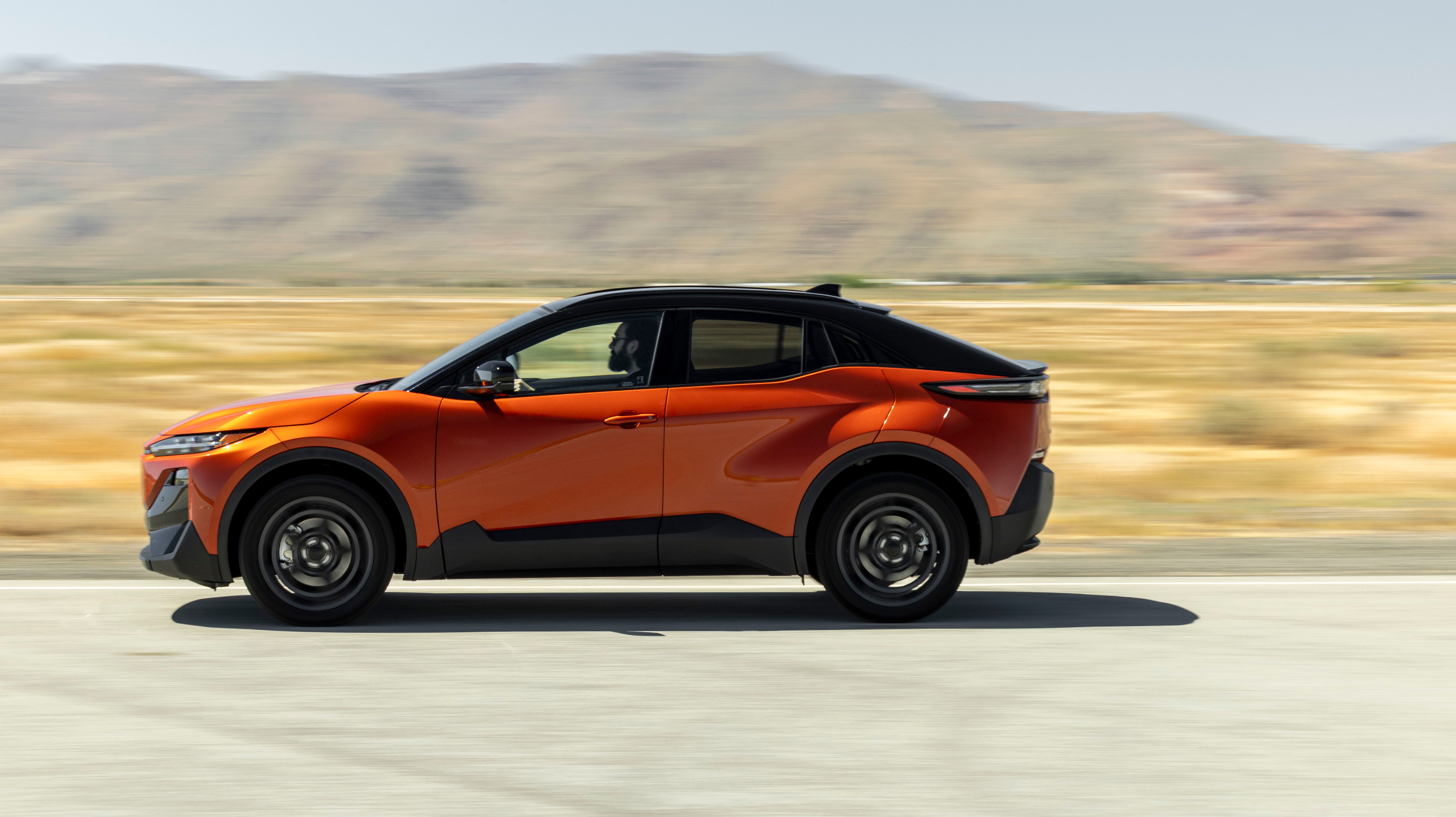
Modern Subarus don’t have a reputation for being quick, but the Uncharted GT makes a solid effort to shake that. Zero to 60 mph falls in just 4.6 seconds, and the quarter mile is accomplished in 13.2 seconds at 101.2 mph, considerably quicker than any gas-powered Subaru we’ve tested in the last decade and coincidentally just about matching our best Subaru result from a 2015 WRX STI. Middling handling (26.7 seconds at 0.70 g average on the figure-eight) and poor braking performance (130 feet stopping from 60 mph), however, preview what to expect on the road.
While new Subarus aren’t particularly quick, they do tend to ride quite well, polishing off bumps so occupants aren’t jostled—a trait that pays dividends off-road. That level of ride sophistication is missing from the Uncharted. This Subaru bobbles up and over every seam and crack in the pavement, all but ensuring those inside feel each expansion joint, subtle shift in elevation, or Botts’ dot as you go down the road. Steering is unremarkable, too. Turn-in is quick—probably overly so given the suspension’s inability to keep up—while the steering feels video-gamey. The plucky charm that characterizes most Subarus is certainly missing here.
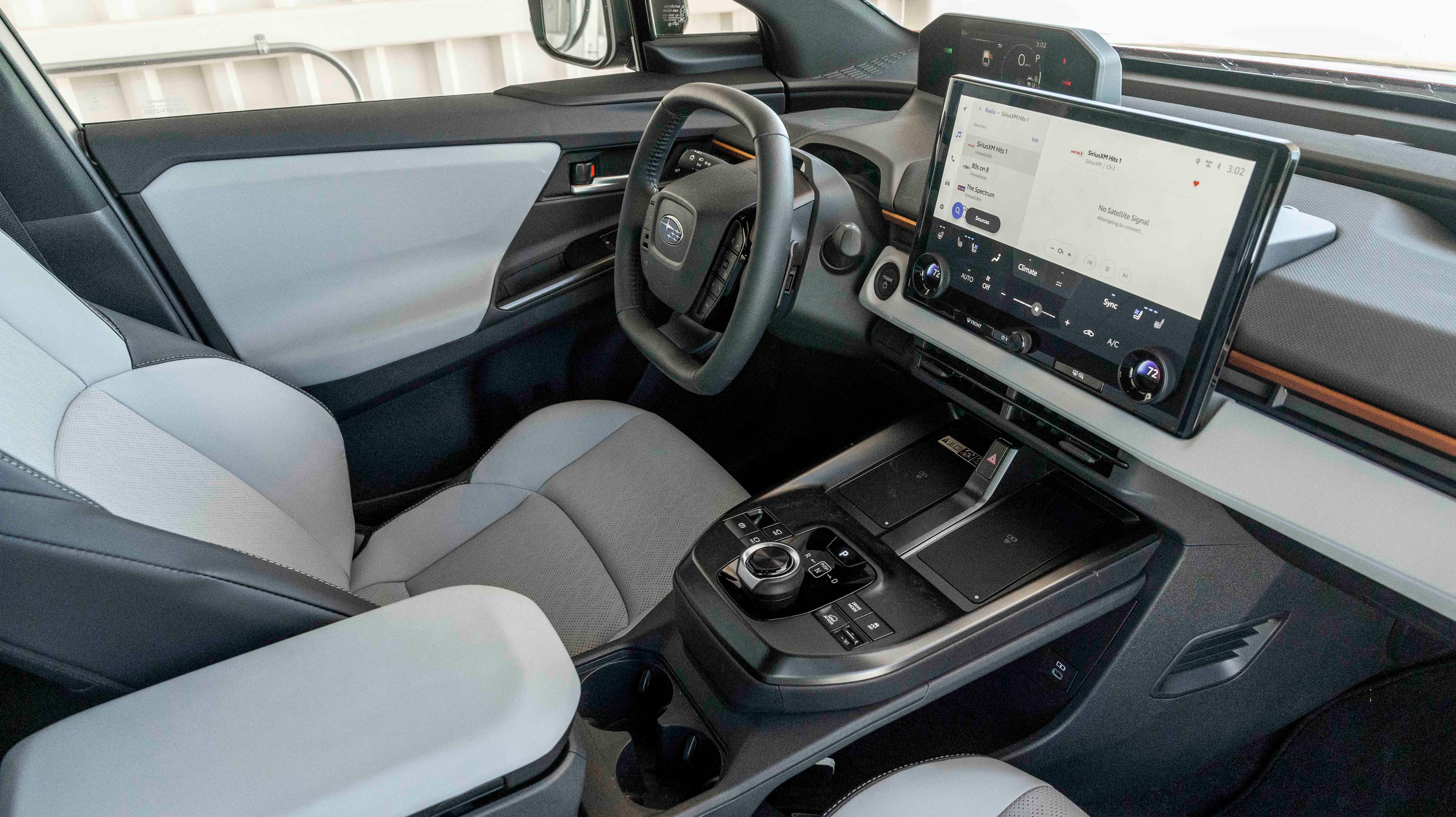
To be fair, the Uncharted is quick in the real world. Power from its twin motors is doled out smoothly (with just a touch of wiggle in the steering wheel when you’re really on it), and the brake pedal feels refreshingly normal, which is great considering there’s no one-pedal driving like you might find on many of the Uncharted’s competitors. This Subaru’s driver assist system, despite its relative simplicity compared to Subaru’s latest EyeSight system on the new Outback, also works great. The system does a great job at communicating to the driver what it “sees” on the surrounding road, manages heavy stop-and-go traffic well, and even has a touch sensor in the wheel’s rim so that it knows you’re there without constantly tugging at the wheel every few moments as you go down the road.
As for practical matters? The Uncharted misses several details Subaru typically nails. The cabin’s design is nice, but it’s not particularly well packaged. Up front, storage is in short supply, and neither the door pockets nor the cupholders can accommodate hiking-sized water bottles. Visibility isn’t great, and the seats themselves aren’t particularly comfortable after long stints behind the wheel, which is made worse by thinly padded armrests. We’re also not fans of the Toyota infotainment software; the instrument cluster is hard to read and obtuse to operate, while the central display is limited in functionality compared to the latest Subaru-developed system that debuted in the new Outback.
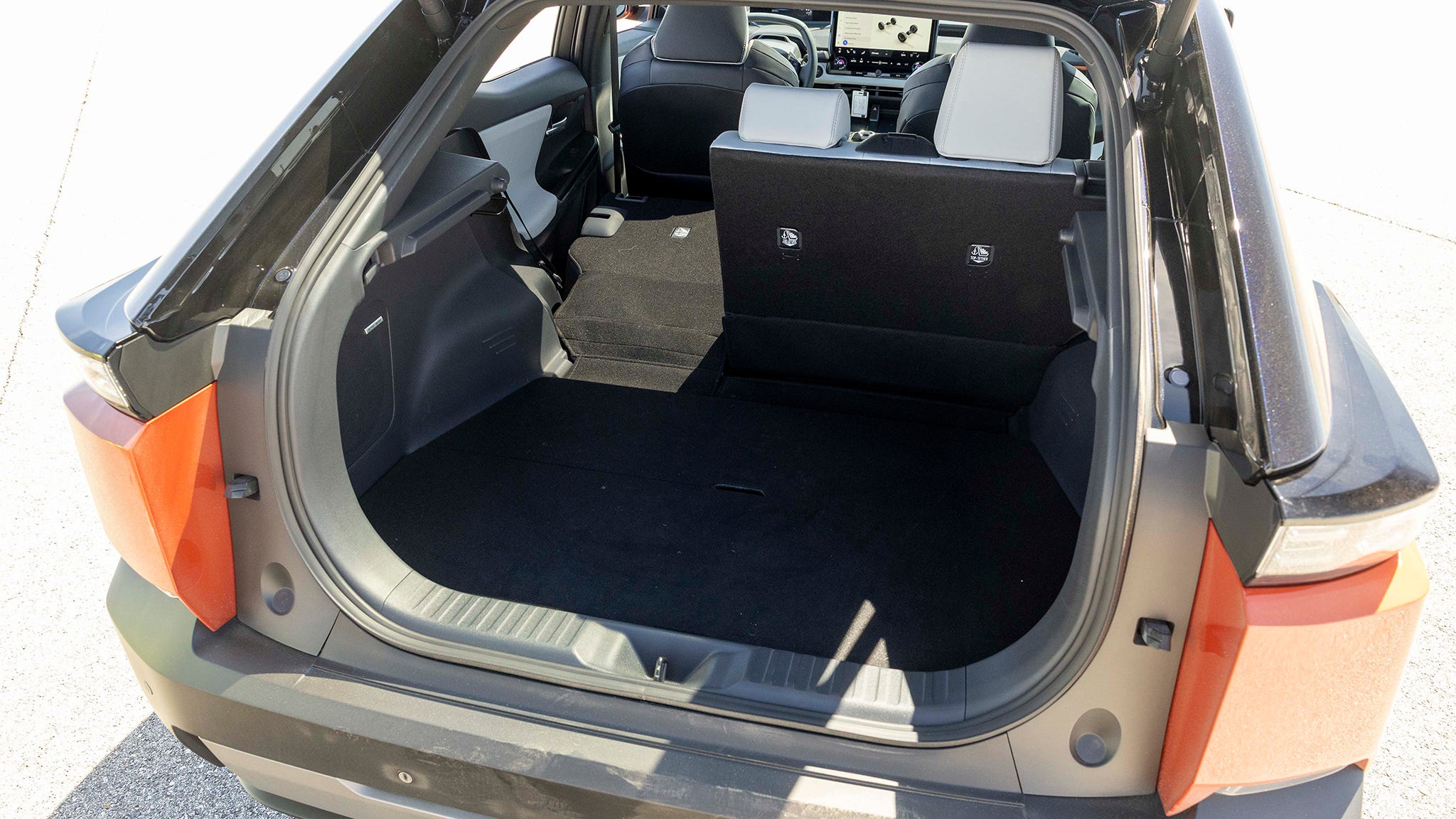
It’s more of the same in the rear of the Uncharted. The rear door openings are narrower than what you find on most other Subarus, for instance, making ingress and egress into the back seat difficult. You also pay for the stylish roofline with less storage than other similarly sized Subarus in the trunk, and the rear seats don’t fold completely flat.
A few months back when we first sampled the Uncharted we wrote : “A driver could choose the Uncharted or C-HR and get the same basic experience. But many of the reasons they might prefer Subaru are missing from the Uncharted. Limited practicality and front-wheel drive aren’t what Subaru has been about for so long. Meanwhile, in Toyota’s broader and less defined lineup, the C-HR doesn’t seem so divergent.”
More seat time in the Uncharted has only further cemented that belief. The Uncharted, for all its flaws, is a perfectly fine if forgettable electric crossover —unfortunately for the company it’s likely a far better Toyota than it is a Subaru. If you want an electric Subaru, the Trailseeker is a far more compelling option, especially north of $40K.
Comments (0)