
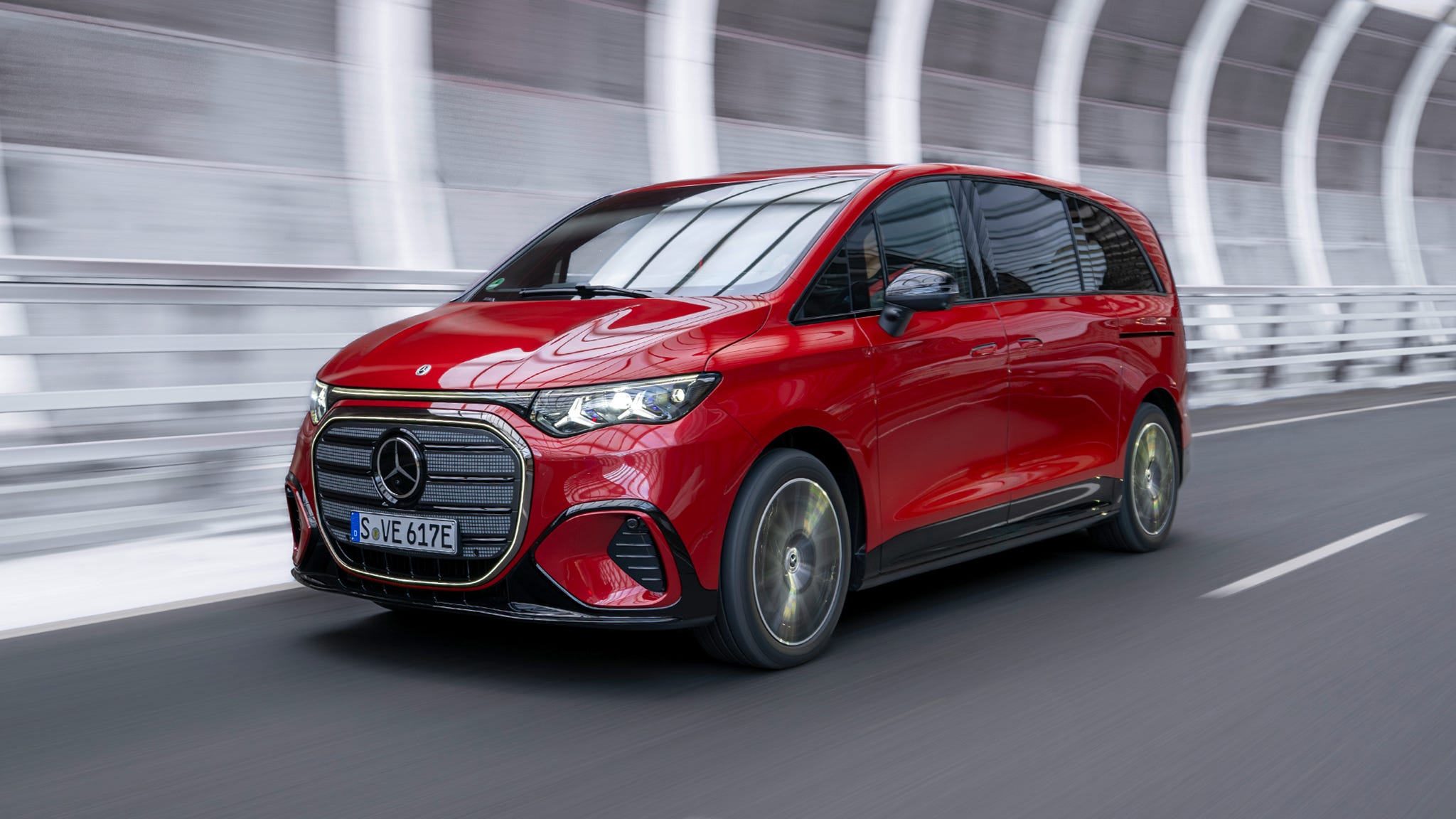
Behold, the Mercedes-Benz VLE, the automaker’s all-new, all-electric powered miniv—oops, we almost used the word Mercedes doesn’t want us to write. Instead, they’d like us to call it a “grand limousine” which, translated from German car-speak, means big sedan. It makes sense, we suppose. The VLE is expected to play the part of the old Town Car as a luxury executive transport, one step down from the even grander VLS (which will serve the role New-Worlders think of when the word “limousine” is uttered). Mercedes is also aiming to pitch the VLE as a luxury family car, like—well, y’know, a minivan. Well, friends, after our first in-depth experience with it, if any vehicle can make the minivan desirable again, it’s the VLE.
Mercedes invited us to Spain, where the VLE is built, to drive some early-production European-spec versions of the single-motor VLE300 and dual-motor VLE400. The VLEs we drove were just our first taste of the model set to arrive here by late in 2027; all the vans we drove were short-wheelbase Euro models. America (and, presumably Canada) will get the extended-length version, which doesn’t merely add a few extra inches out behind the rear axle like minivans used to do. Long-wheelbase VLEs are stretched at the B-pillar, between the front and back doors. And while we can’t help but think of the VLE as a minivan, it’s anything but mini; the short-wheelbase VLE is nearly as long as a Toyota Sequoia, while the stretched version is 4 inches longer than a Cadillac Escalade and nearly a foot longer than a Honda Odyssey.
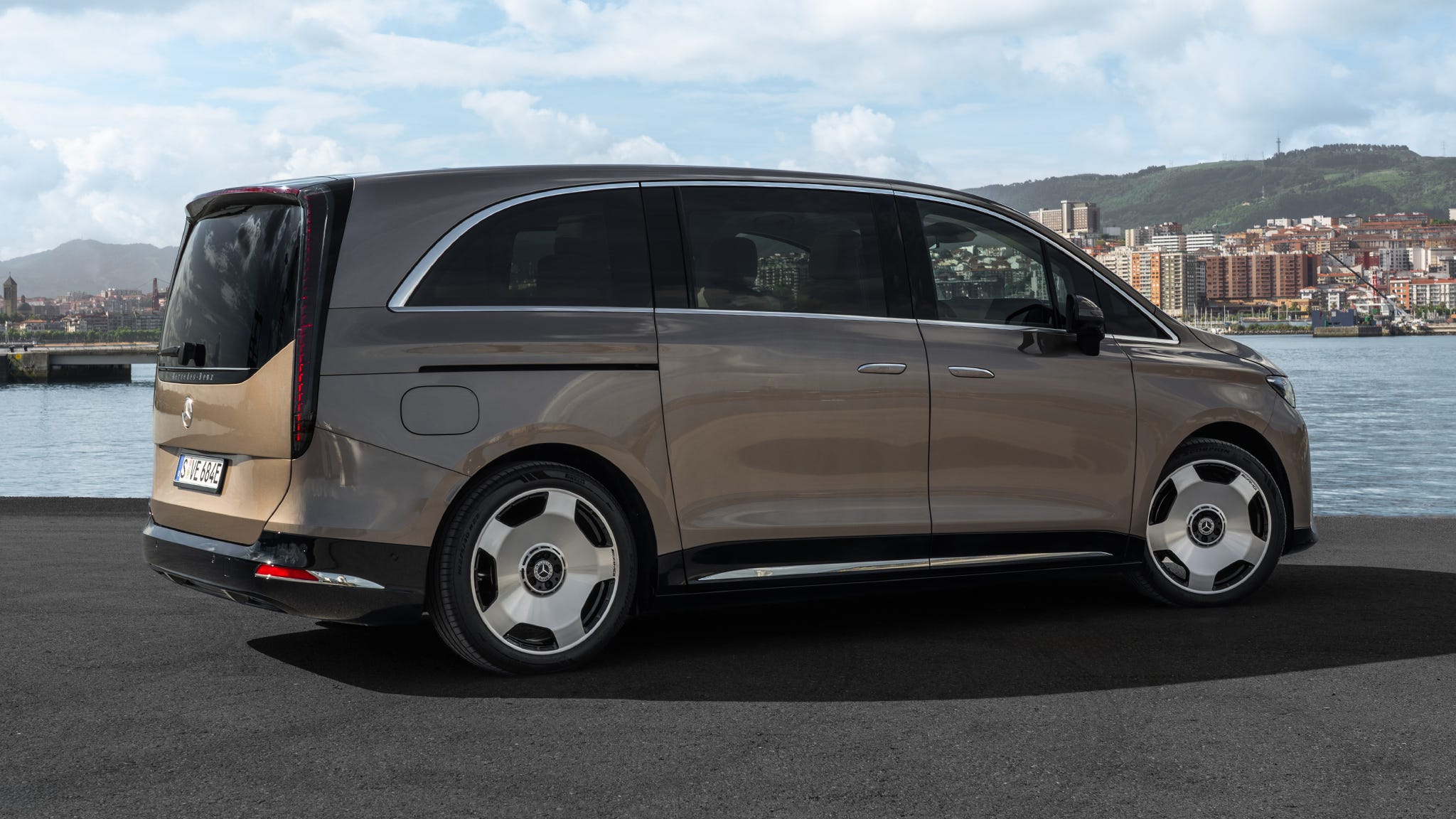
You’d expect its massive size to make the VLE as maneuverable as a bus. That’s a perfect segue into our favorite feature: its four-wheel steering system that can turn the rear wheels up to 7 degrees. At low speeds, the rear wheels turn in the opposite direction to the fronts and make the VLE feel like it’s bending itself around corners. Mercedes sent us down some narrow Spanish streets designed to barely accommodate the likes of a minuscule Seat 600, and the VLE turned out to be no harder to maneuver than any of today’s modern teeny-tiny Euro hatches.
The need for this system is far less pronounced in the U.S., where even the long-wheelbase VLE should have no issues maneuvering in our Ram 2500–sized streets, though the extra length translates to a turning circle about the same as a GMC Yukon. (Still kind of impressive, as the Yukon is nearly half a foot shorter in length.) Still, here’s the really cool part: The VLE’s self-parking (and unparking) system can turn the rear wheels any way it pleases and crabwalk the VLE into tight spots. As you’d expect, the rear wheels turn in the same direction as the fronts at higher speeds for more stability during aggressive lane changes, though that’s of doubtful benefit, for reasons we’ll expand on momentarily.
So, what about the powertrain? America will get the dual-motor VLE400. Its two motors work together to produce 416 hp and 420 lb-ft of torque. As you’d expect, the VLE400 feels punchy but not overly quick, at least not by dual-motor EV standards. Mercedes claims a 0–62-mph time of about 6.5 seconds, and that’s for the lighter, shorter-wheelbase version of the van. No drag racer this, then.
We also got a chance to drive the VLE300, which uses a single motor that delivers 272 hp and 321 lb-ft to the front wheels. Mercedes has not decided whether this powertrain will make it here, and we understand the dilemma. The single-motor VLE is torquey but tepid, likely too slow for private buyers. For the hotels and luxo-taxi services that will likely form a sizeable portion of the VLE’s American buyer base, and who will be more concerned with smoothness than speed, the VLE300 might offer lower purchase and running costs.
Said motors draw power from a big, 115-kWh battery pack using a nickel-manganese-cobalt chemistry. It’s way too early for EPA range figures, but on the hyper-optimistic European WLTP ratings cycle, Mercedes claims 390 miles for the dual-motor VLE400 and 435 miles for the single-motor VLE300. There’s no set formula for converting WLTP to American EPA range—if anyone does figure it out, we’re going to recommend them for a Nobel prize—but we think it’s likely the VLE400 should comfortably top 300 miles, and the single-motor VLE, if it does get here, could exceed 350.
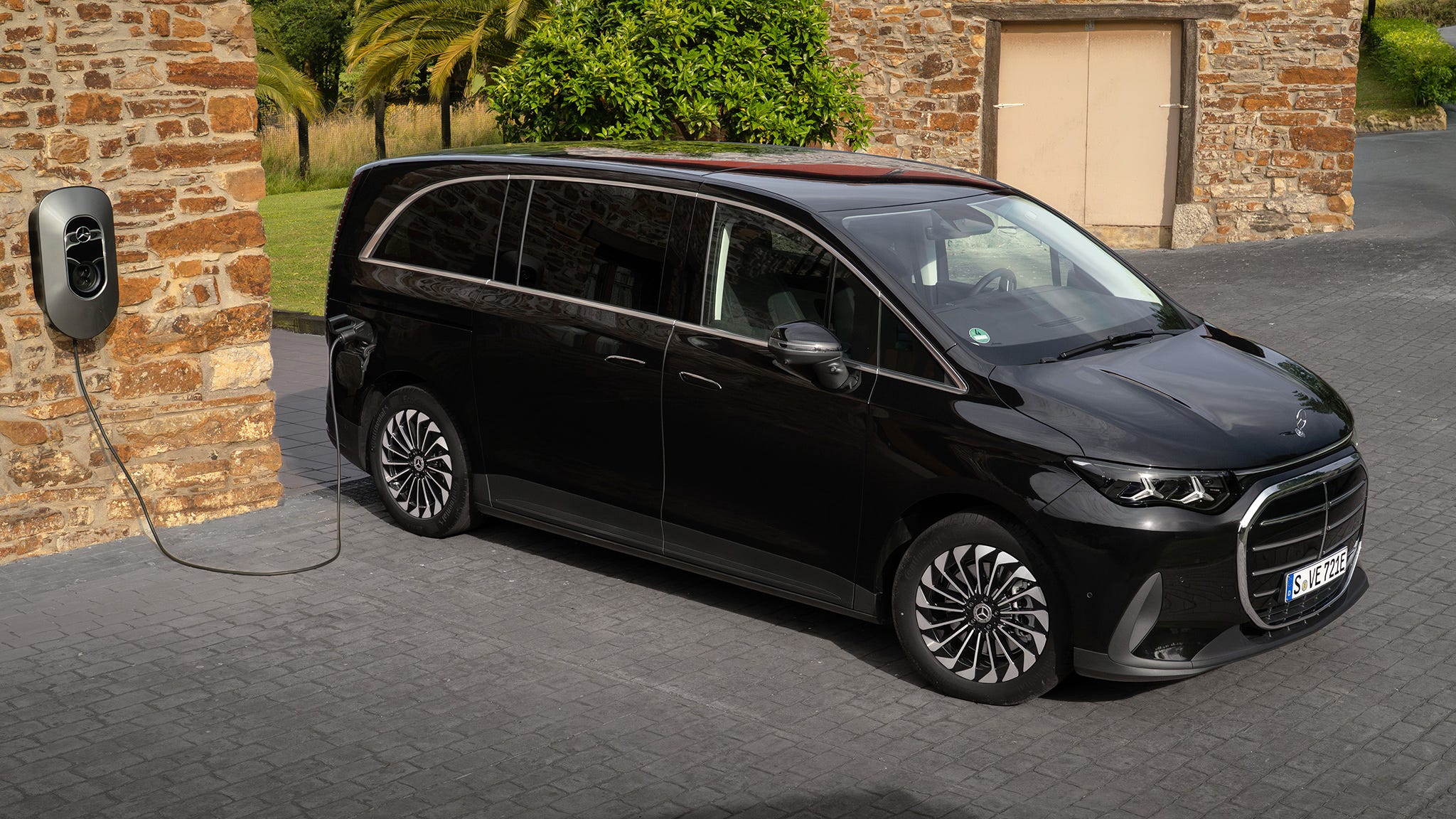
As for charging, the VLE uses an 800-volt architecture, and Mercedes says it can add 355 km of WLTP range in 15 minutes. Guesstimating at a WLTP-to-EPA conversion, that’s about 180 miles. However, the VLE uses a standard CCS charging port, not the Tesla-compatible NACS connector, which limits fast-charging opportunities. Dial up the battery screen on the VLE’s center display, and it shows the highest possible charging speed for its current state of charge, handy for deciding on one’s fast-charging strategy.
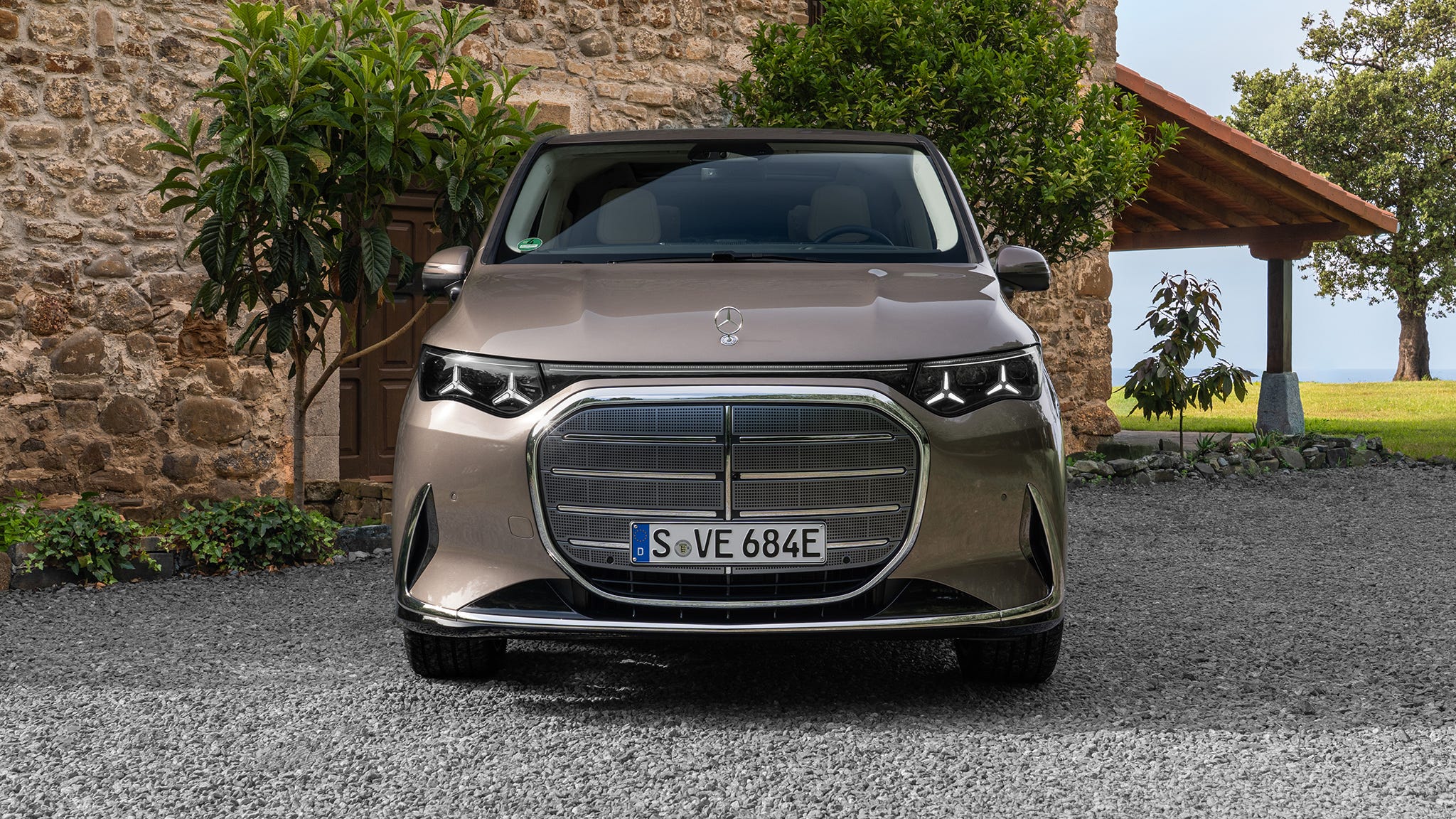
What about the rest of the driving experience? The VLE’s Airmatic suspension system has been developed to placate rather than play. The vehicle’s soft ride, combined with the smooth and silent powertrain and noise-insulated cabin, creates an unexpected feeling of serenity. But dive into a curve, and the VLE leans more than you’d expect from a vehicle with a heavy battery under its floor. Push harder, and it makes the sort of quiet fuss one expects from a maître d’ when one wears a T-shirt into a restaurant where a tie is expected. There’s no scene to be made, but it will be obvious your actions are regarded with definitive distaste.
Speaking of batteries under the floor, you’d expect that to make for an unacceptably high step-in height, but Airmatic takes care of that. The VLEs we drove automatically lowered their ride height by 40mm (about 1.6 inches) when parked, raising to cruising height when turned on.
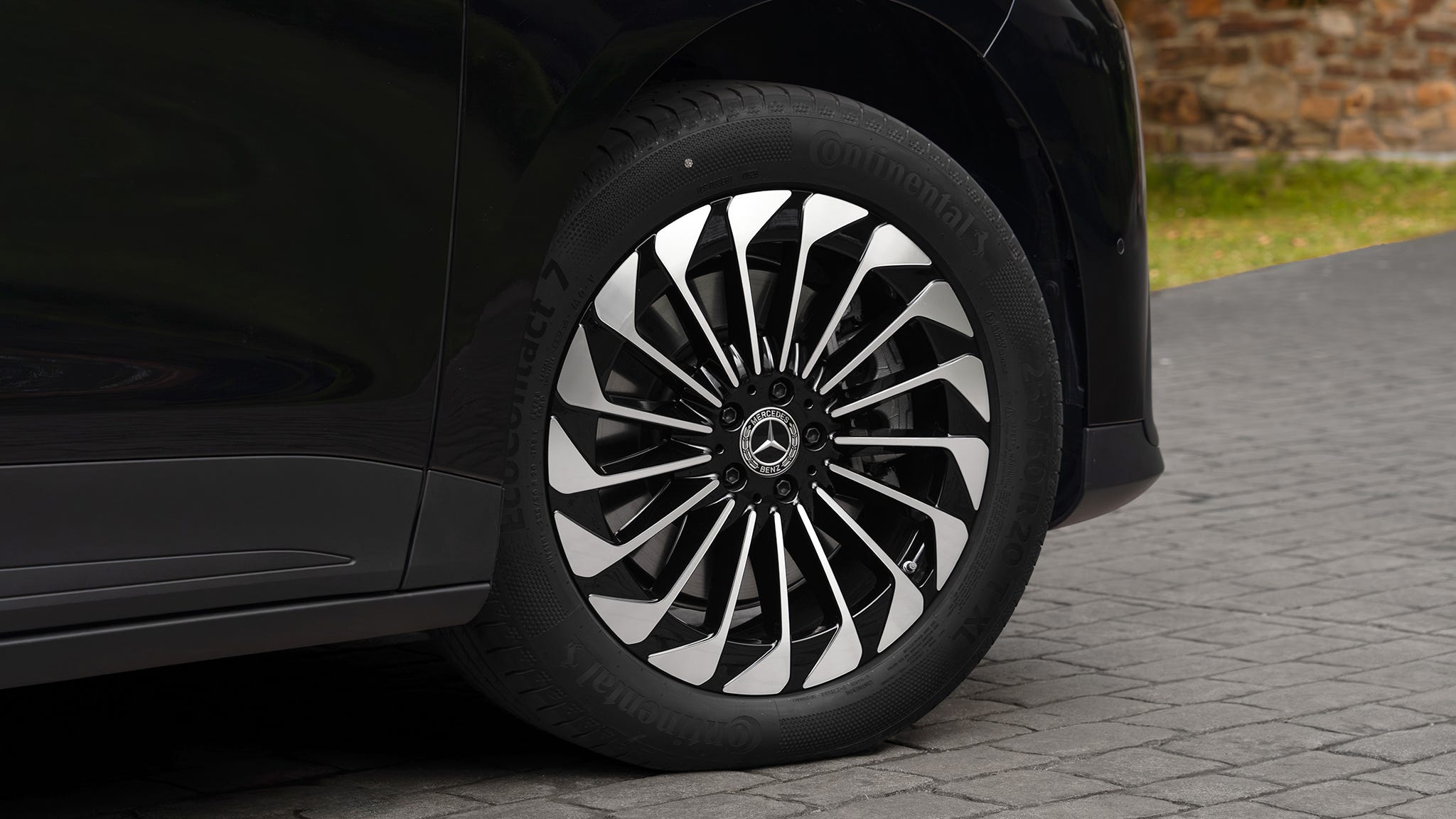
Like most EVs, the VLE features multiple levels of regenerative braking. Both Normal and Strong modes provide one-pedal driving and will bring the VLE to a stop without tapping the traditional brake pedal. Intelligent mode shuts regen off until there’s something ahead of you worth stopping for, like slow traffic. While we love one-pedal driving, we got into the VLE’s role as a chauffeur-driven vehicle and used Intelligent mode for maximum smoothness.
Mercedes’ engineers showed us another nifty bit of technology, and we can’t think of a way to neatly segue into it from our narrative, so we’re going to clumsily insert it here: The VLE “remembers” your path for the last 500 or so feet you’ve driven. Let’s say you turn down a narrow alley, weaving through trash cans and parked delivery trucks, only to find it dead-ends and there’s no room to turn around. No sweat about backing out: Using the parking system, you can put the VLE in reverse, and it will steer itself down the same path you took to get into this mess. It even limits speed to 8 mph, so you can back out with the accelerator to the floor if you are so inclined. Naturally, if it finds a new obstacle, the VLE will stop and hand control back to you.
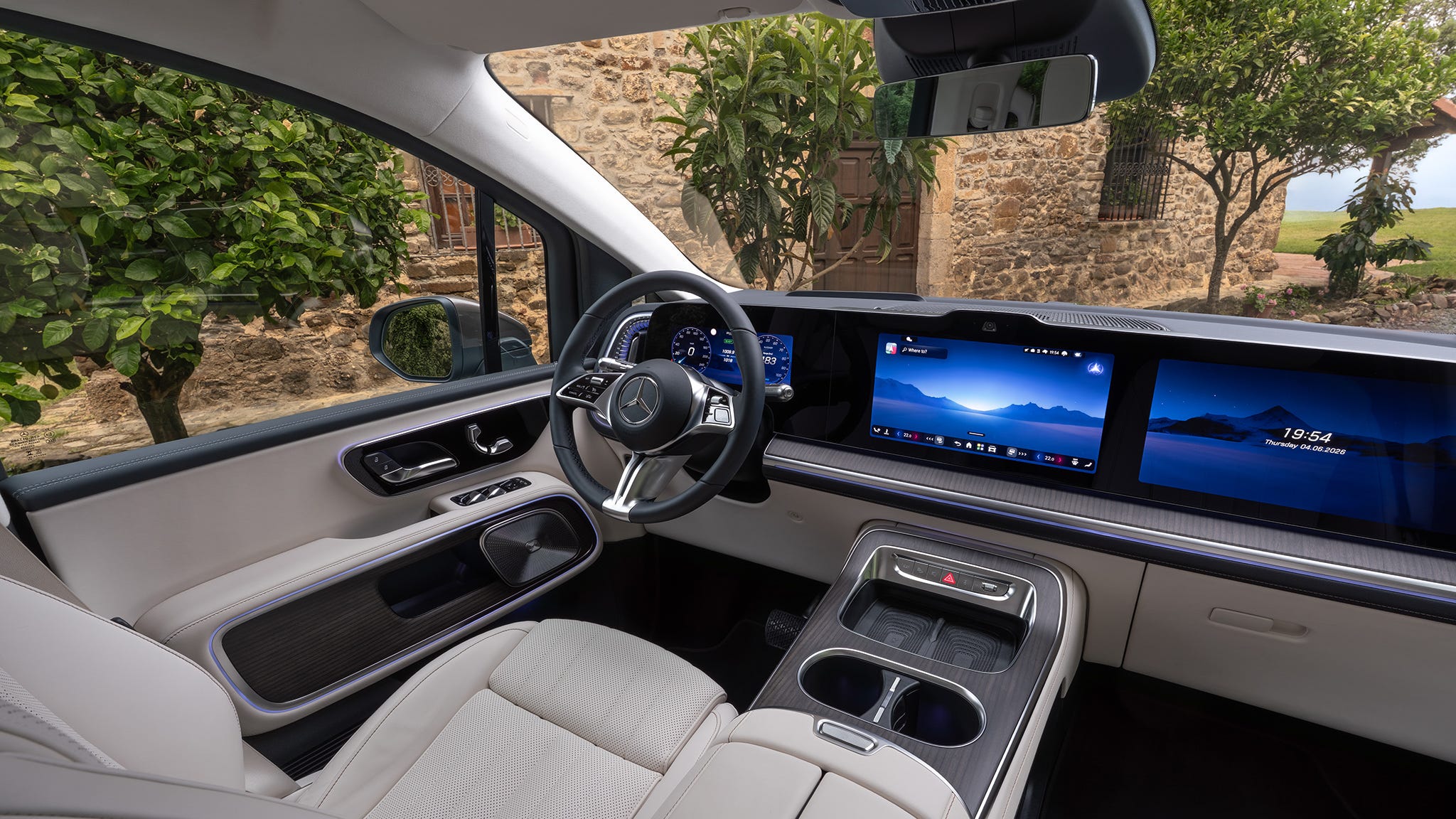
The VLE’s interior is such a thing of beauty that we’ve given it its own review, which you can find here. We’ll give you the highlights, particularly as they concern the driver, who faces three crisp, colorful screens: a 10.25-inch display for the driver and dual 14-inch screens for the center position and the passenger. There’s also a huge head-up display. The VLE runs Mercedes’ latest MB.OS operating system, which is kind of straightforward most of the time. But it also has a great voice recognition system, and when we couldn’t figure out how to turn on the HUD, we simply asked for help: “Hey, Mercedes, turn on the head-up display.” Presto, it worked.
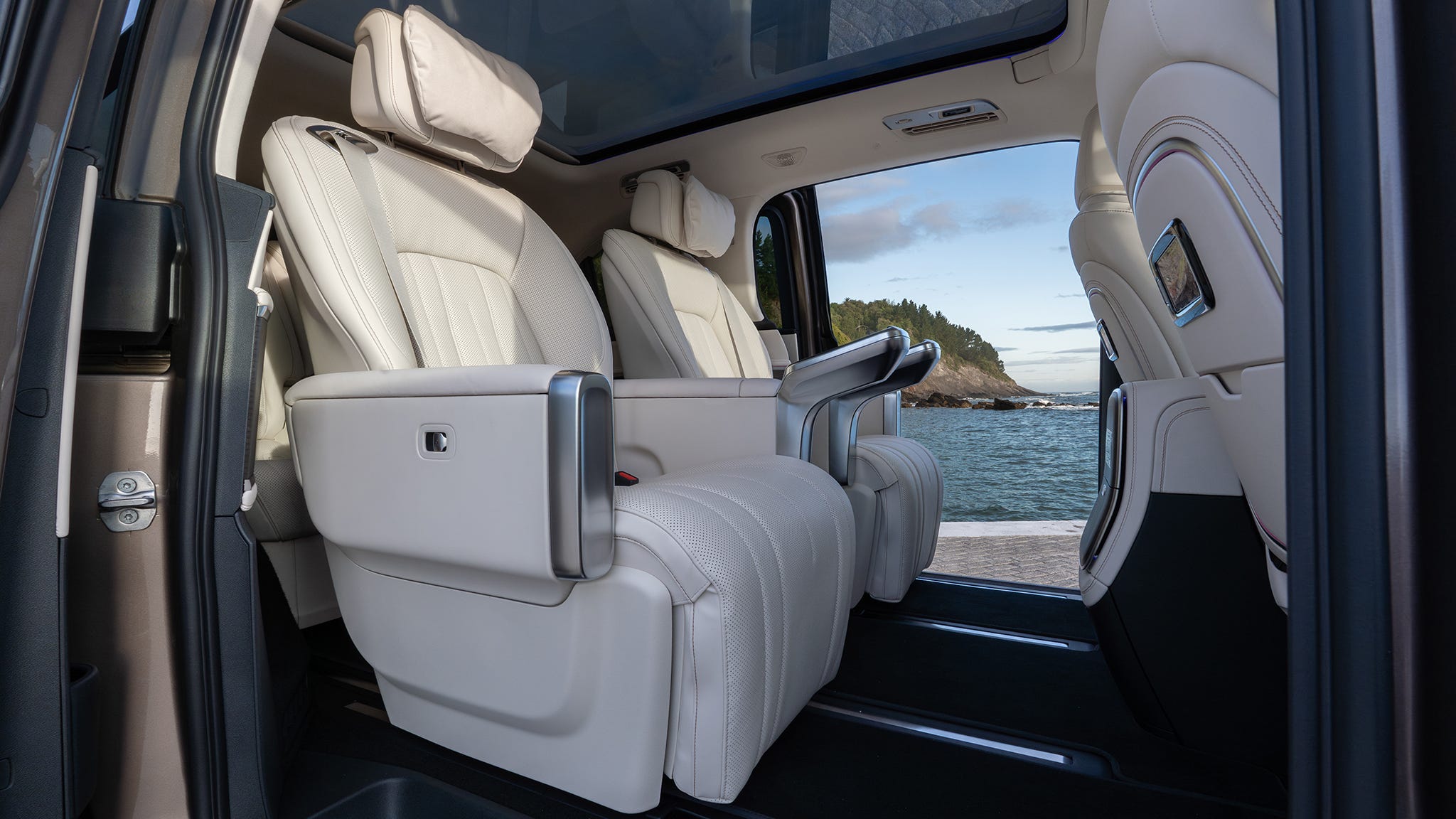
As for the rest of the interior, Mercedes will offer a plethora of seating arrangements for the second and third rows, including power-reclining seats with footrests and an epic 31-inch screen that can be used for movies, games, or videoconferences. (Check out our interior review for more.) We sampled all options and combinations and can report that they are all comfortable, roomy, and nicely trimmed. That’s one of the details we love about the VLE: All three rows are finished and trimmed to the same high degree.
The VLE is expected to arrive in the U.S. in the second half of 2027 as a 2028 model, and it’s likely your first opportunity to ride in one will occur when traveling to or from an airport. No doubt livery companies will fall all over this thing, especially in cities that have a good EV charging infrastructure.
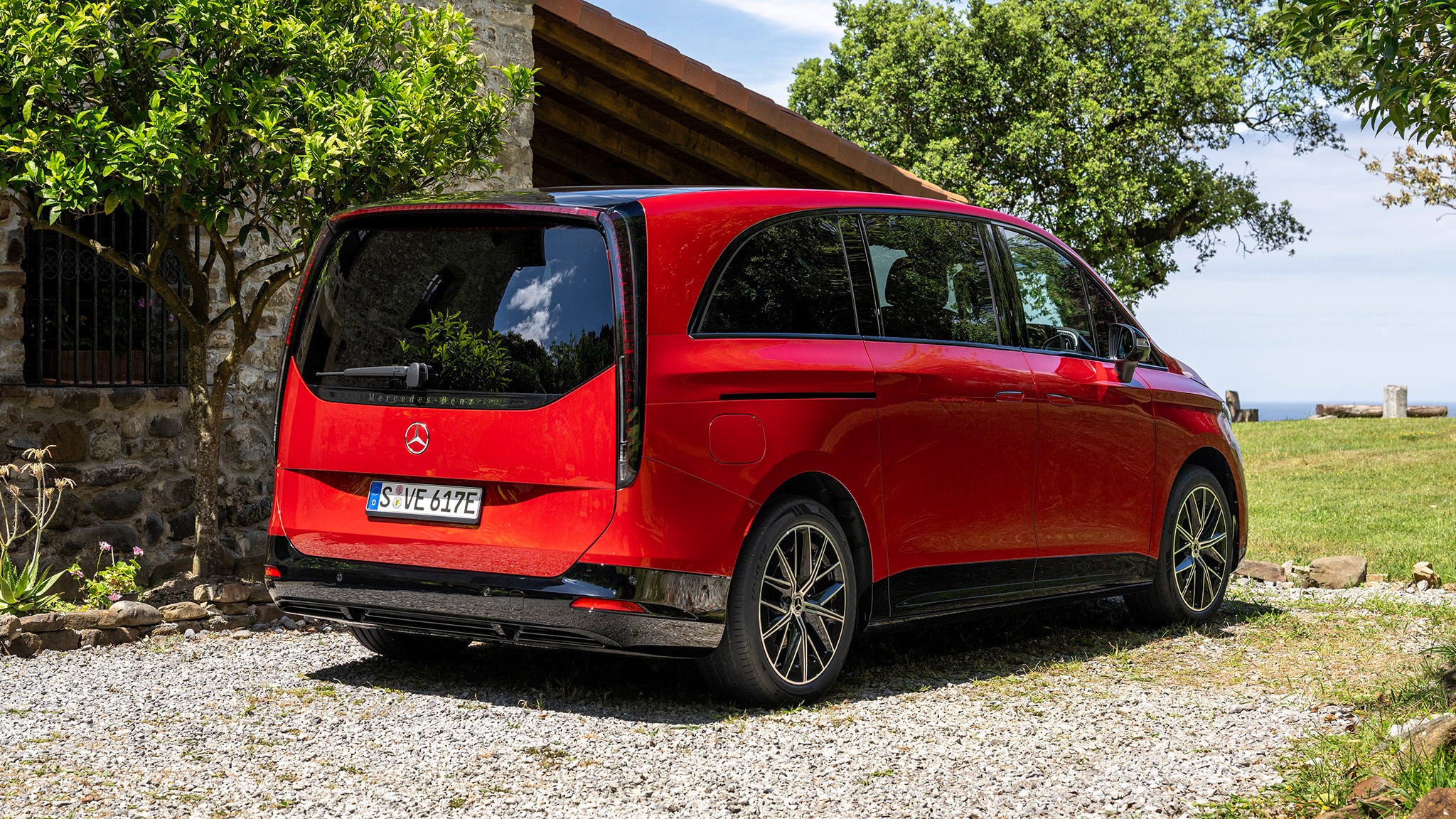
That’s fine, but we think the VLE makes one hell of a good—brace yourselves, Mercedes denizens, we’re going to say it—minivan. With its comfortable seating, huge windows, smooth ride, massive sunroof, comfortable environs, and (we hope) reasonably long range, the VLE makes one heck of an adventure vehicle, and we thought how nice it would be to settle in with a couple other couples and go see the sights.
We don’t yet know pricing, and our best guess is somewhere in the $80,000 to $100,000 range depending on specifications, which is a lot for modern American families. For those who can afford it, the VLE is the vehicle that could make minivans “A Thing” again—whether or not Mercedes admits that’s what the VLE is. We can’t wait to see the U.S.-bound iteration.

Comments (0)