
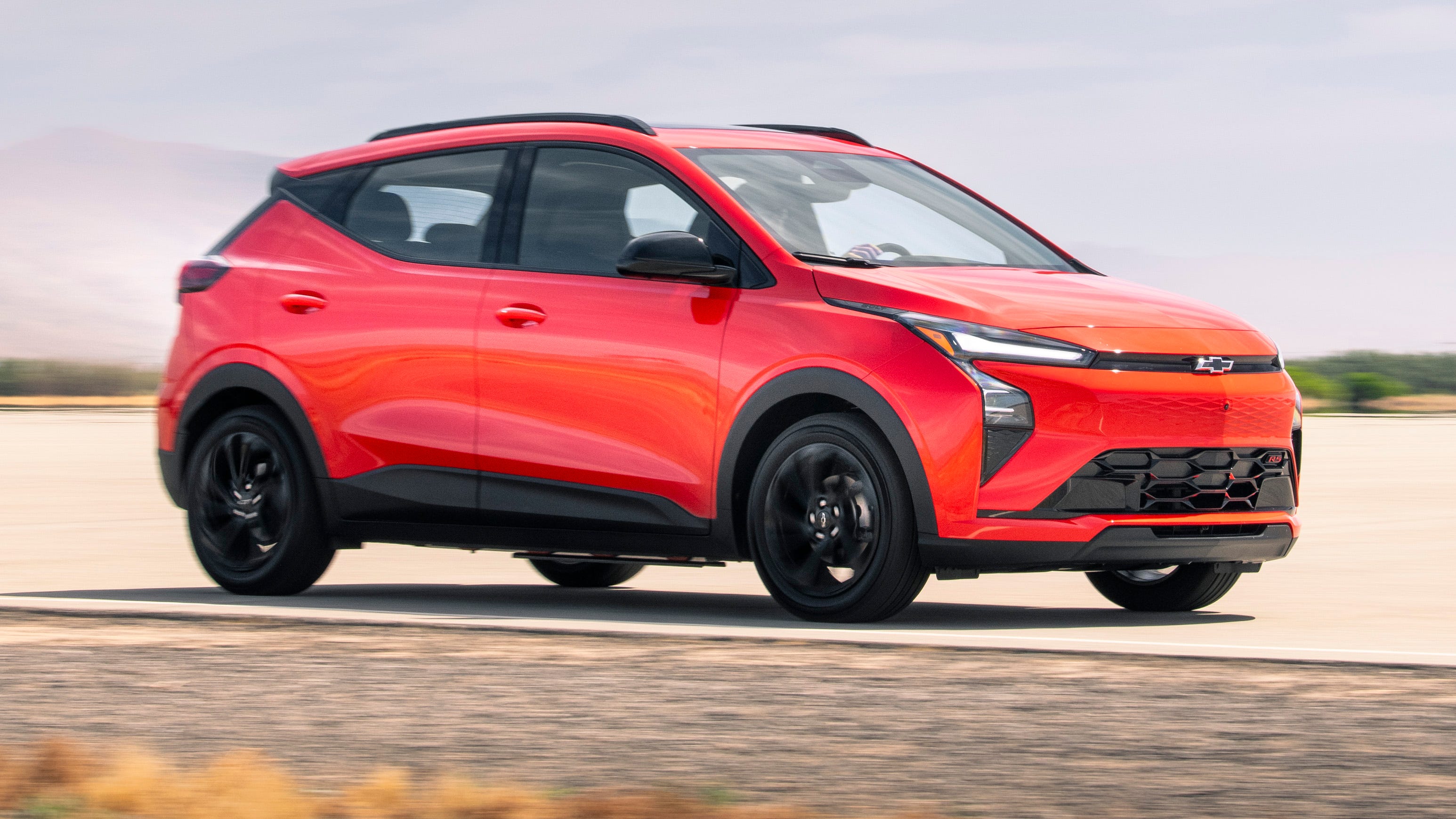
When the Chevrolet Bolt EV first arrived roughly a decade ago, it was celebrated for making longish-range electric driving feel attainable. Our first impressions also found a car with a feisty 200-hp motor, useful one-pedal capability, and an overall ride that benefitted from planting a heavy battery low in a short, tall body. It was quick without being exotic, practical without being joyless, and game changing enough to be named our 2017 Car of the Year.
That personality endured as the Bolt aged, and the lineup added a larger Bolt EUV sibling. The bargain kept getting better, and its eager, efficient, and slightly unpolished nature stayed familiar, until it was discontinued after the 2023 model year. Now the Bolt is back—sort of. The 2027 model is essentially a revised Bolt EUV that Chevrolet currently only plans to produce in a limited run as opposed to embarking on a long-haul nameplate revival. That makes this First Test feel less like an in-depth examination and more like a closing argument.
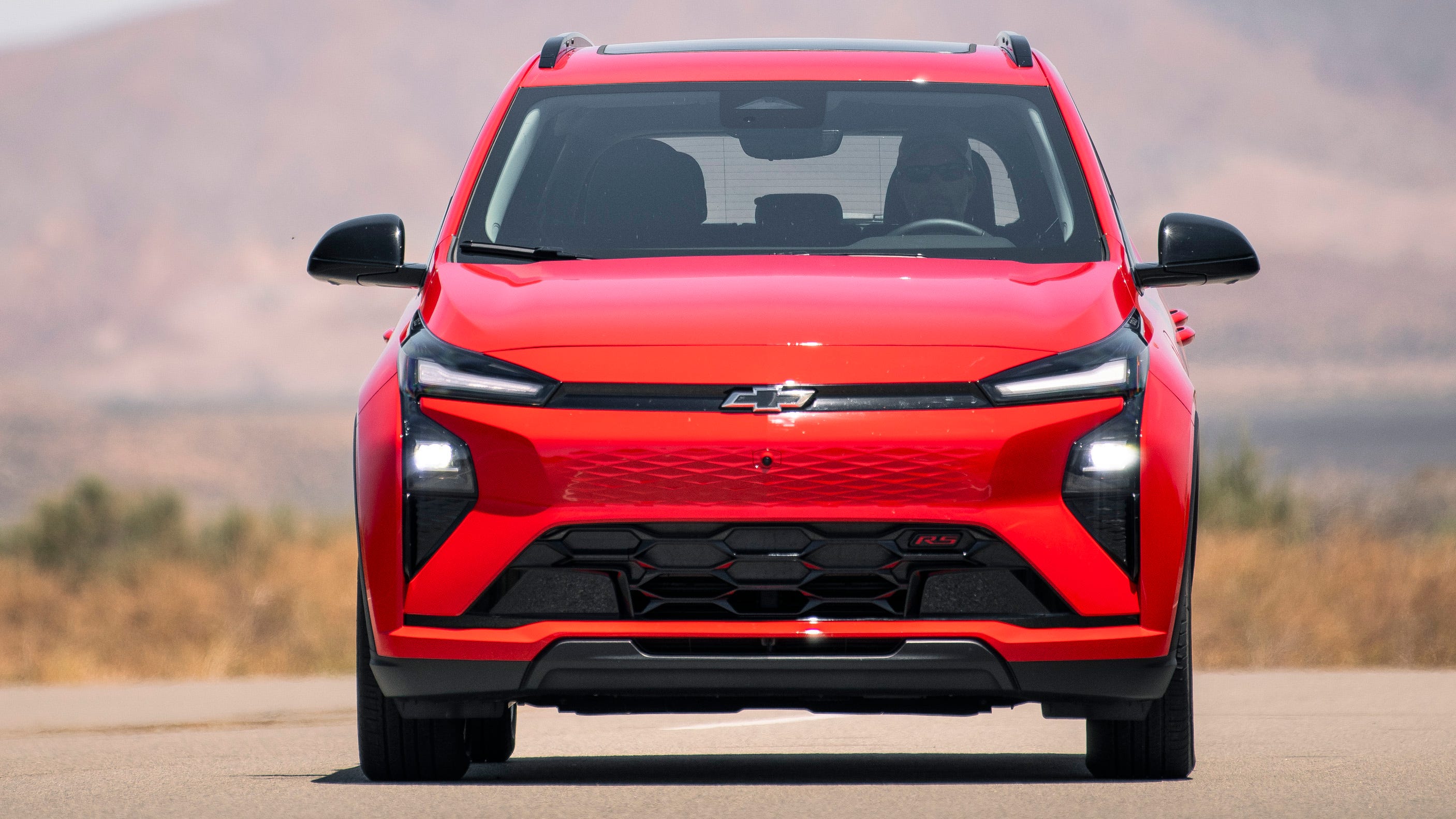
At 210 horsepower, the front-motor-only Bolt makes a smidge more horsepower than the old Bolt EV and EUV, but it loses a massive chunk of torque at only 169 lb-ft—almost 100 lb-ft less than the last models. That trade-off is noticeable when you hit the accelerator from a stop. Whereas earlier Bolts had that familiar EV snap right off the line, the 2027 Bolt RS we tested eases into motion more deliberately, even in Sport mode. Tour and Sport modes delivered essentially the same straight-line performance at 6.7 seconds from 0 to 60 mph, and our quickest launch required a little pedal overlap to wake everything up.
Once rolling, though, the new car settles into a familiar rhythm. It feels quick enough to navigate normal traffic, on-ramps, and everyday commuting, and despite being the heaviest Bolt we’ve tested, its new drive unit mostly cancels out the extra weight and lower torque. The result is a car that posted the exact 60 mph number as a previous Bolt EUV we tested and lands only a beat behind the lighter Bolt EVs. It also stays competitive with the latest Nissan Leaf, which offers more torque but also weighs substantially more. Less punchy? Yes. Slower by the stopwatch? Not really.
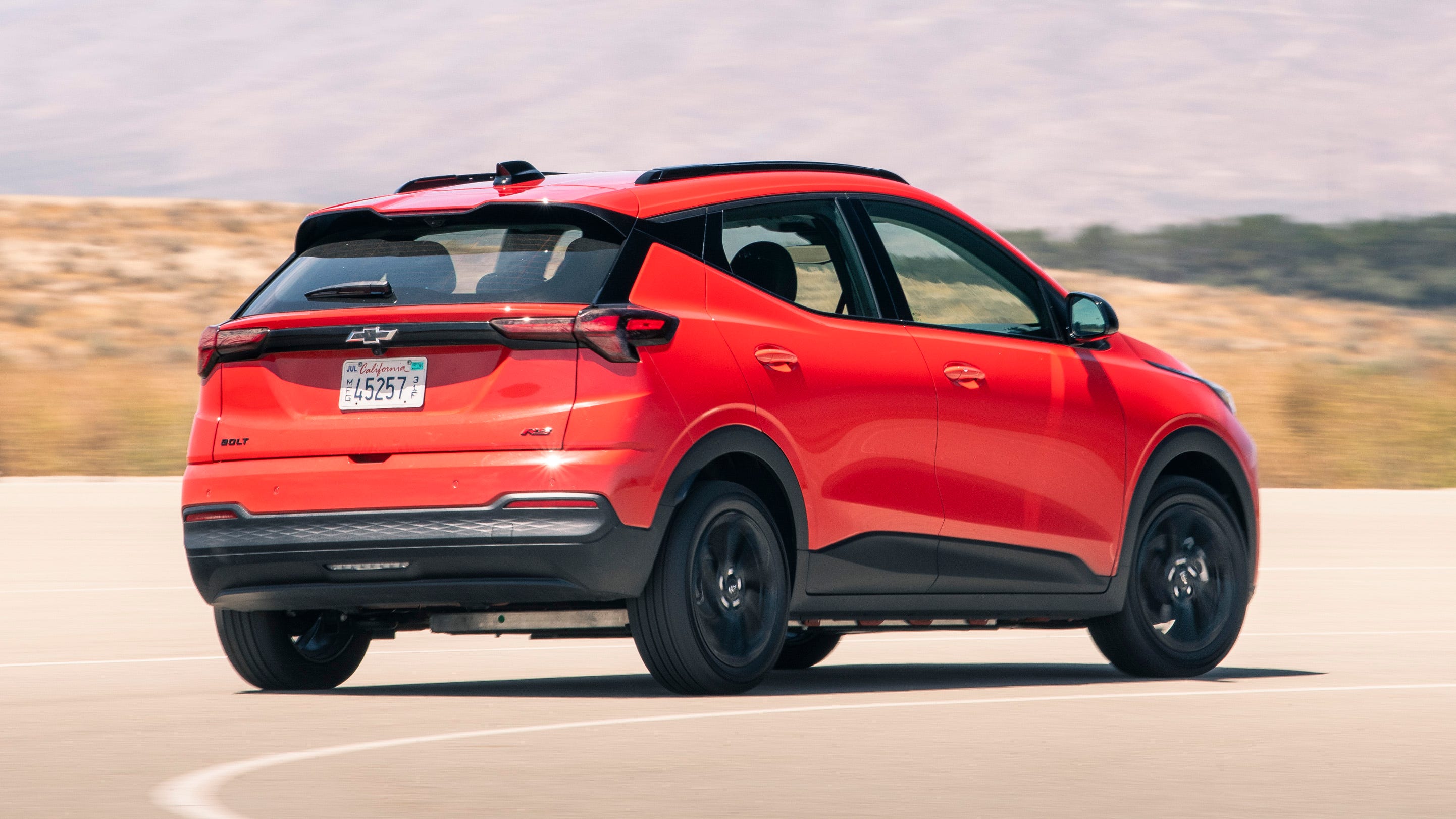
The 2027 Bolt still drives like a Bolt, which is both a compliment and a warning. Its small footprint, light steering, and low-mounted battery make it easy to toss around, and on smooth pavement the Chevy feels more alert than its budget-EV mission suggests. In Sport mode with traction control off, it turns in willingly, settles into mild understeer, and behaves in a tidy, predictable way.
The problem is what happens when the road gets messy. The new Bolt rides on the longer-wheelbase EUV platform, but its track remains narrow by modern small-car and small-SUV standards. Although the battery helps keep the body from feeling tipsy, the chassis doesn’t have the broad-shouldered stance of newer, wider electric crossovers . Push it hard, and the Bolt asks a lot from its outside tires. Try to add power before the wheel is straight, and the electronics noticeably rein things in. It can feel alert and cooperative but not especially planted or eager to power out of a corner.
Its overall ride remains the car’s bigger flaw. Previous Bolt EUV reviews criticized rough impacts, suspension noise, and poor body control, and the 2027 car doesn’t fully escape that inheritance. Its suspension is soft without being plush, with enough compliance to feel light on a handling course but not enough discipline to keep the body tied down on imperfect pavement. The car’s dynamic test numbers improve over the old EUV and land close to the lighter Bolt electric hatchbacks—and even the latest Leaf—but they don’t erase the everyday compromise. The Bolt still grips and changes direction better than expected; it also still bounces and impacts too harshly over bad pavement.
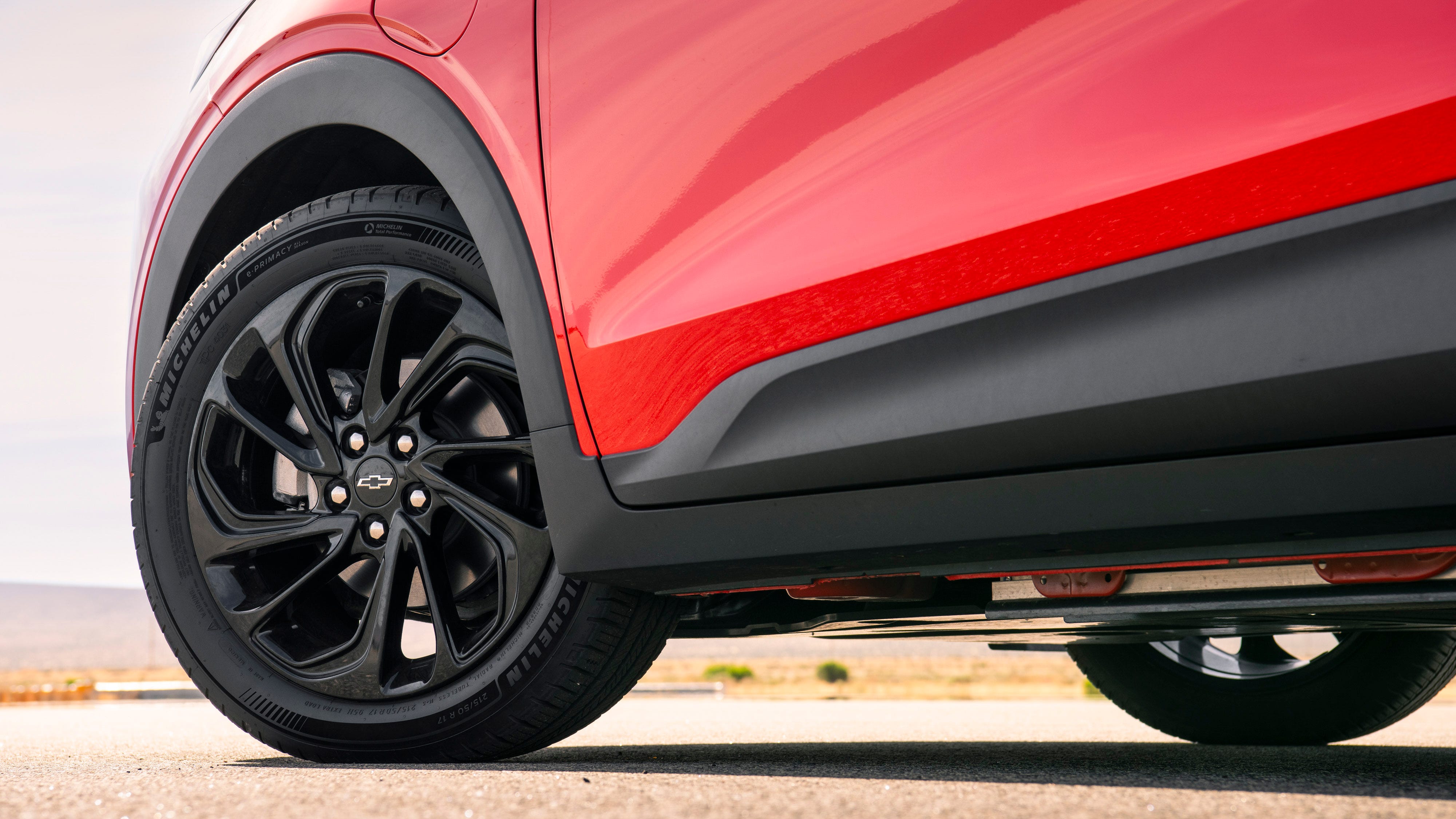
The new Bolt’s brake pedal is one of its more convincing dynamic improvements. In instrumented testing, at 124 feet from 60 to 0 mph, the Chevy stopped shorter than the old EUV and essentially matched the lighter hatchbacks we’ve previously tested. That’s a solid result for a narrow-tired, front-drive EV carrying more weight than any previous Bolt in our testing history, and it also edges the latest Leaf, though the Nissan’s extra mass gives it a tougher job.
On the track, the Bolt’s pedal felt firm, smooth, and easy to trust, with some expected dive but otherwise composed body motions. The ABS calibration also stood out in a good way, working with the driver rather than against them during hard stops and quick transitions. Away from the controlled surface of the test track, though, the picture became less tidy. Under hard braking, especially when the pavement changed to something smoother, ABS could trigger sooner than expected, even at relatively low speeds.
The regen interface is new, too, but we were less taken with it. Earlier Bolts layered deceleration through a shifter-selected Low mode and a steering-wheel Regen on Demand paddle; the 2027 Bolt simplifies that into three one-pedal settings that most other General Motors EVs have adopted: Off, Normal, and High. The problem is that both active regen modes are fairly aggressive. Owners may adapt over time, especially in stop-and-go driving, but during our drive we usually preferred to switch one-pedal operation off entirely.
The Bolt’s range story is more about refinement than reinvention. On paper, the battery pack is the same size as before: The previous Bolt EV and EUV used a 65.0-kWh pack, and so does the 2027 model. What has changed is the battery’s chemistry. The new model switches to lithium-iron-phosphate, which helps lower cost and improve charging durability while preserving the core appeal that has always made the nameplate work: usable electric range in a small, relatively affordable package.
Our 70-mph Road-Trip Range test number is less flattering. At 217 miles, the 2027 Bolt gave back a meaningful chunk of its 262-mile EPA-estimated range at highway speeds, which matters because this version finally addresses one of the old car’s biggest weaknesses thanks to its quicker peak DC charging speed and a NACS port, which allows easy access to the Tesla Supercharger network. The new Bolt should be easier to live with during longer drives than before, but its highway range still makes it feel more like an excellent commuter than a road-trip EV. The latest Leaf makes that distinction clearer: Its EPA number is slightly lower, but it traveled farther in our highway-range testing despite being substantially heavier.
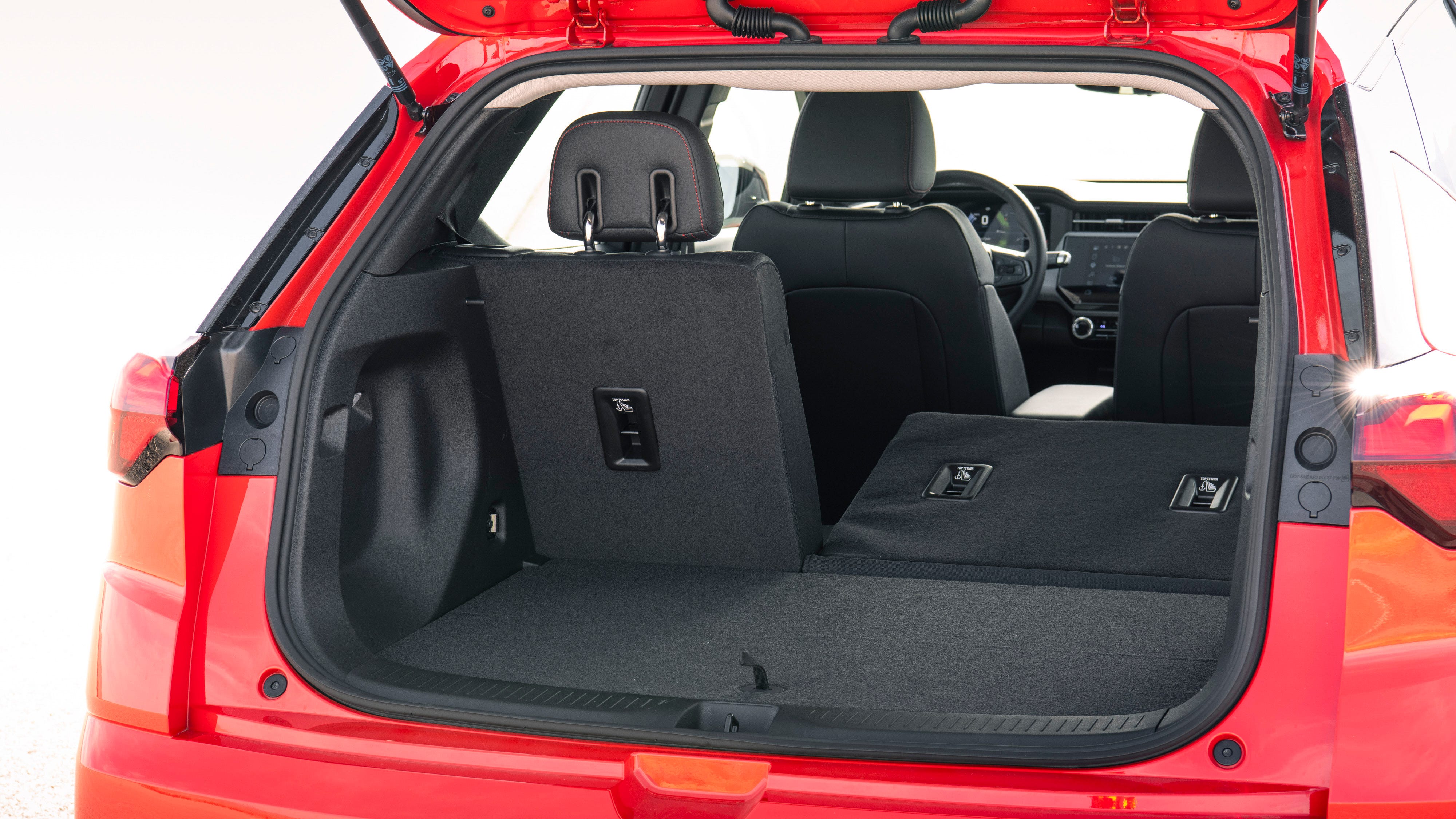
The Bolt’s best everyday trick remains its packaging. It’s properly city sized on the outside, but it doesn’t feel like a penalty box inside. Passenger space is essentially unchanged from the old Bolt EUV, which means generous front legroom and a genuinely useful back seat; cargo space is also right where the EUV left it. Chevrolet gets some of the little stuff right, too, including handy passenger-side dash shelves and a covered underfloor cargo well that keeps grocery bags, backpacks, and other loose items from sliding around.
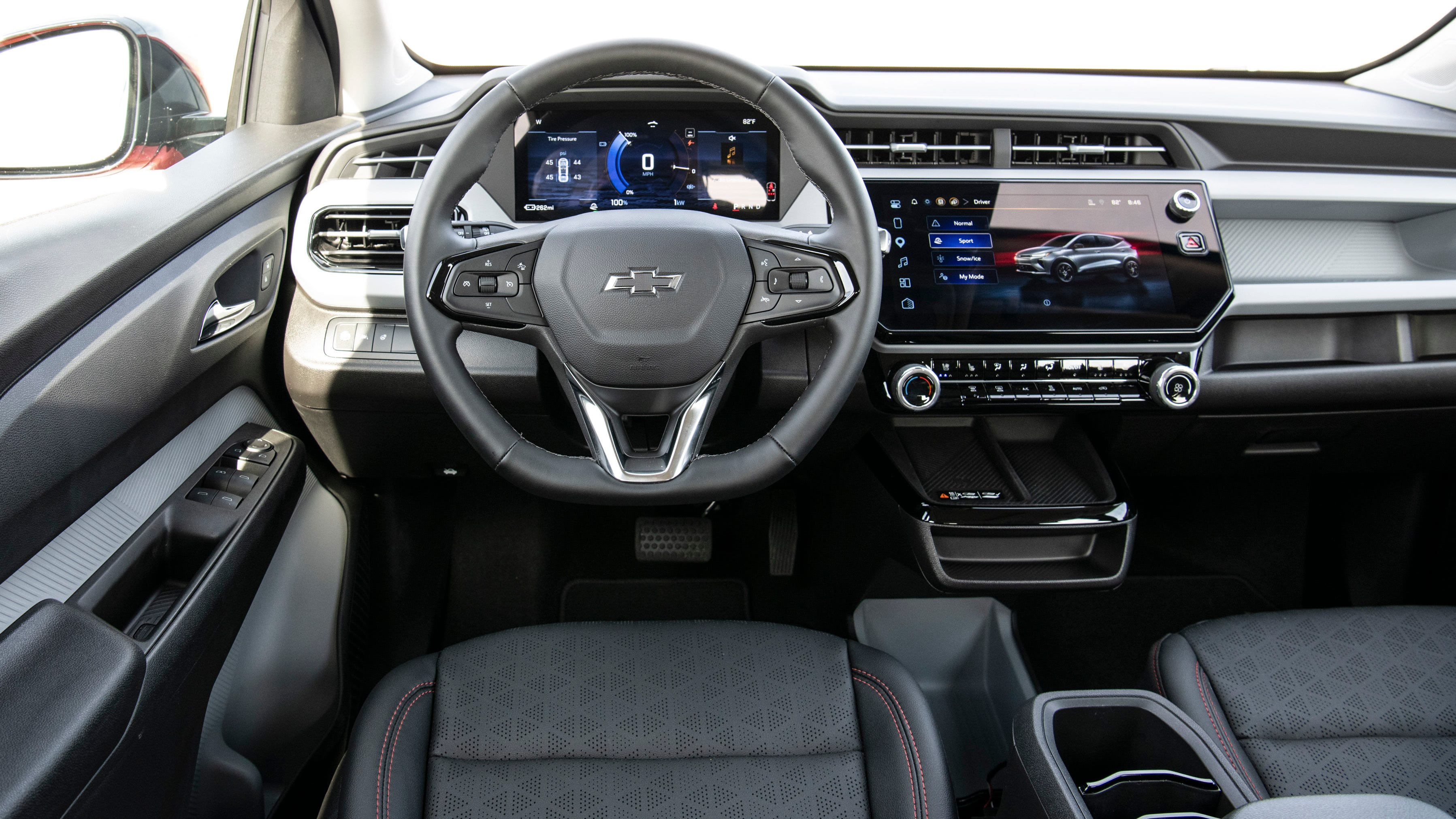
The 2027 Bolt also mixes old and new features better than expected. GM’s well-regarded Super Cruise is included, bringing back one of the Bolt EUV’s best tricks, and its safety alert seat again sends warnings through vibrations in the driver’s seat. The switchable digital/analog rearview mirror also returns, while the new steering wheel adds hidden audio controls on the back side. The screens look sharp, and we especially like the big, obvious battery and range graphic that appears when you get in and again when you shut the car off.
But the small-car practicality still comes with small-car refinement. At speed, there’s too much wind and road noise in the cabin. The new 11.3-inch touchscreen and 11.0-inch digital gauge cluster make the cabin look far more modern than the old Bolt’s, but the interface is busy, with lots of small icons, and the center screen sits low on the dash at a time when many automakers are moving key information closer to the driver’s line of sight. The start-stop logic is also odd: There’s no start button, so getting going is easy, but shutting the car down manually requires tapping a tiny icon along the upper edge of the touchscreen, right next to the equally tiny brake-regen control. Getting used to just getting out of the car, closing and locking the doors, and letting it turn itself automatically takes getting used to if you’ve never done it before.
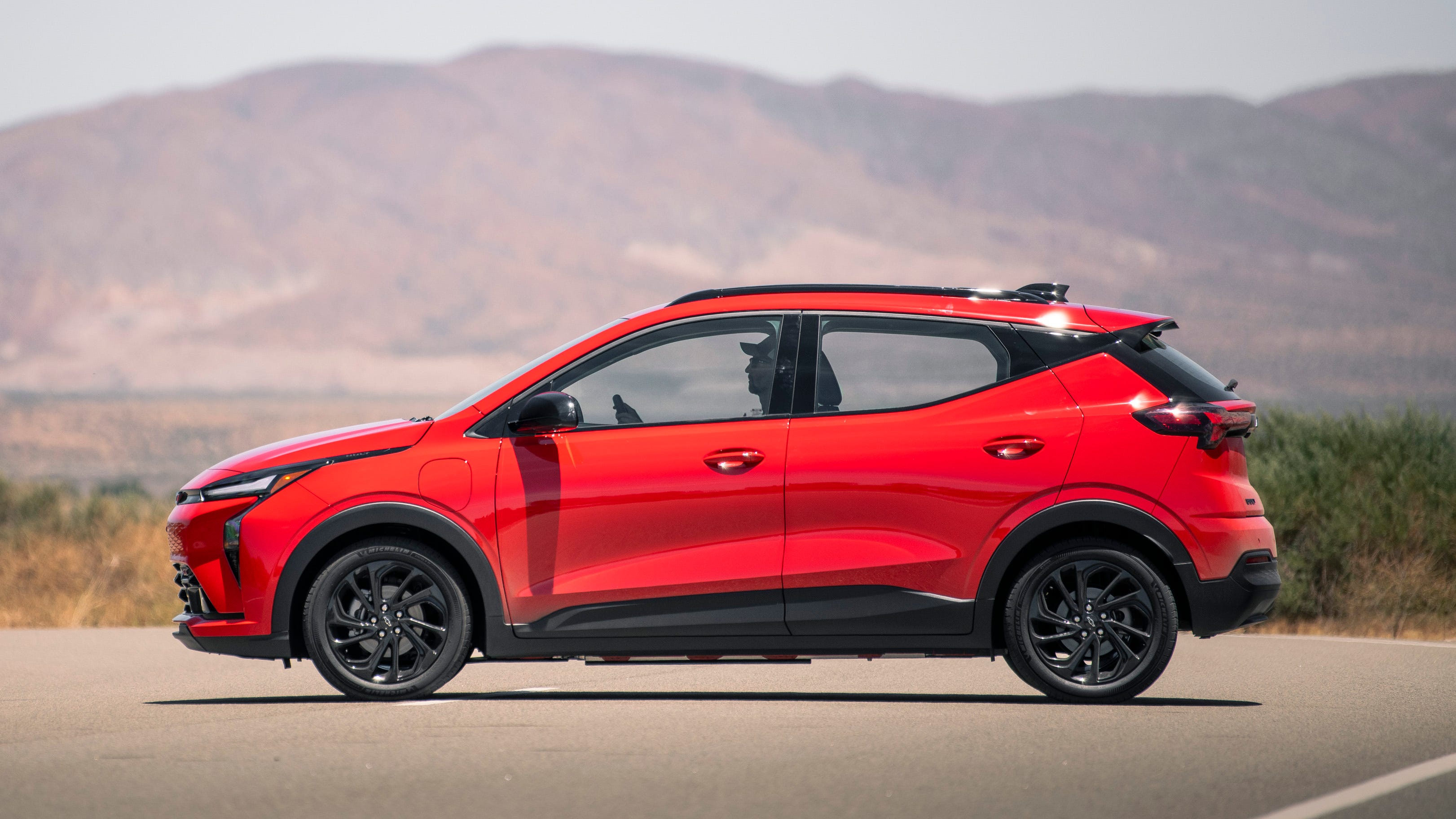
The 2027 Chevrolet Bolt isn’t the clean-sheet comeback some buyers might have imagined. It’s still narrow, noisy, and too busy over bad pavement, and it’s more satisfying as a practical runabout than as a polished small EV. The loss of the old car’s low-speed torque also takes away some of the instant shove that made earlier Bolts feel quicker than they were.
The price helps put those flaws in perspective. No, the new Bolt isn’t quite the screaming deal the 2023 Bolt EV and EUV became after their late-life price cuts. But at $32,995 to start and $35,685 all in, our 2027 Bolt RS still lands thousands below the Nissan Leaf Platinum+ we recently tested. It also brings faster DC charging, a NACS port, sharp screens, Super Cruise, useful range, and the same small-outside, big-inside packaging that made the old car work.
Thanks in part to those improvements added to its baseline benefits, it remains exactly the kind of EV the market needs: small, sensible, affordable transportation that’s good enough in the places that matter most. That fact that Chevrolet plans to build the revived Bolt for a short run may end up being its biggest flaw. The new Bolt is imperfect—but especially at this price, it’s also too useful to feel disposable.

Comments (0)