
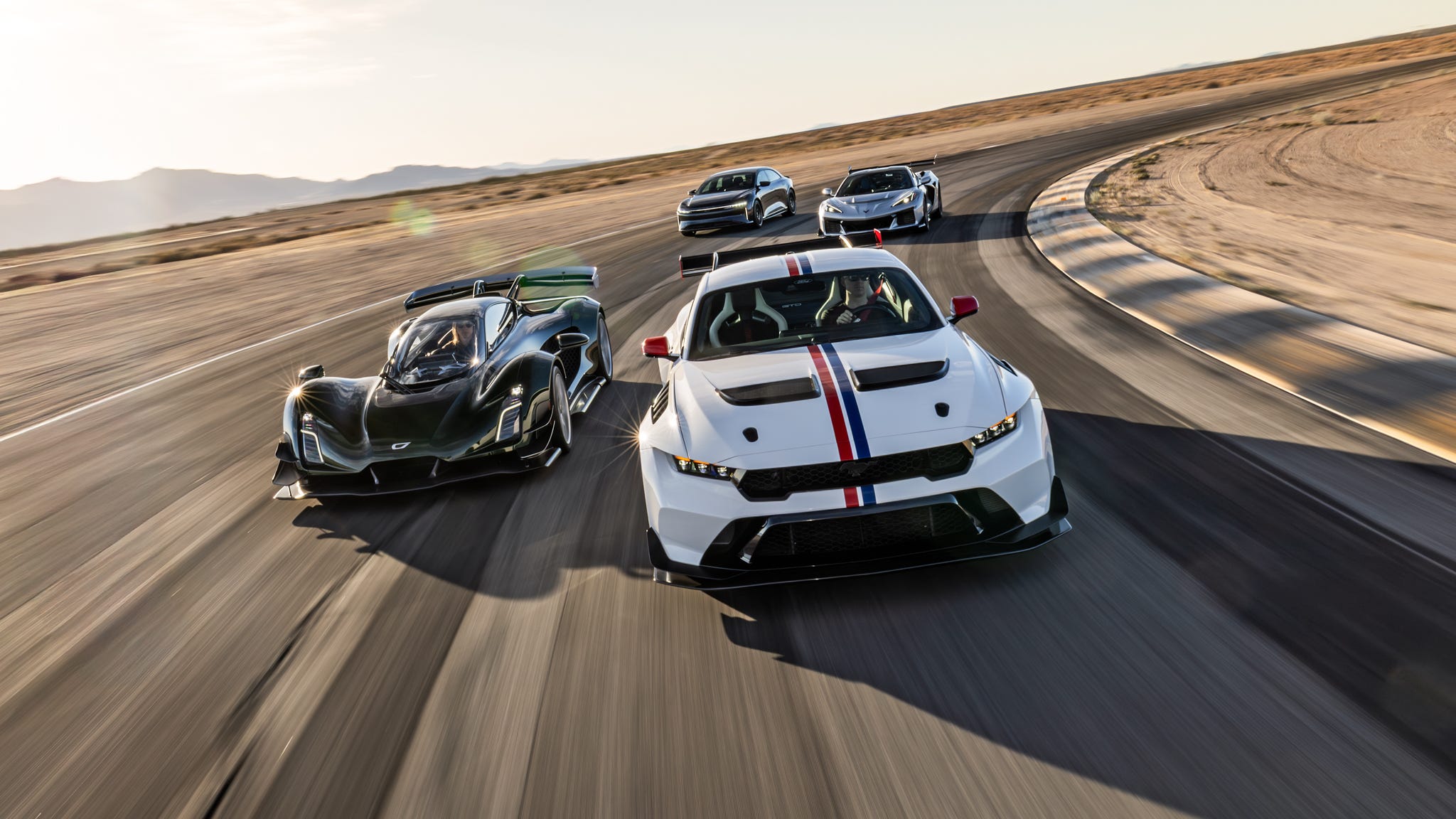
We’re 250 years into the grand experiment known as the United States of America. In that time this country has become known as one populated by industrious and generally optimistic people, with the belief a person can achieve their dreams via hard work, determination, and community. We’re restless, too, not afraid of exploring the unknown, whether it be found on Earth, the moon—or beyond.
Similarly, the automobiles America is most known for are the ones most associated with work and exploration. American automakers invented functional and practical pickups and SUVs, all of which remain hugely popular. And even though the first sports cars and supercars originated overseas, meaning the idea wasn’t “ours,” we’ve built some great ones, too. But this isn’t about looking back on the past; we’re more curious about now and what’s next. What is the state of the art? What are America’s best performance cars in 2026? And what does it all tell us about what our future holds?
To find out, we first assembled four cars we think best represent contemporary American-made performance and spent a week with them on the track at Chuckwalla Valley Raceway, on the road, and even on a U.S. Air Force runway.
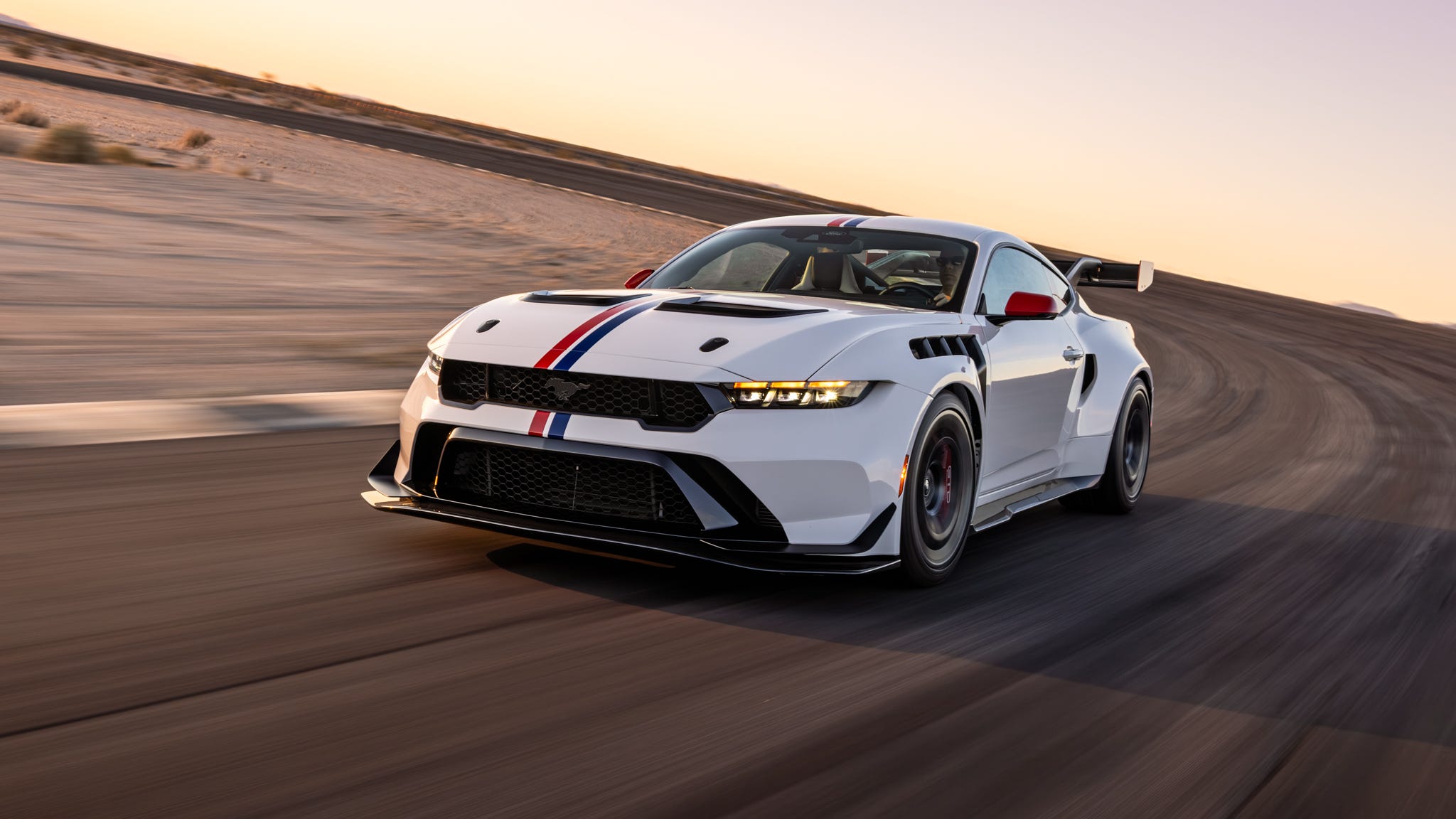
The muscle car is the type of performance automobile most associated with America, and the 2025 Ford Mustang GTD faithfully follows in that tradition. Born from the idea of building a streetgoing version of the Mustang GT3 race car—admittedly not an original conceit—the GTD blends muscle car provenance with 21st century motorsport innovations.
Technically, the GTD journey isn’t all American. Every Mustang begins its life in Flat Rock, Michigan, where a GTD’s body-in-white is plucked off the line and shipped to Multimatic in Ontario, Canada, where the hot rodding begins.
There the rear subframe is modified to accommodate a new eight-speed twin-clutch automatic transaxle, freeing space for Ford’s 5.2-liter Predator V-8 under the hood. Following the familiar muscle formula of boring out a smaller engine for more juice and then supercharging it, the GTD produces 815 hp and 664 lb-ft of torque. Unlike most muscle cars, this is the least interesting part of the car.
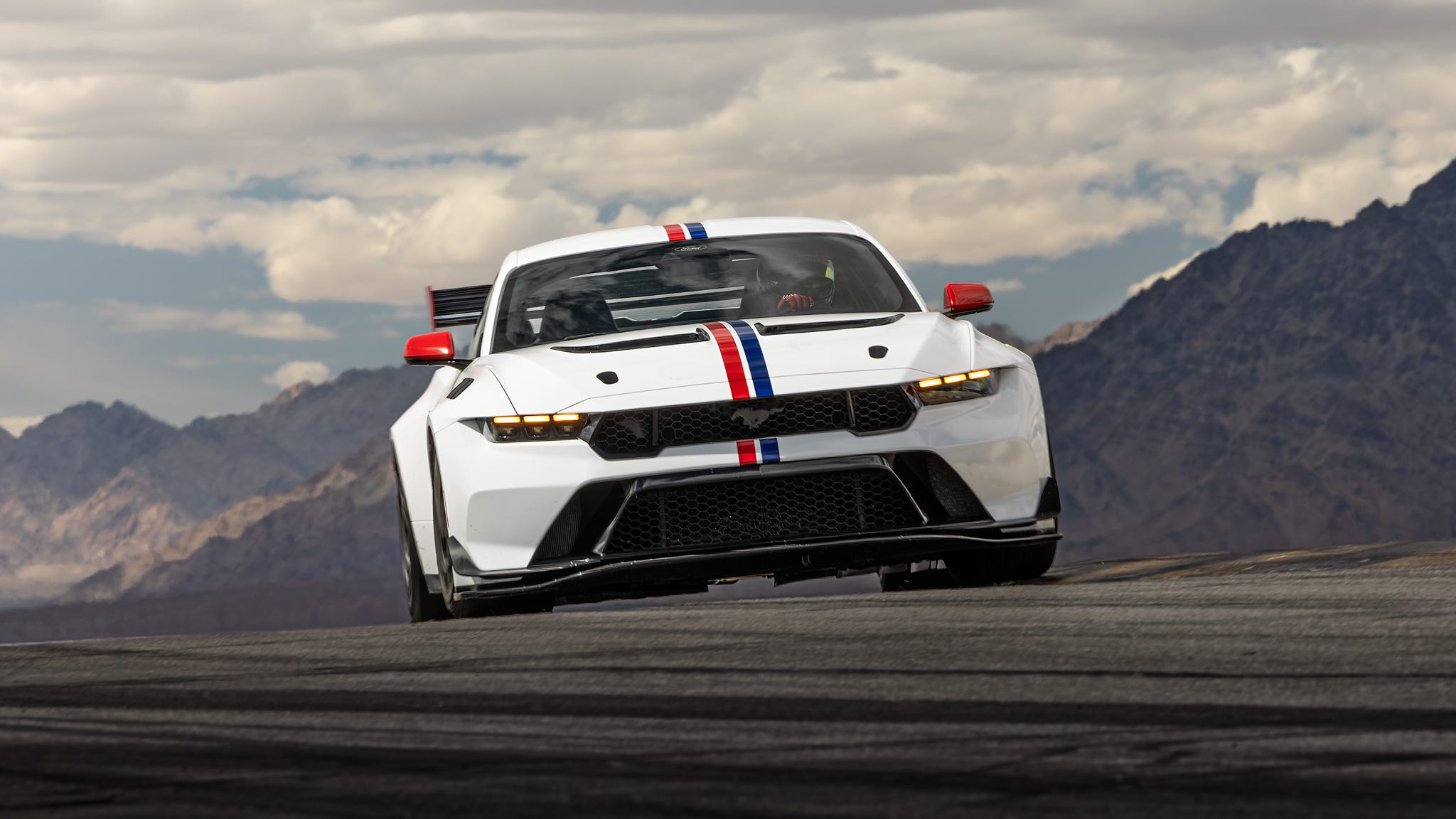
Instead, it’s what’s going on underneath and outside that makes the GTD extra special. In addition to the transaxle and associated radiators in the “trunk,” this Mustang sports Multimatic’s DSSV suspension, which pairs electronically controlled spool-valve dampers with two coil springs, one for track work and one for the street. Track mode engages a hydraulic ram that drops the Mustang closer to the ground by more than an inch and a half. The subsequent reduction in frontal area, an aggressive GT3-style aero kit, and an active drag-reduction-system-equipped rear wing add about 15–20 mph to the car’s top speed, which is officially 202 mph.
Other changes: steamroller-width Michelin Pilot Sport Cup 2 R tires (which all but the Lucid featured), carbon-ceramic brakes, traction control that allows drivers to dial in how much or how little help they’d like, and extensive carbon fiber to keep its 4,400-pound curb weight from ballooning any higher.
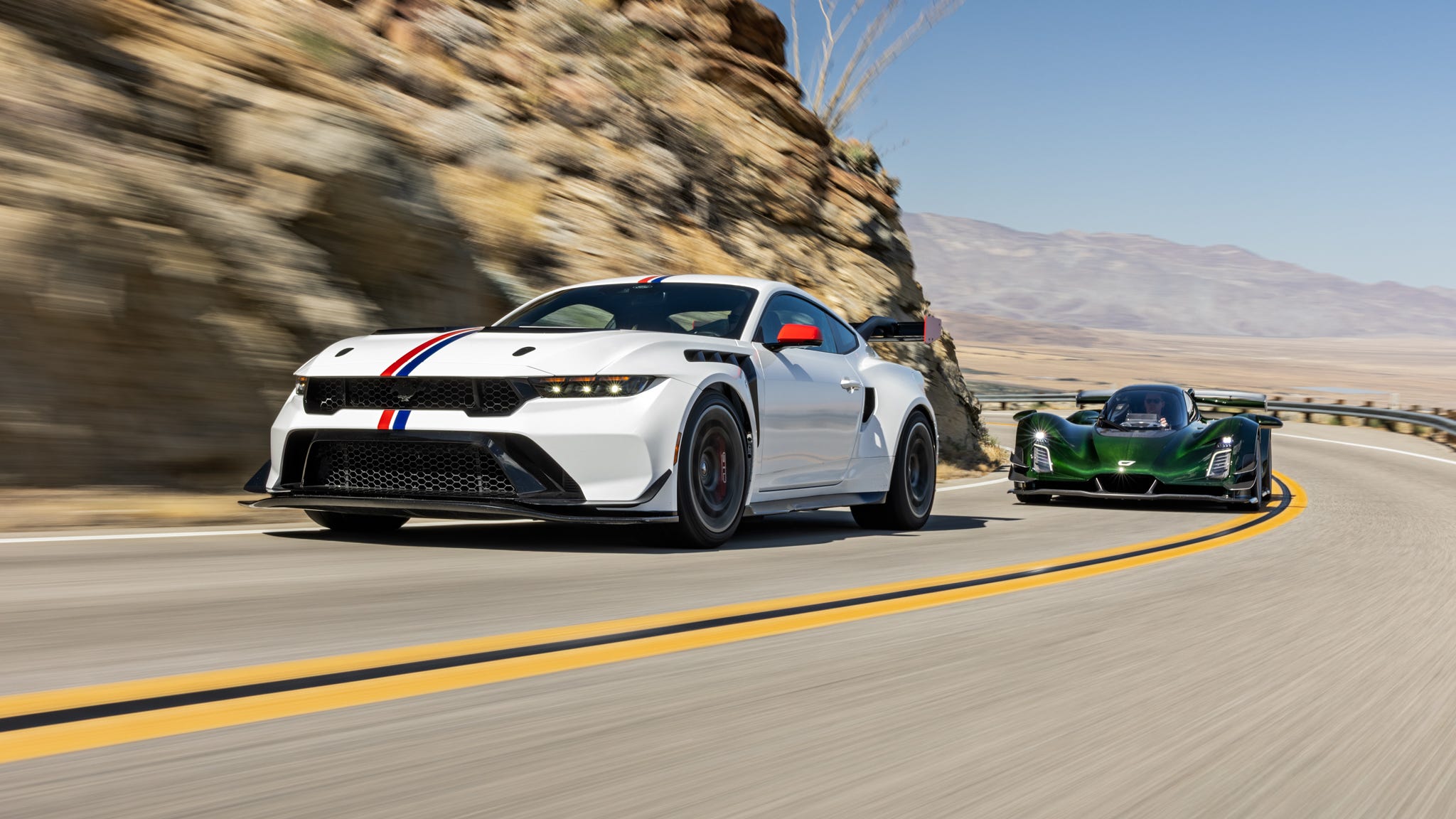
Amazingly, you don’t really notice those pounds behind the wheel. The GTD is the most impressive Mustang we’ve ever driven. It’s familiar, yet it inspires confidence and feels balanced in a way no previous Mustang has achieved. The suspension and chassis are the stars here; they respond to inputs in a way that, as ridiculous as this sounds, makes this porker feel like a much smaller, lighter car. A reasonably good driver can easily rotate the rear end and precisely point the nose seemingly at will.
The rest of the supporting package is equally great. The car brakes like it could stop a fully loaded Air Force tanker, and its steering only gets better as you put more heat into the tires. Bury your foot in the throttle, and you’re greeted by a throaty bellow out the back end, accompanied by quick shifts and the supercharger’s whine. The GTD doesn’t feel straight-line fast among this cohort, which speaks more to the insanity of the group: At 2.7 seconds to 60 mph and posting a lap time at Chuckwalla just 4.17 seconds off the quickest car’s pace, it is indeed an incredibly quick and fast car.
More than numbers, however, the GTD makes us feel like we never want to stop driving, capturing an essence only the best performance cars offer—that nirvana, a greater sense of understanding about both the machine and its driver, is just a bit farther down the road.
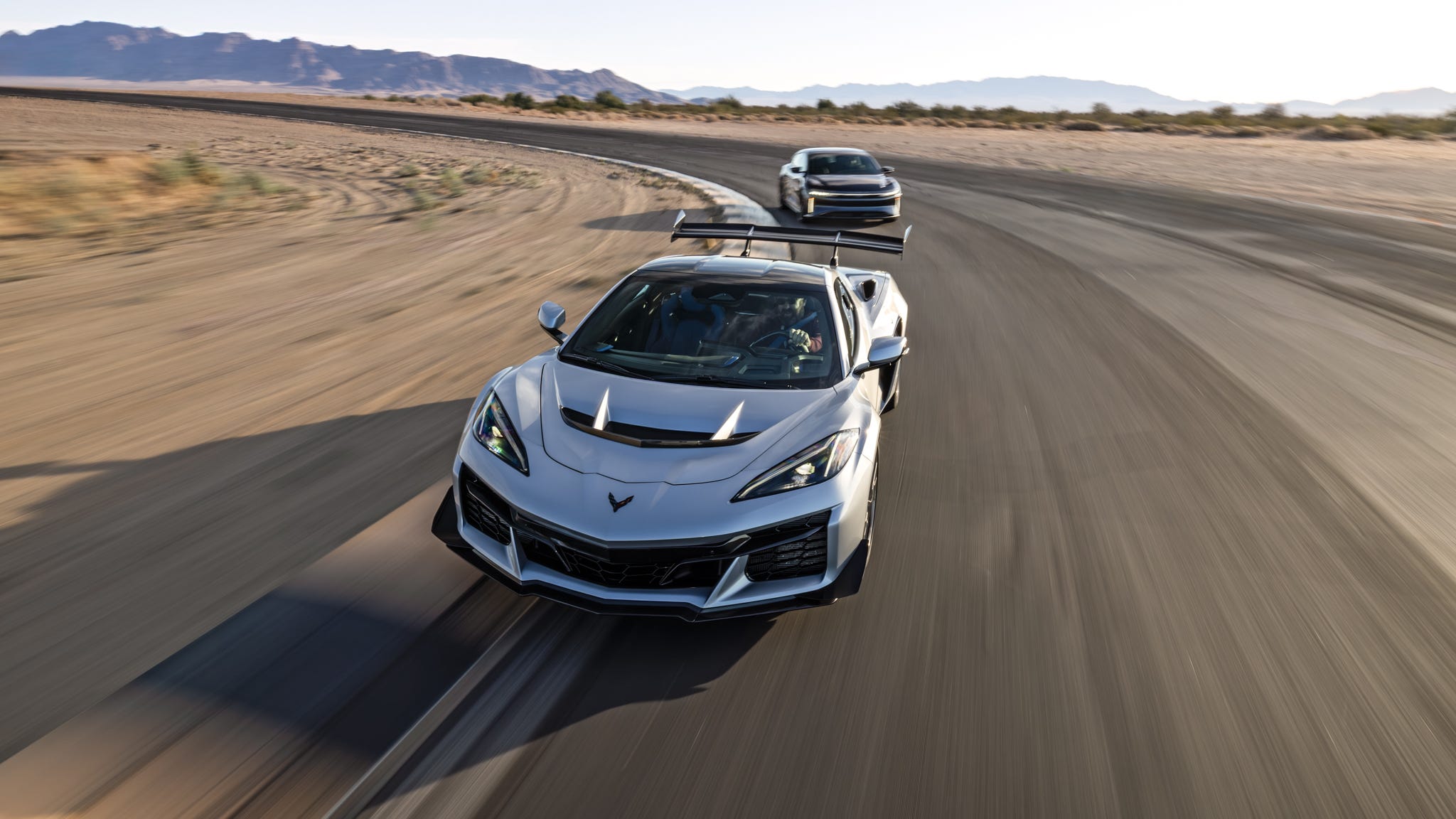
There’s no doubt the Corvette is America’s car. In continuous production since 1953, it’s the longest-running sports car nameplate in the world. For the bulk of those 73 years, Corvettes followed a familiar form: engine up front, an automatic or manual transmission, and rear-wheel drive.
So the eighth-generation Corvette was a monumental break from the past for Chevrolet, and the new 2026 Corvette ZR1X is even more so. Built off the ZR1, the ZR1X is a rolling dedication to American excess, an example of what engineers can do when they throw nearly three-quarters of a century of engineering and racing know-how into a road car in the pure pursuit of performance.
Behind the driver sits a high-revving 5.5-liter flat-plane-crank twin-turbo V-8 producing 1,064 hp and 828 lb-ft, which it puts down through an eight-speed twin-clutch transaxle. Just ahead of the driver is the ZR1X’s party trick, a higher-voltage version of the Corvette E-Ray’s motor. Good for 186 hp and 145 lb-ft on its own and fed by a 1.9-kWh battery pack hiding under the center console, it raises the Corvette ZR1X’s total output to 1,250 hp and gives it all-wheel drive.
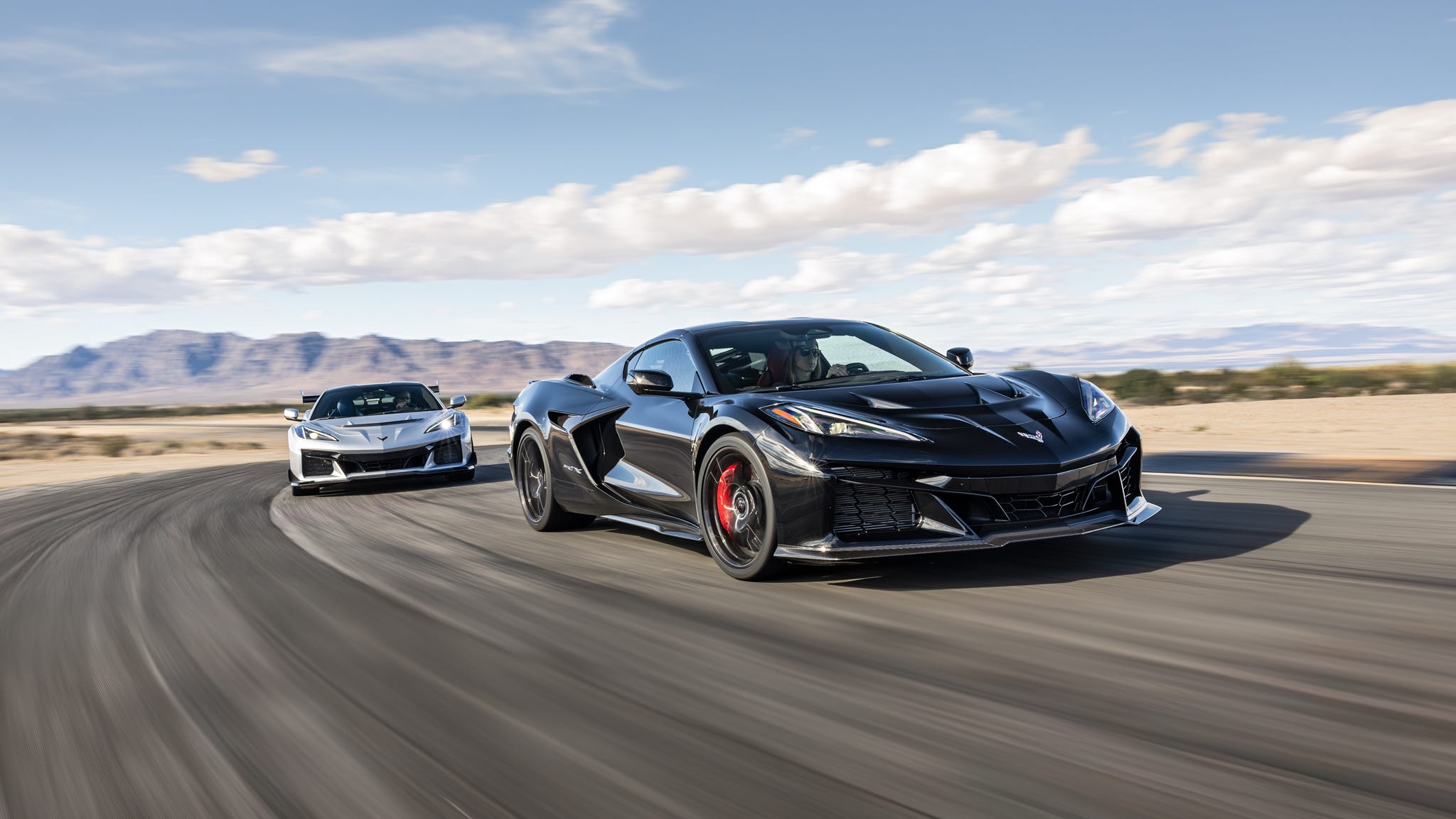
But there’s also more performance to be had here; Chevrolet sent along two ZR1Xs, one of which featured the ZTK track pack. This adds Pilot Sport Cup 2 R tires, a unique MagneRide damper tune, carbon-ceramic brakes, and a full carbon-fiber aero kit featuring dive planes, spoilers, and a wing good for up to 1,200 pounds of downforce (though that full figure only comes when the car blasts past the 220-mph mark, making the peak downforce number mostly a fantasy). Without the wing’s drag, the ZR1X is capable of reaching 233 mph.
We didn’t have the space to get the ’Vette up to 233 mph on March Air Reserve Base’s runway, but the ZR1X certainly lives up to its billing as the most powerful Corvette ever. Zero–60 mph happens in 2.1 seconds, and its quarter-mile performance of 9.2 seconds at 153.3 mph has it hanging with hypercars that cost far more. “Full acceleration is impressive and relentless, virtually forcing the horizon into your eyeballs with an urgency you had better be ready for,” said pro racer Andy Pilgrim, who set our lap times around the Chuckwalla road course.
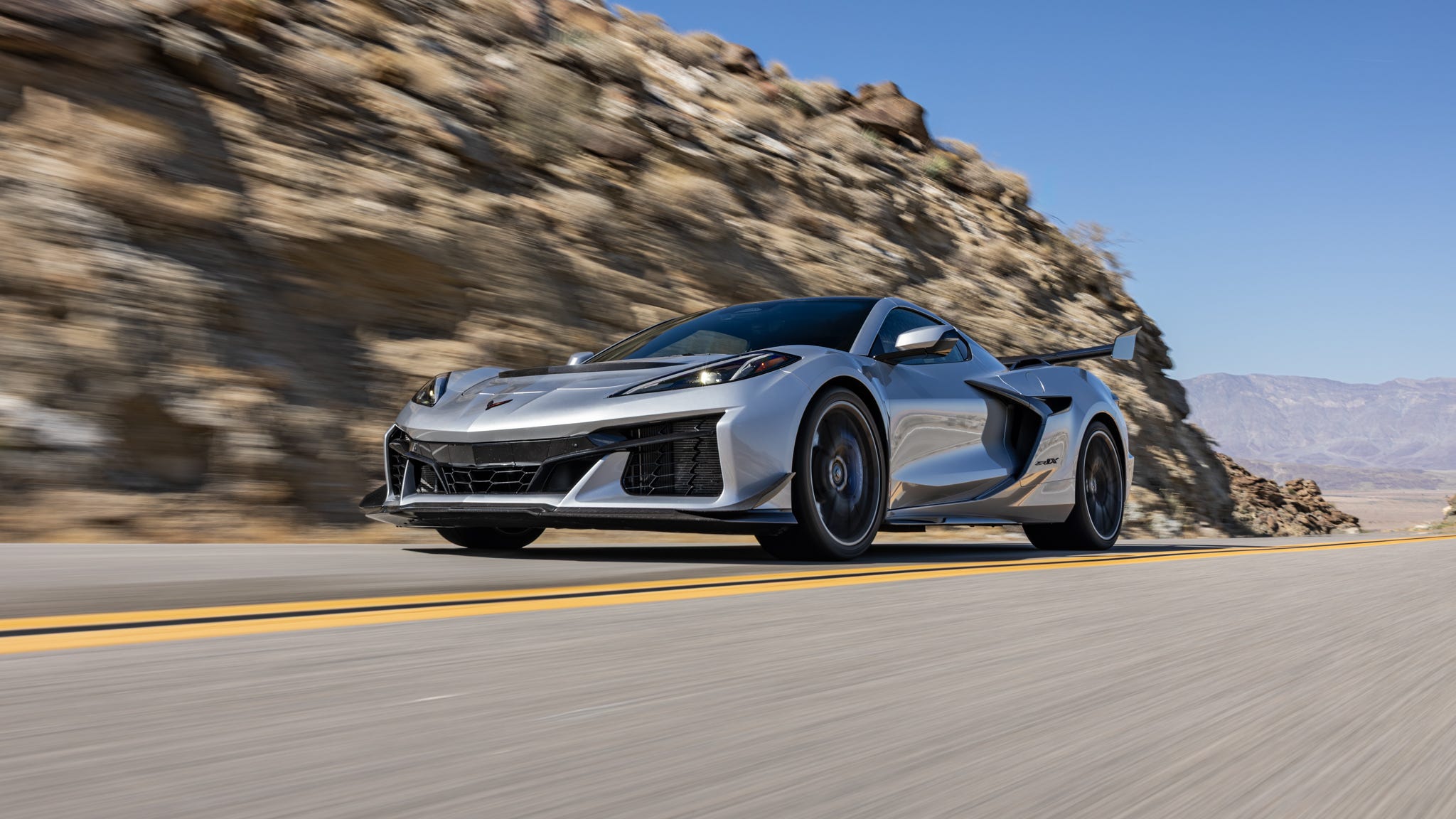
Yet it’s amazingly approachable. It feels weirdly docile, a grand tourer on the road that’s also eager to help you go flat out on your out lap. Part of that might have something to do with Chevy’s Performance Traction Management system, which is simultaneously so effective and so invisible, the team behind it would’ve been put on trial for witchcraft in colonial America. “They’ve done an incredible job making 1,250 hp stick to the ground like gum does to hair. How? How?! ” testing director Eric Tingwall said. (Witchcraft, Tingwall. Witchcraft.)
Of course, that front motor helps, too, except when it doesn’t. The ZR1X’s motor is additive on straights and coming out of tighter corners, where you can drive in a way that’d be irresponsible in other Corvettes by getting hard on the throttle and letting the front end pull you out the other side of corners. But there’s a small price to pay for that performance: The steering lacks the sharp bite of rear-drive Corvettes. There’s also a healthy dose of understeer baked into the chassis. This is easily managed—the big brakes see to that—and accounts for much of the confidence the car instills, but it mostly left us wondering, could less really be more?
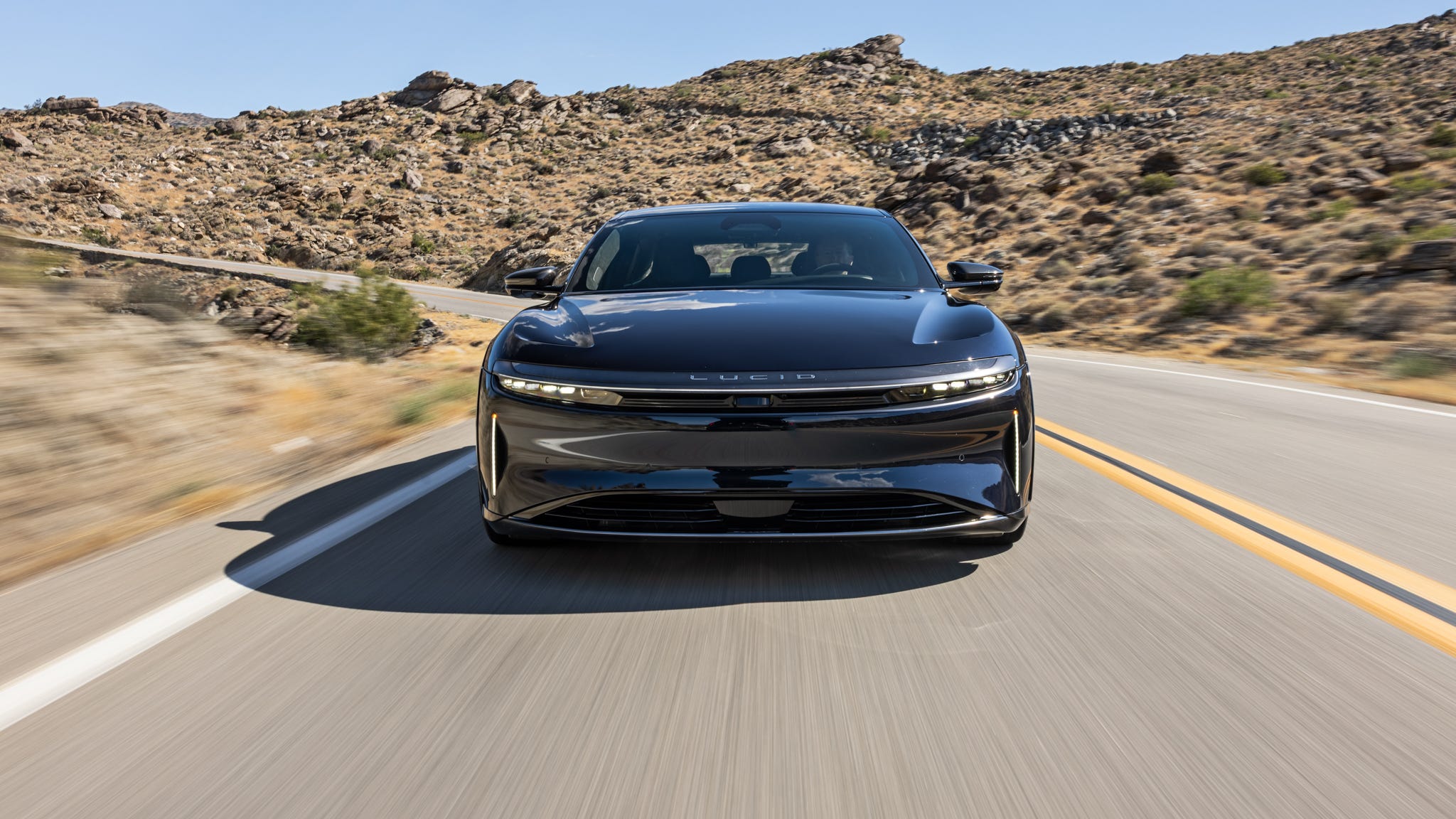
The Lucid Air Sapphire shouldn’t really be here, should it? It’s electric. It’s practical. Relatively efficient. Could this luxury sedan really represent both the state of the art of American performance and the future of the industry against three megacars? Absolutely.
The Air Sapphire’s credentials begin with its powertrain. It has two motors at its rear axle and a third up front for a total output of 1,234 hp and 1,430 lb-ft. Its quick-charging 900-volt, 118-kWh battery pack can maintain consistent power delivery over multiple hot laps, a feat that eluded the Air Sapphire in our previous tests but not here. Trick software allows Lucid to vector torque side to side for quicker turn-in or fore and aft to virtually alter the car’s wheelbase, while its traction control ensures all ponies are available at a moment’s notice.
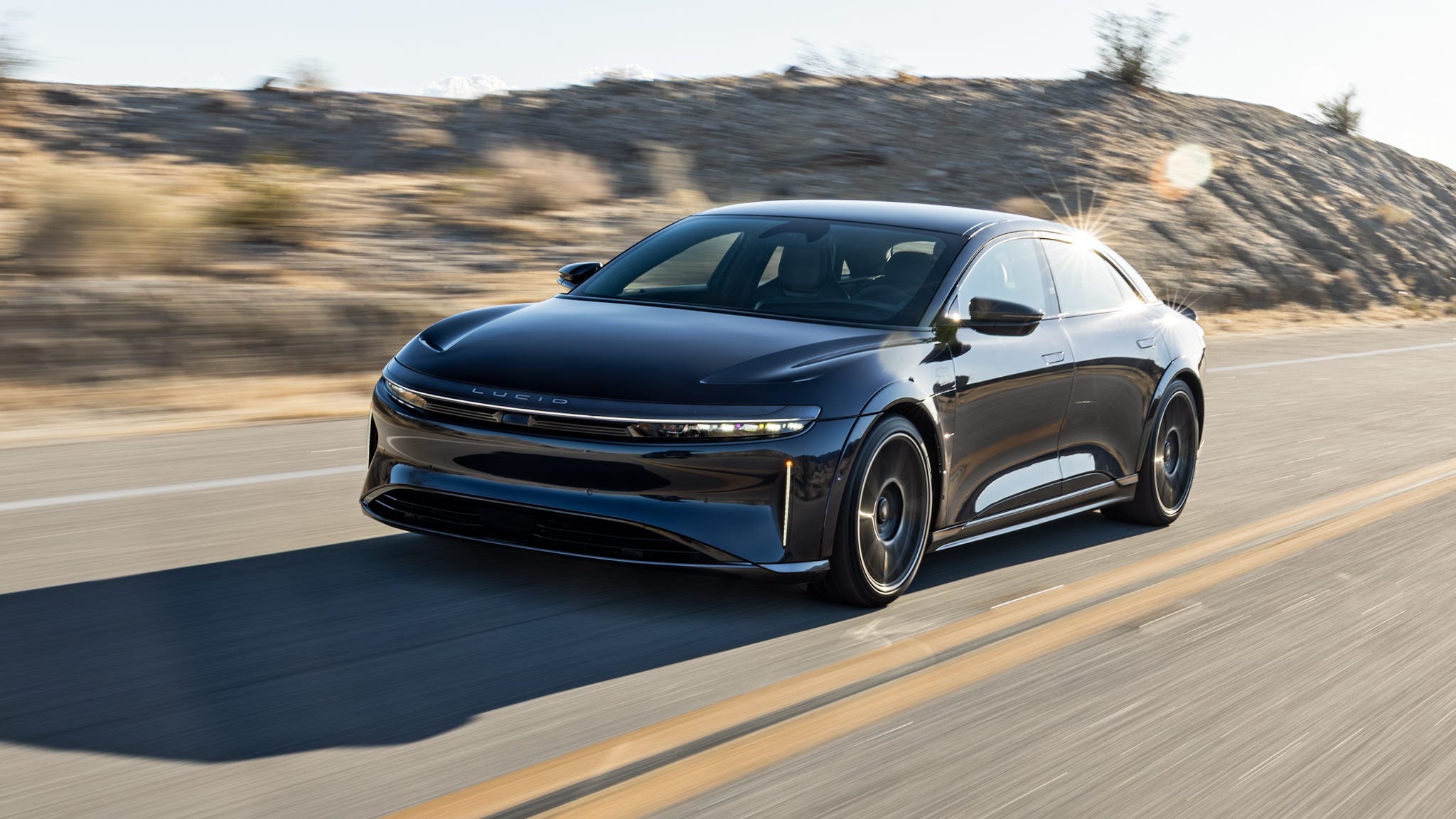
And they are. Consistently. The Air Sapphire will bang out 2.0-second 0–60 runs no matter the surface, state of charge, or meatbag behind the wheel, and its 9.14-second quarter mile at 153.2 mph puts the field behind it.
But this is no one-trick pony; it’s a fun, supremely well-engineered, well-balanced super sport sedan. “The Air is an almost shocking road course performer,” executive editor Mac Morrison said. “It was the easiest of the four cars to rotate for corners. There’s an infinitely controllable level of oversteer that a driver can use to get the Lucid turned and pointed straight on the exit line so you can put the power down early and cleanly.”
Out on our road loop, the Sapphire is even better. Its fundamental chassis and suspension tuning reveal a deep understanding of what makes a performance car work. The setup is soft enough to be comfortable but firm enough to preserve balance. Its software allows you to change the car’s character just by changing the way you drive it—a classic luxury sedan on straights with hot-hatch point-and-squirt precision in the curves.
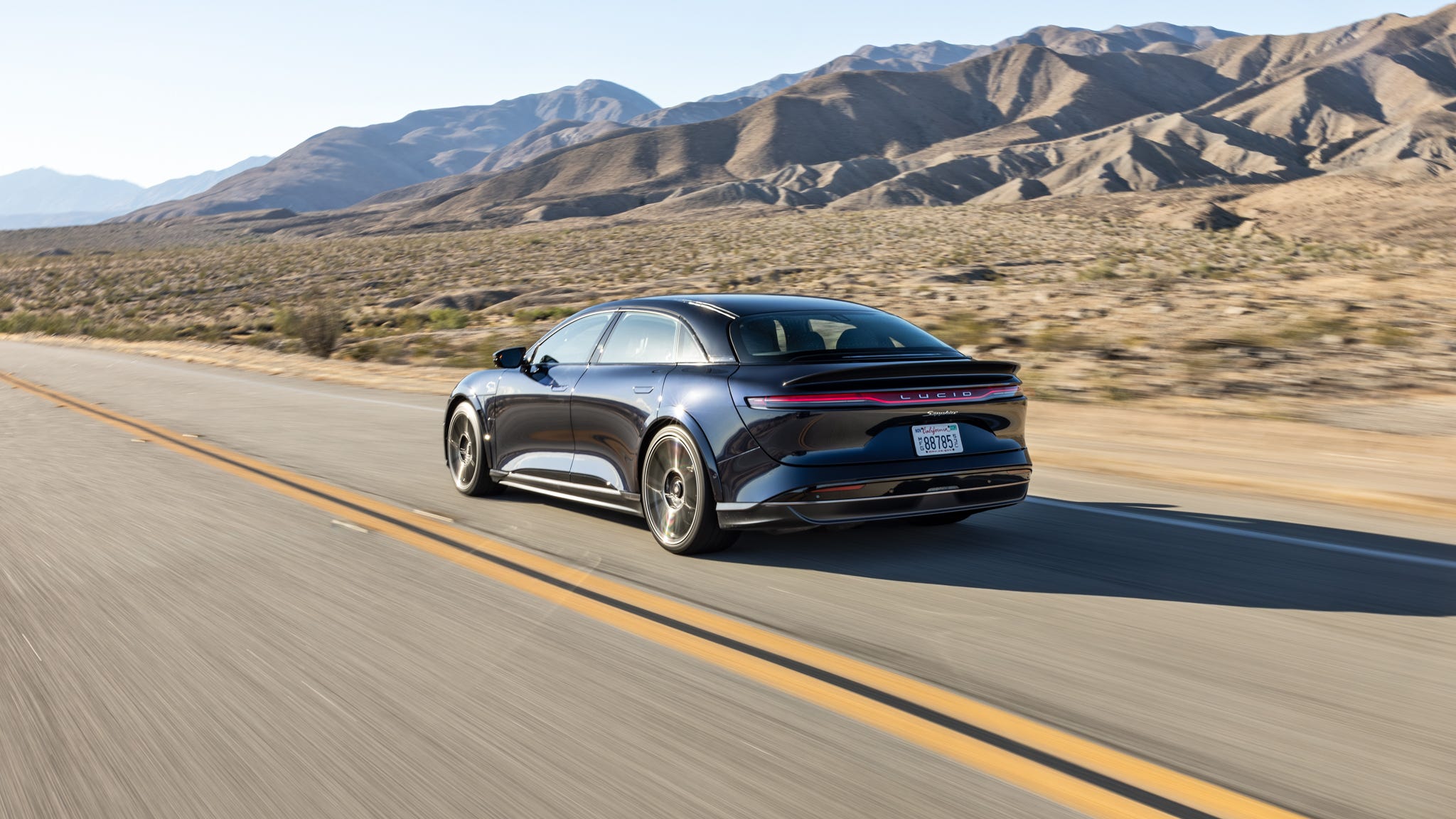
As for range anxiety? Nope. This Lucid finished our six-plus-hour, spirited road loop with about 15 percent charge left in its battery. The Corvette, meanwhile, went through an entire tank of fuel, the Czinger two, and the Mustang three.
“Leading into this test, the Sapphire was the one I doubted,” Tingwall said. “Did a large electric luxury sedan really belong among a trio of gas-chugging, hyperfocused two-seaters? After a week with the cars, the answer is definitively yes. The Air is an absolute delight to cruise in, to fire up a mountain road, or to wring out around a track, and there’s so much engineering prowess on display, from its range to the beautiful chassis dynamics.” In other words, American performance EVs simply get no better.
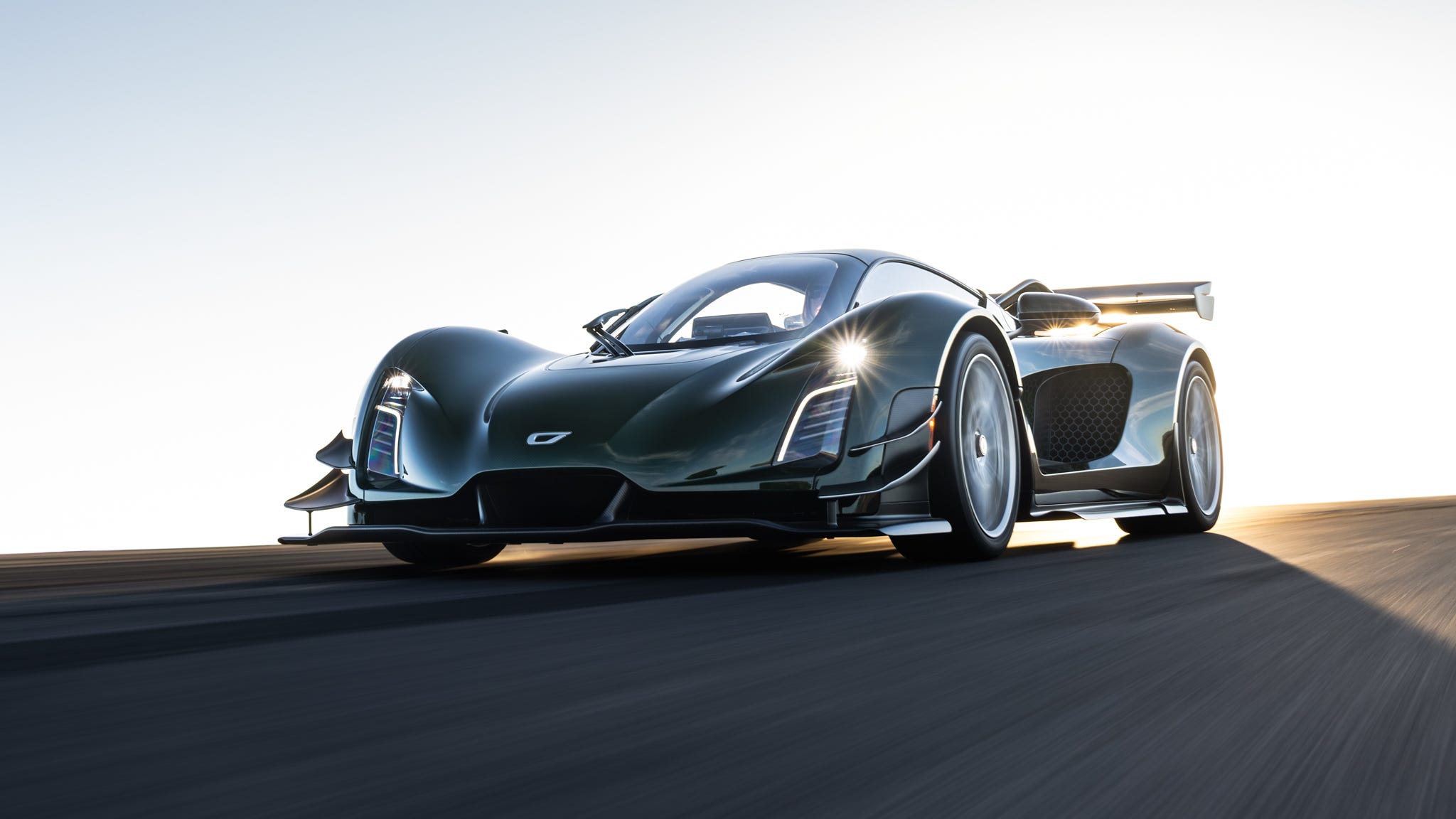
You’d be forgiven for dismissing Czinger as the latest in a long line of hypercar wannabes backed by unscrupulous individuals more likely to run off with your money than deliver on promises.
But you would be wrong. The 21C is a deeply serious car developed, engineered, and put into production thanks to innovations that could change modern car production as much as Ford did more than a century ago.
There’s nothing really “normal” about the 21C, but the picture makes a lot more sense once you realize Czinger’s parent company, Divergent Technologies, is an in-demand startup that builds parts for automakers and defense contractors alike. What those companies are after is exactly what makes the 21C so special.
Like the parts Divergent builds, Czingers are designed by both humans and AI algorithms with extreme precision. The parts are 3D printed with proprietary alloys and joined by robots arranged in a circle so they can work together, reducing the manufacturing real estate Czinger needs to build the 80 21Cs it has planned. The final parts are hand-assembled and pieced together with everything that can’t be printed.
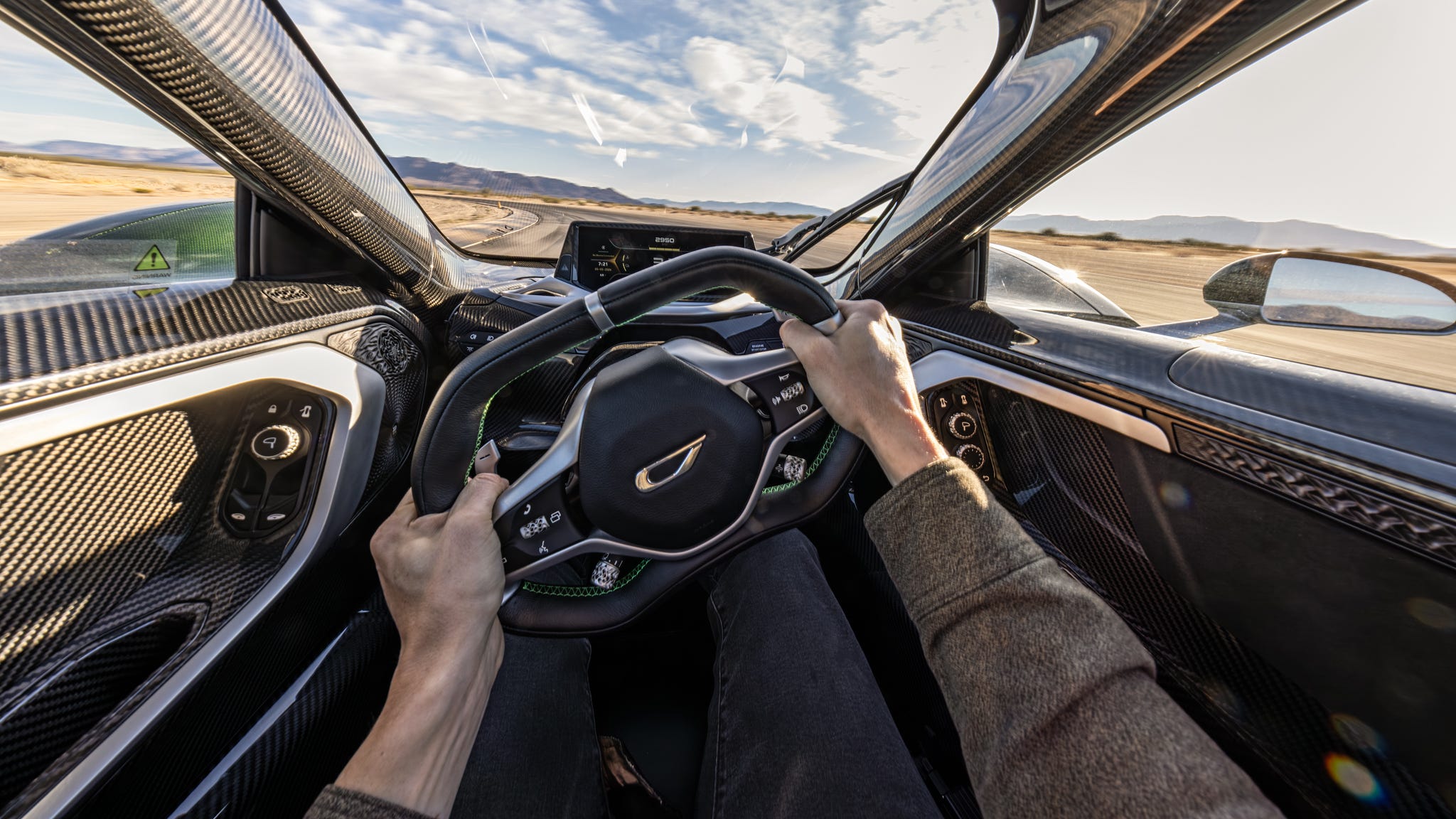
The result looks like nothing else on the road. Driver and passenger sit in tandem, with 800-volt battery packs totaling 4.4 kWh worth of energy as saddlebags. In front are two motors good for a combined 536 hp; in back a 2.9-liter twin-turbo flat-plane-crank V-8 sits mated to another motor that keeps the hybrid batteries charged and a seven-speed single-clutch automated manual with 48-volt electronic actuation to speed up shifts. Total system output is 1,250 hp and 691 lb-ft.
The 21C comes in two flavors. The green one we spent most of the week with features the high-downforce package, which has dive planes and wings and underbody ground effects that give the car up to a claimed 3,307 pounds of downforce at 150 mph. The sleek silver car, meanwhile, displays the VMax configuration. It’s capable of 253 mph, Czinger says. (The winged model maxes out at 219.)
Getting into the Czinger after exiting the other cars is pure sensory overload. The 21C is capable of immense speed. The forces generated by accelerating, braking, or turning are massive, the heat through the canopy and floor intense. The noise—air over bodywork, tires on pavement, gravel off the underbody, the V-8 as it screams to its 11,000-rpm redline, the whine from the sequential gearbox—is overwhelming.
And boy, is it quick. The 21C VMax hit 60 mph in 2.0 seconds and blasted through the quarter mile in 9.2 seconds at 156.9 mph; the half mile zings (sorry) by in 14.4 seconds at 187.9 mph, and it shrinks a 2.5-mile runway into a city block. Pilgrim set the production car lap record at Chuckwalla in the high-downforce car, posting a time of 1:46.55. “The average IndyCar driver should feel right at home while experiencing the brutal acceleration of the Czinger,” he said.
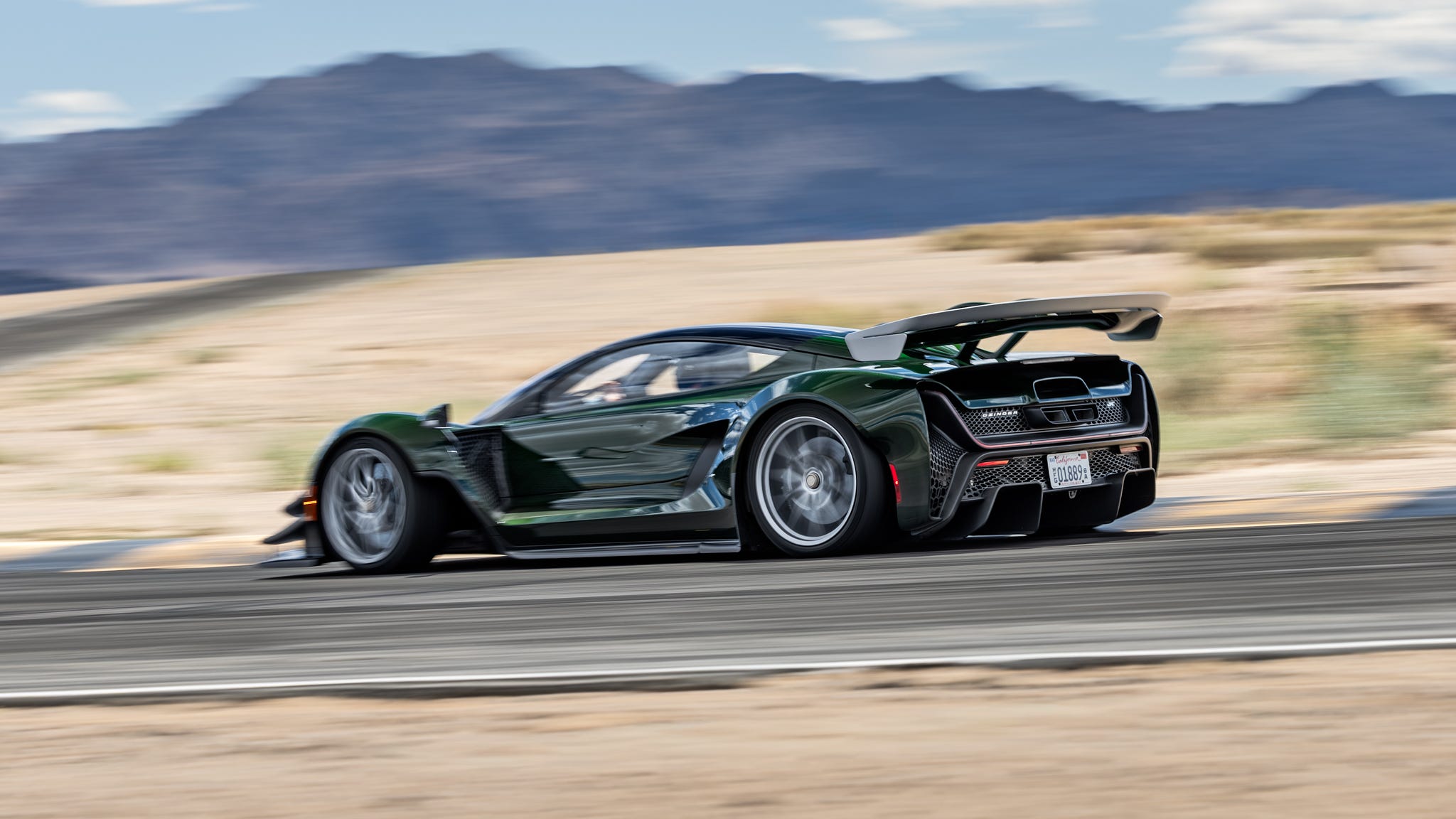
As for mere mortals, there’s certainly a learning curve. “I quickly learned I was braking way too early,” associate road test editor Erick Ayapana said. “This car is very light up front and needs late braking to keep some of that weight and grip through corner entry.” Czinger acknowledged it handed us the car with an understeery setup, which Pilgrim wasn’t entirely pleased with, but it probably helped the rest of us keep it all in one piece. The brake pedal requires you to press as if you’re trying to kick through the floorpan and stop Flintstones-style.
It’s no exaggeration to say getting used to the speeds this car produces requires a full mental reset. In theory, the faster you go, the faster you can corner as the aero works to push the tires into the ground and get the Czinger around corners at speeds you didn’t think were possible.
Out on the road, the 21C is a complex creature, equally joyous and frustrating. The transmission, for instance, sometimes shifts smoothly to the next gear exactly at the car’s heavenly redline; other times it throws you forward as it works through neutral then kicks you in the back of the head as it finds the next cog and resumes acceleration. The steering, which feels nearly unassisted, is sometimes crisp but sometimes wiggles in your hands.
Those traits combine to make the fastest car on the track a little slower on the street. “It didn’t matter who was driving the Czinger and who or what car was chasing it,” Tingwall said. “The 21C is just too stiff, too raw, and too intense to fully deploy on a public road with traffic, potholes, and a million other potential threats lurking beyond every apex.”
Despite that, the Czinger is a car we can’t stop thinking about. It’s immensely impressive that this is the first automobile from a company that didn’t exist a decade ago. It’s a real car, with room for two, a reasonably nice cabin, crazy neat doors, and a powertrain and driving experience that mostly live up to or exceed the company’s lofty promises.
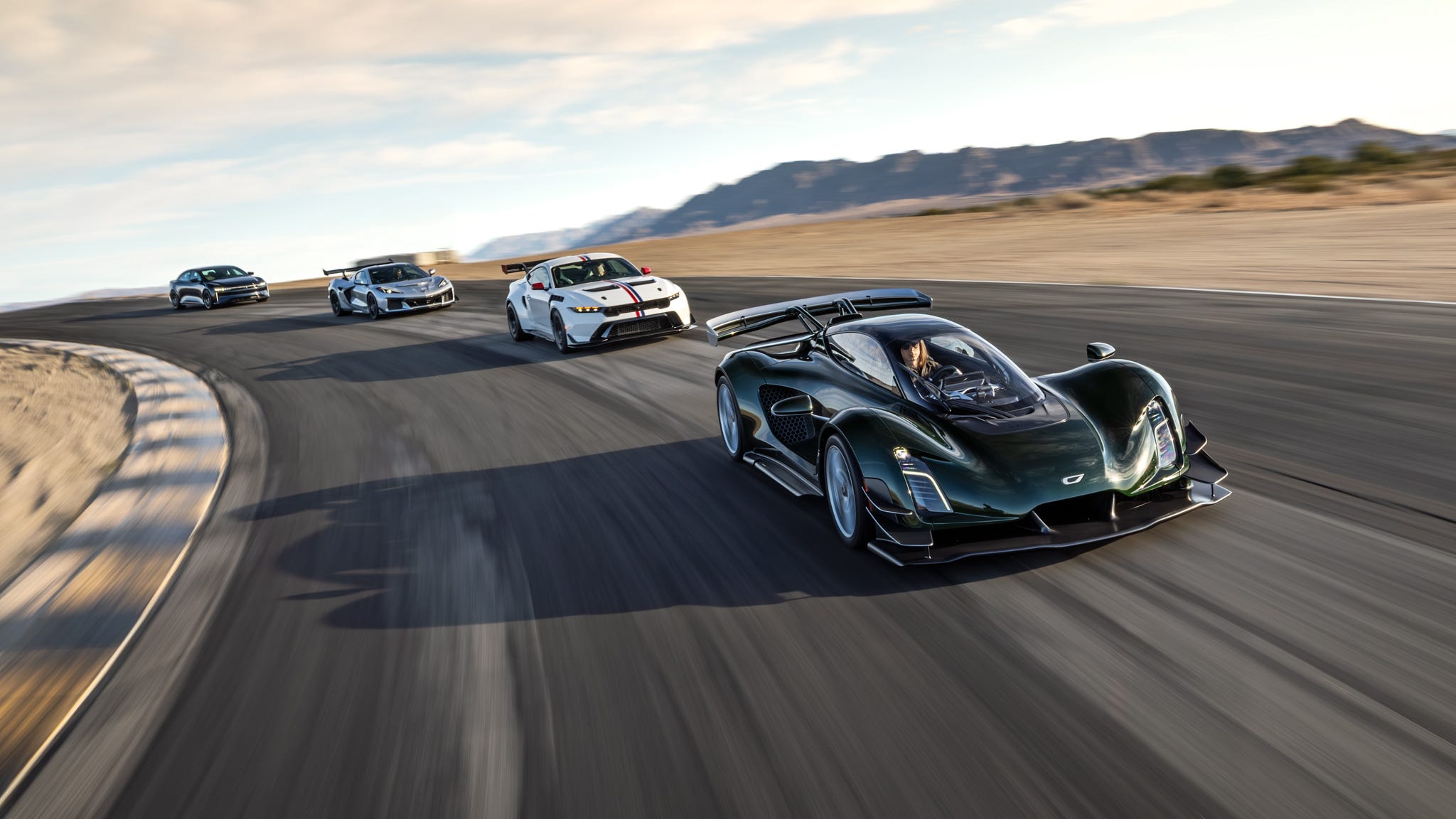
Beyond the Czinger, the cars from Lucid, Ford, and Chevy all show American performance is far more than simply alive and well. The Mustang GTD breaks no obvious technical ground, but it demonstrates what determined engineers can do when presented with a seemingly impossible brief. Meanwhile, the Corvette ZR1X just might be the world’s most well-rounded supercar, one that makes the extraordinary ordinary. Lucid proves that no matter what fuels our vehicles, the performance we’ve always loved won’t disappear. If anything, it’s only going to get better.
Back to Czinger: More than any number, its manufacturing process hints at a future when cars could become less capital- and resource-intensive to produce—and perhaps more affordable to buy. The technology it showcases could democratize the car all over again. What’s more American than that?
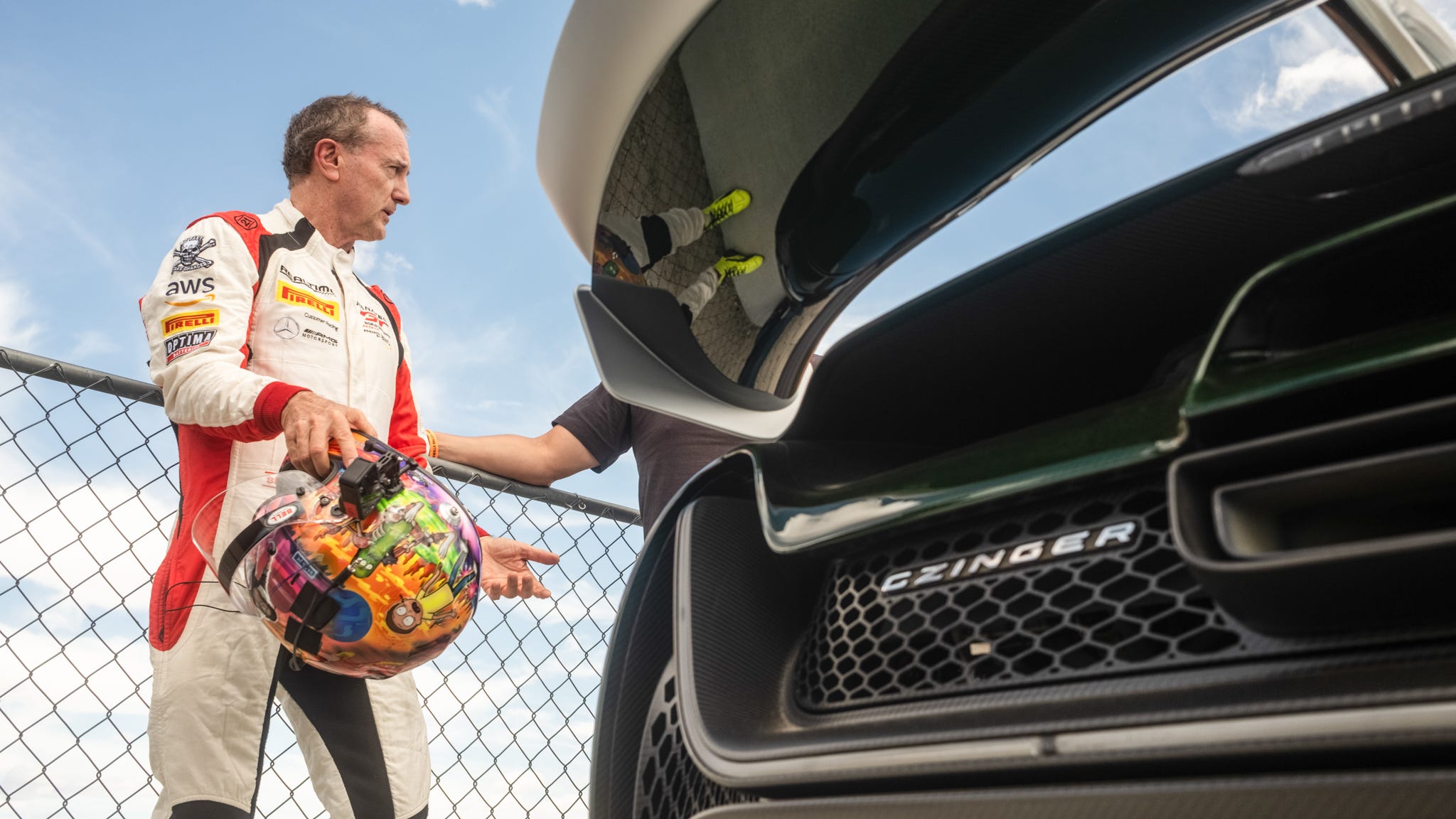
Czinger 21C: The car is very quick and well hooked up on initial turn-in, whether trail-braking or post straight-line braking. I did, however, need a little more front grip in Chuckwalla’s four long double-apex, differing-radius sections. This lack of front grip showed up as slight understeer when balancing steering addition or deletion with the amount of gas needed to maximize my corner exit speed. I mentioned this to the Czinger engineer, and he confirmed the car was more of a conservative setup for customers, which worked well for the street but was just OK for the track.
Ford Mustang GTD: The setup on the GTD was very well balanced. The front was so well connected, it willingly allowed me to add or delete steering as needed between the four connected differing-radius complexes. I could also move (rotate) the rear of the car at will, on turn-in or midcorner. I would probably have said “car’s good” to my engineer if this were a race weekend. That’s a hell of a compliment to what Ford has done here.
Lucid Air Sapphire: On the track, the weight played a big part, and so did the long wheelbase. The Pirelli Trofeo RS tires, which I had never driven on before, were extremely grippy and consistent. The car’s balance was more to oversteer, especially when altering my radius between the differing-radius sections. There are adjustments an engineer could make to calm the rear, but again, we were doing hundreds of street miles and drag races after our track laps. The fact I could dance with the Sapphire so well is a testament to Lucid’s engineering.
Chevrolet Corvette ZR1X: The handling balance was like the Czinger’s, exceptionally good, but for me, I would have liked a little more front grip in trail-braking and during midcorner adjustments, especially in the turns I keep mentioning. The car came with a generic track setup, and as good as it was, there was no time in the schedule to do much in the way of making changes apart from a couple tire pressure adjustments. But when the goal is to chase the best time possible, small suspension changes take time. They may only bring you a tenth of a second, but quicker is quicker.

March Air Reserve Base in California’s Inland Empire, where we staged our drag race (page 44), was established as Alessandro Flying Training Field in 1918, shortly after the U.S. entered World War I. It was renamed March Field later that year, for Second Lieutenant Peyton March, the son of the Army Chief of Staff, who was killed in an air crash just two weeks after joining the Army. In the early days of aviation, March trained up to 300 pilots at a time in an eight-week course.
During the early 1930s, March became an operational base, and its profile rose under the leadership of Brigadier General Henry “Hap” Arnold. The savvy base commander tapped into America’s fascination with aviation and March’s proximity to L.A., earning publicity for the base with visits from Hollywood celebrities and well-known aviators such as Amelia Earhart.
March was again tapped as a training hub following the United States’ entry into World War II. It was the last stop for many bomber crews before heading to the Pacific theater and also served as the site of Bob Hope’s first USO show in 1941.

The base became part of America’s Strategic Air Command in 1949, serving as home to Boeing B-29 Superfortress, B-47 Stratojet, and B-52 Stratofortress bombers. As a key pillar of America’s nuclear deterrence, those planes often sat ready to launch if the U.S. went to war with the Soviet Union.
March was converted to a reserve base and shrank to about one-third of its previous size in 1996 as the military downsized its footprint after the end of the Cold War. Today it serves the Air Force Reserve Command’s mission to provide combat-ready forces that account for 14 percent of the branch’s personnel. In addition to its C-17 and KC-135 squadrons, the base also hosts Air National Guard F-16 fighter jets and MQ-9 drones.
We landed at March ARB working through the Air Force Entertainment Liaison Office. March’s proud history and pristine 13,300-foot runway made it the perfect venue for an all-American competition celebrating the United States’ 250th birthday.
* Lap time set with a 21C HDF
** with Michelin Pilot Sport 4S tires

Comments (0)