
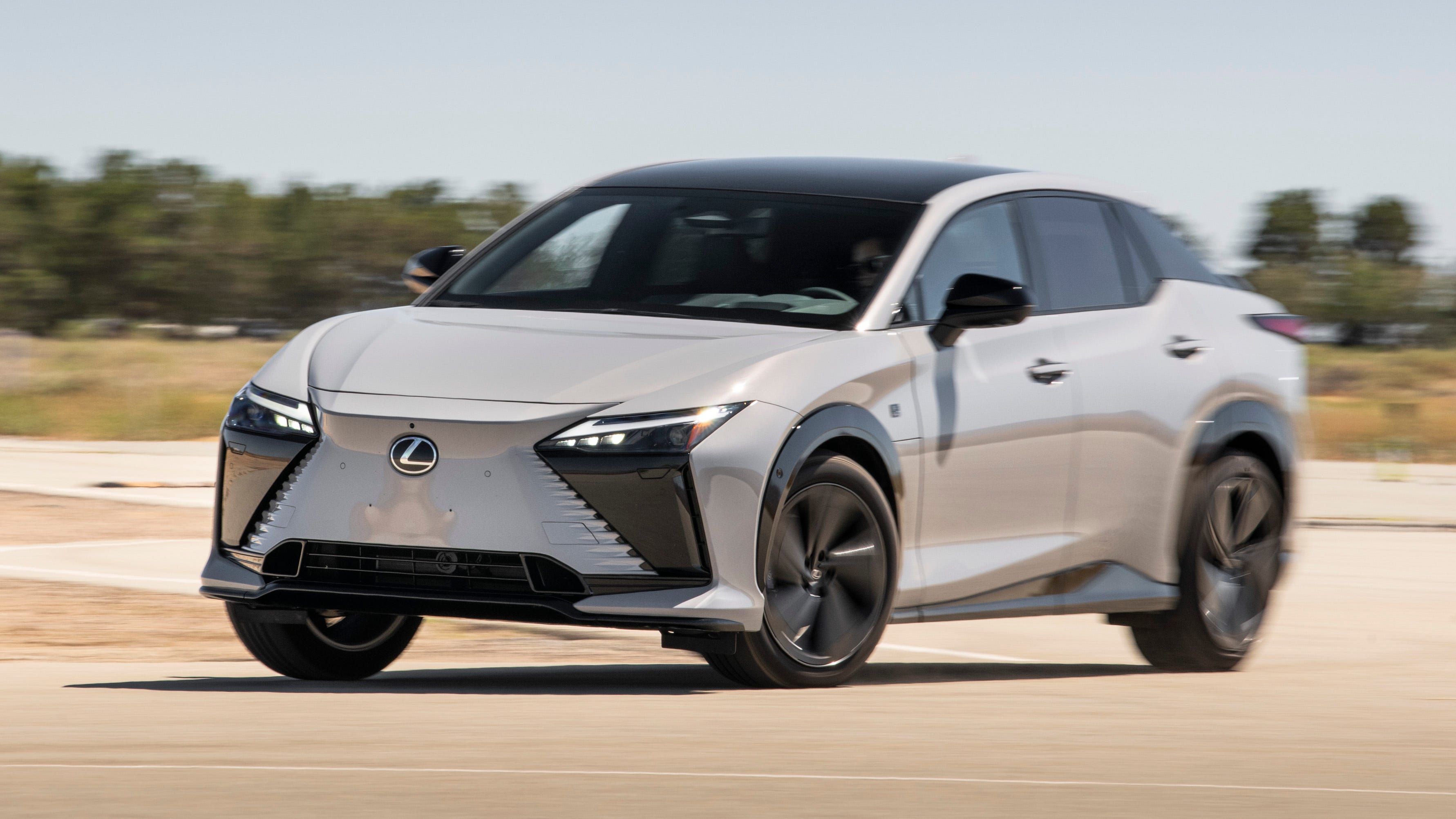
In case you hadn’t heard, manual modes for performance-oriented EVs are all the rage now, and hearing things is one of the things that comes with the experience. Take the setup that’s bundled as part of the F Sport package for the 2026 Lexus RX550e. Tap the M button, and you can start using the 550e’s paddles to “shift” gears, complete with a sound profile that can best be described as an angry, 10,000-rpm vacuum cleaner. It works OK, but a Hyundai Ioniq 5 N this isn’t.
While we admire the attempt to F Sport it up, the whole thing is mid in its execution, not quite an F, maybe a C. It’s part of a pattern we found with this Lexus in particular. What it does, it does well. After that, it’s a mixed bag at best, which is pretty much what we’ve come to expect from the present generation of Lexus and Toyota EVs.
Remember the Lexus IS F? We sure do. That V-8-powered rocket sled of a sedan rushed from 0 to 60 mph in 4.5 seconds in our testing. Then there’s the mighty Lexus LFA supercar, the carbon-fiber-clad V-10 beast from the far east that touched 60 mph in 3.8 seconds.
But as Bob Dylan famously sang, “the times they are a-changin’,” in this case thanks to all-electric powertrains, to the point where a 4,722-pound SUV with 402 hp can match one of Toyota’s all-time great sports cars from 0 to 60 mph, doing the sprint in the same 3.8 seconds as the LFA.
It’s all relative when you start to put things in context, however, as many of the contemporaries of the dual-motor, all-wheel-drive Lexus RZ550e F Sport have posted similar or better numbers in our testing, with the best of breed being the Ioniq 5 N. Launching the RZ is simple enough; we put it in Sport mode with traction control off and mashed the go pedal. You experience some squat as it launches, and its updated e-Axle system apportions torque, but once underway it smashes electrons all the way through the quarter mile in 12.3 seconds at 111.4 mph. In case you wondered, the LFA took 11.8 seconds at 123.7 mph.
This is where things start to go off the third rail a bit. Unlike the Lexus F cars of yore, the modern Lexus F Sport models are lightly dusted sport packages and not fully formed and engineered sports cars, so more context is required. During our testing, we had the most issues with the RZ’s brakes, which served up a heaping helping of double trouble at the track.
Every time we attempted to brake hard into our figure-eight handling loop, the ABS came on harder than a telemarketer who finally got you to pick up the phone, so much so that even when we took our foot off the pedal, we still felt it working. It led to just average results as we couldn’t get it properly settled into hard braking zones. And despite being shod with a solid set of Dunlop SP SportMaxx summer tires, the 119-foot 60–0-mph braking number was also on the disappointing side.
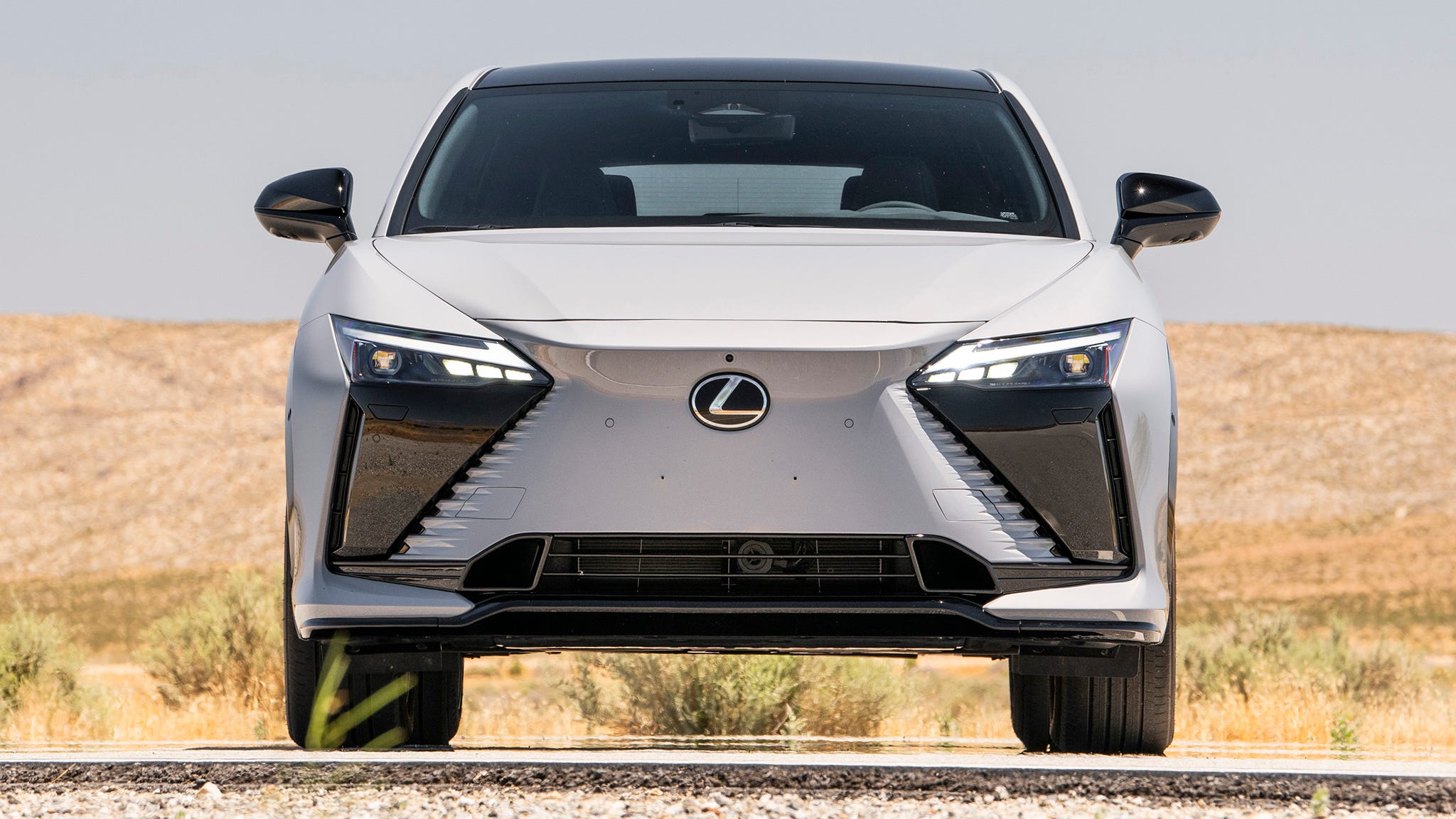
It wasn’t all sad-face emoji, as we were able to get a pretty good feel for things steering-wise, but this is an SUV that, like several in its class, is more of a point and shoot, stoplight sleeper that will dust many an unsuspecting sports cars packing gas-fed heat under the hood. Will you be able to play around with it some on your favorite switchbacked back road? Yes-ish. Just be advised, despite those strange pointy spoiler things jutting out from each side of the roof and its cheeky rear deck wing, this car is about straight line go; the rest is mostly for show.
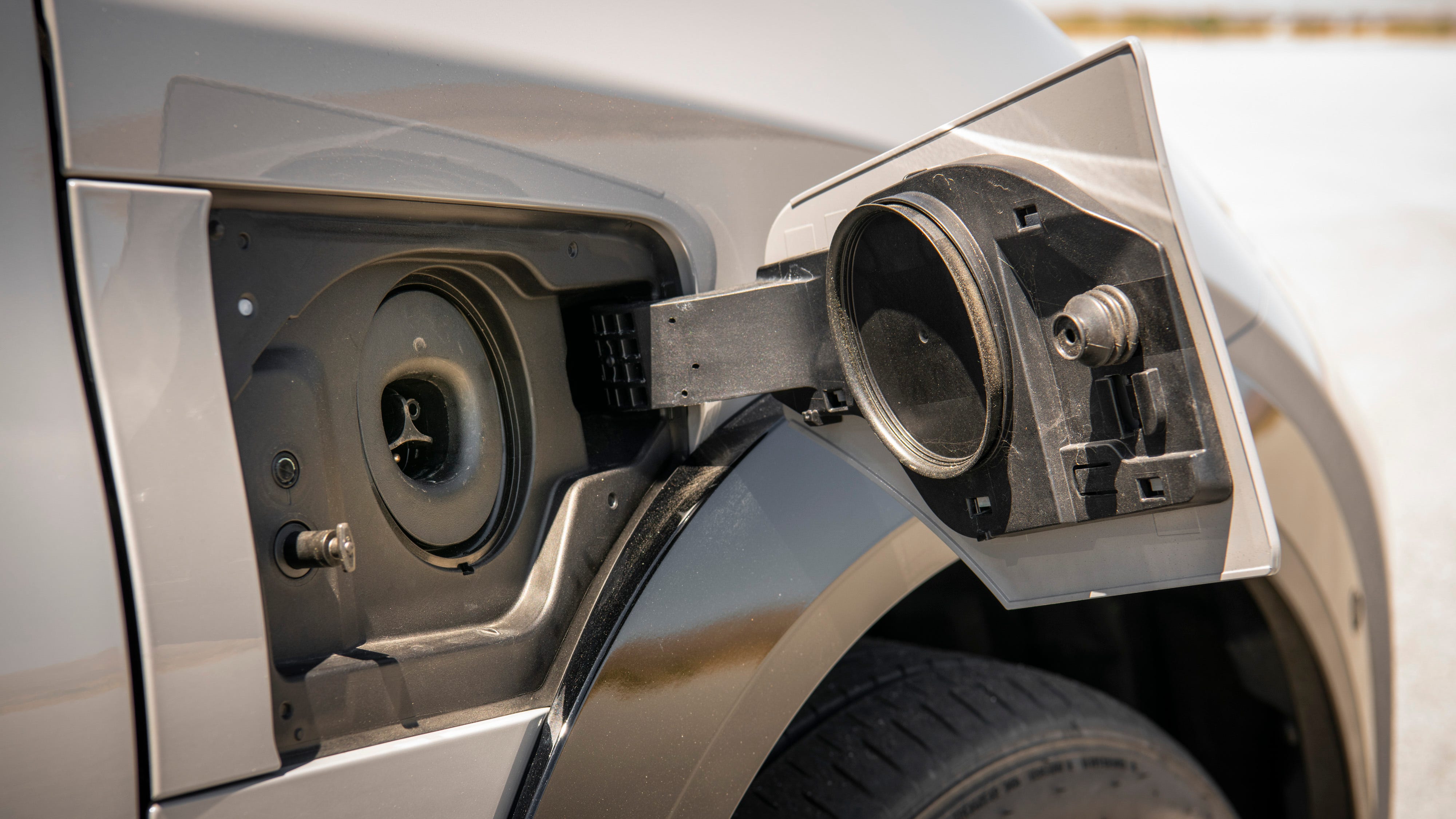
It’s no secret that the present generation of the Toyota and resulting Lexus EVs have been less than average from charging and range standpoints, to put it charitably; despite some recent enhancements, things haven’t gotten a whole lot better. Thankfully, Lexus fitted the latest RZ with a NACS port, so at least you have more charging locations available when you get low on juice, which our testing indicates will be often. There have also been some enhancements to both the motors and the battery pack (now at 76.9 kWh) that marginally improve things.
Given that the RZ550e F Sport is meant to be a performance model, its EPA rating of 226 miles of range is somewhat forgivable as a result. But in our MotorTrend Road-Trip Range test, where we run an EV from 100 percent to 5 percent charge at a steady speed of 70 mph, the 550e only travelled 187 miles. Dipping on the wrong side of 200 miles of range is borderline unacceptable for a modern all-electric vehicle, regardless of its mission.
It wouldn’t be nearly as big a deal if the RZ charged quickly, but that’s not really the case, either. Despite the battery pack update, we didn’t see any significant uptick in charging times over the past RZs we’ve tested, with 152 miles of range added in 30 minutes from 5 to 80 percent charge versus a prior 2023 dual-motor 450e model that added 131 miles. Better, yes, but markedly so? Not so much. Other similarly sized models like the Tesla Model Y and its more direct Genesis GV60 competitor handily outcharge it.
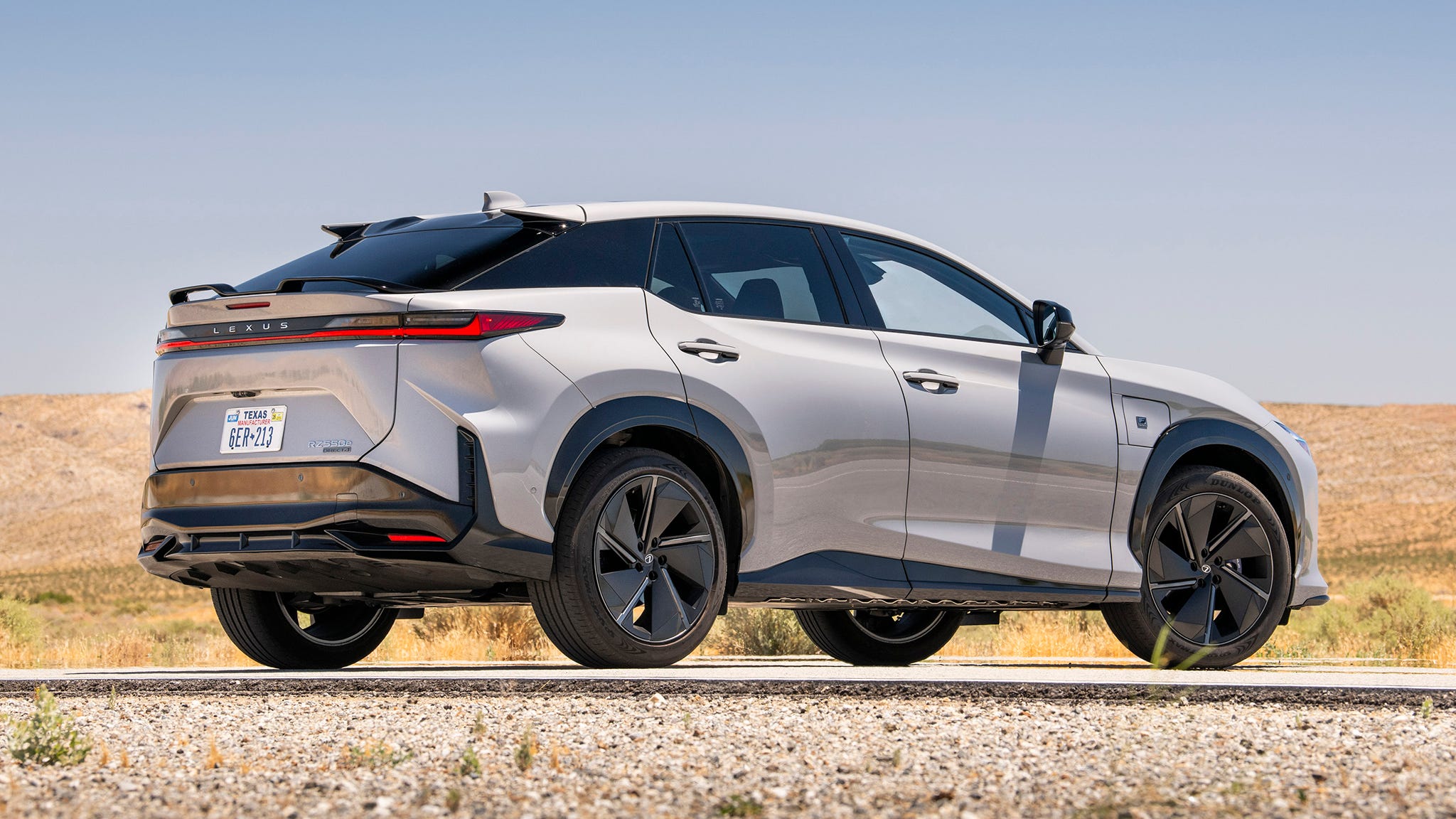
Although it would probably be best to get a prescription for some EV anxiety meds if you’re thinking about doing any extended road-tripping in the RZ550e, for around-town driving, this car is decent fun. Its compact size and relatively svelte weight for an EV means it can be shifty darting between lanes thanks to the responsive steering we experienced at the track making a net positive impact.
Over buckled pavement, the ride does an impressive job absorbing impacts, with a suspension that keeps things connected but not in a feel-every-bump sort of way. This is where the F Sport tune comes into play, and there’s just enough sport here to make things interesting. When you want to try your hand at using regenerative braking to slow the car, you can use a paddle to boost the regen levels to help take the load off, and the brake pedal itself is easy to modulate in typical slowdown situations.
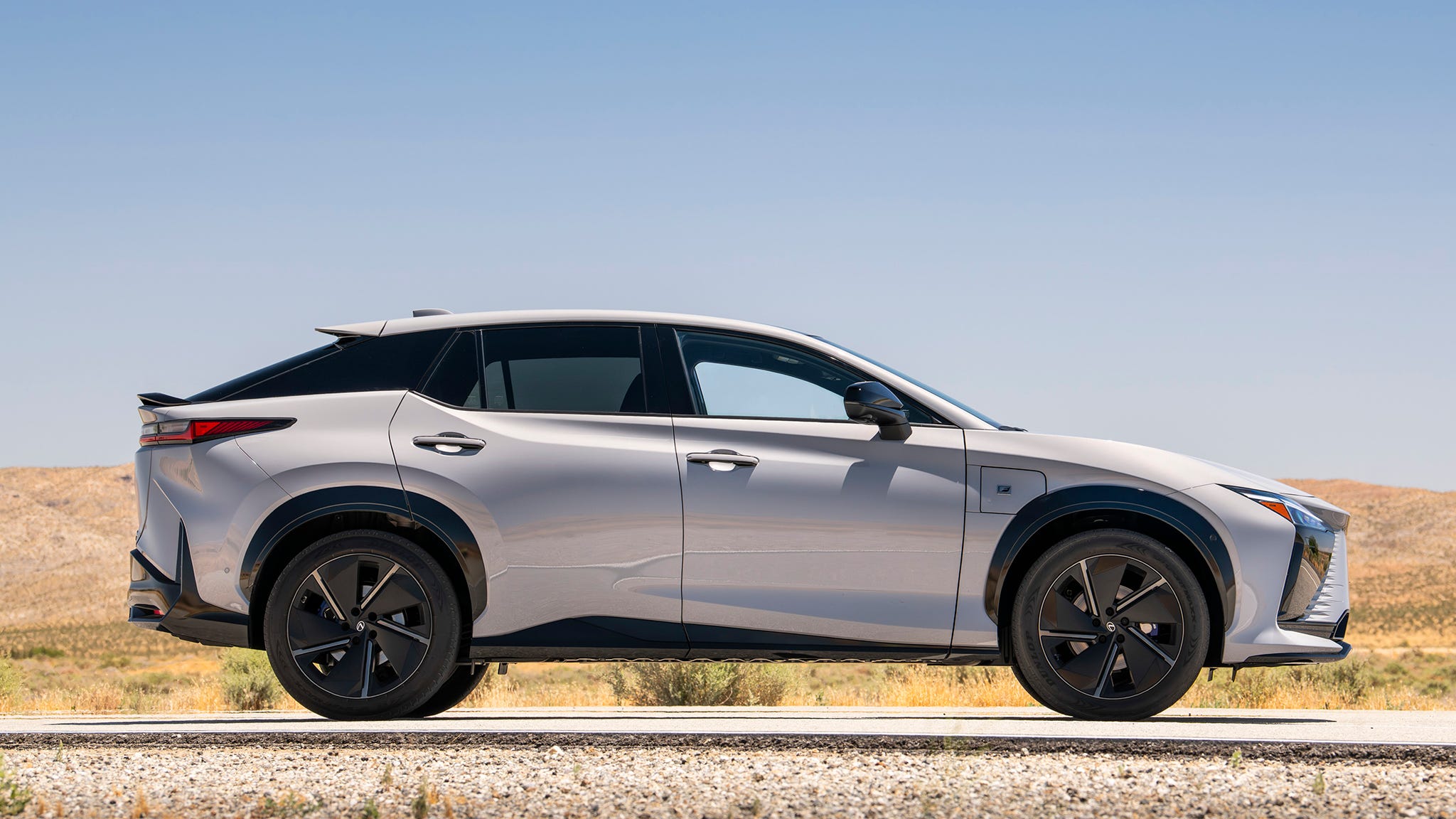
As for the F Sport package, it mainly does good things to adorn the exterior, save those weirdo spikes at the top of the rear hatch, and we really dig the aero-covered, turbo-fan look of the 20-inch rims. Overall, it looks the part of a machine with some mean.
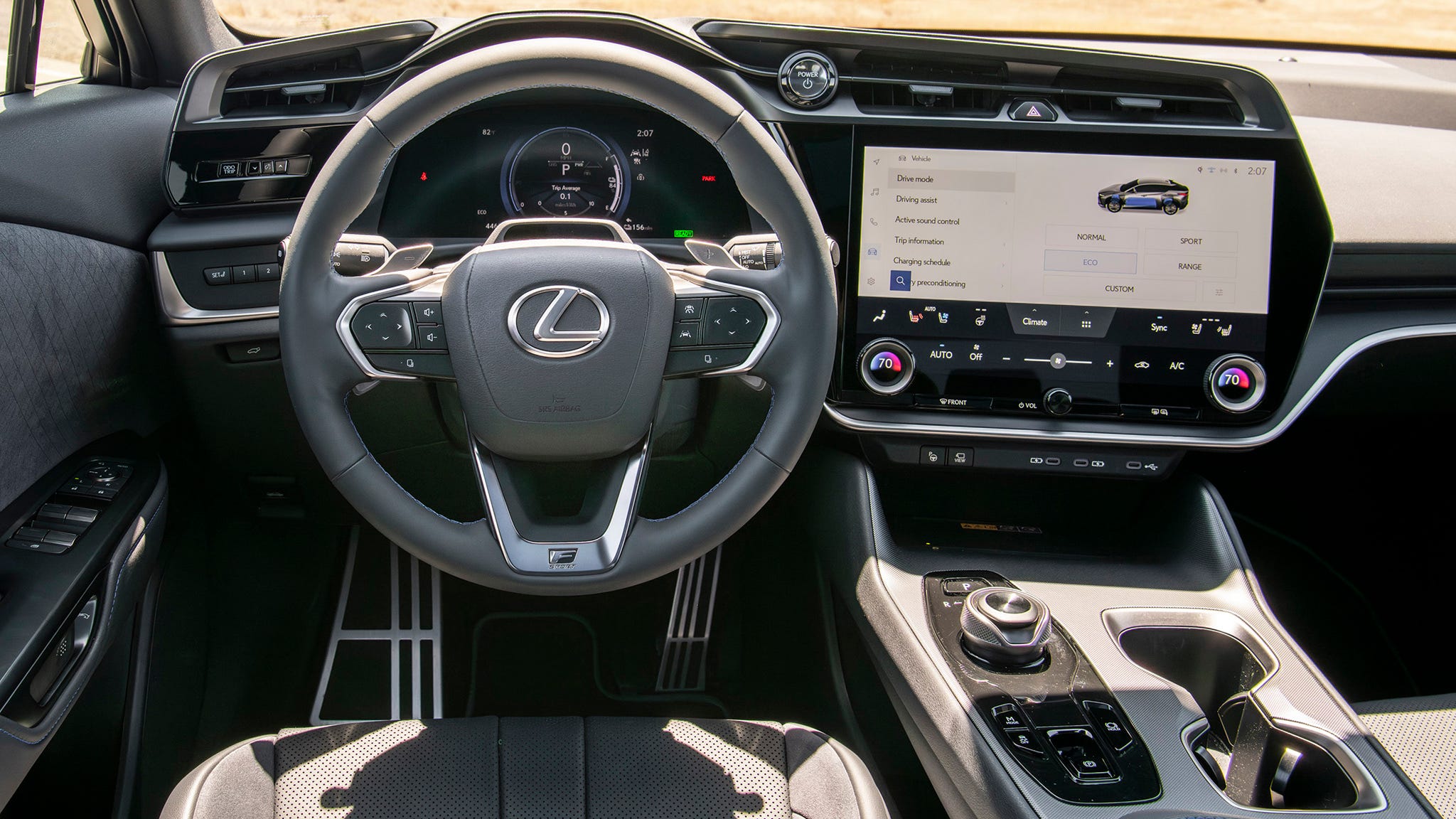
The RZ550e’s interior is another of its bright spots, thanks in part to the F Sport special bucket front seats and steering wheel and the new Lexus 14.0-inch infotainment screen that’s one of the better units going. We would like to see that extended to the instrument panel, which gives the cockpit its own feel but also looks dated. Competitors like the GV60 integrate both into one broader, more cohesive package.
Other interior highlights include a large panoramic dual-pane glass roof, quality materials, and top-shelf fit and finish that Lexus vehicles have become known for. There are also redundant buttons for key controls and copious power ports, and the rear-seat occupants won’t want for head- or legroom, despite its smaller dimensions. As with other Lexus models, the RZ also comes with a plethora of safety and advanced driver assist systems, but drivers should be prepared to be over-nannied by some of the proximity sensors.

It’s also a decent value, all things considered. At $62,034 all in, it’s less than the lesser 2023 450e we tested and roughly 12 grand less than the 2026 GV60 we evaluated, with the only real option being a $2,600 Luxury package that adds a remote park feature, a high-spec Mark Levinson sound system, and several subscription-based services such as digital key, traffic jam assist, and remote connect.
We see what Lexus attempted to pull off with the 2026 RZ550e F Sport, and we applaud the effort to get this EV to move quickly in a straight line. However, for it to match models like the Hyundai Ioniq 5 N, it needs more than a meh M mode to do it. It needs a real F grade—and we don’t mean fail.
Comments (0)