
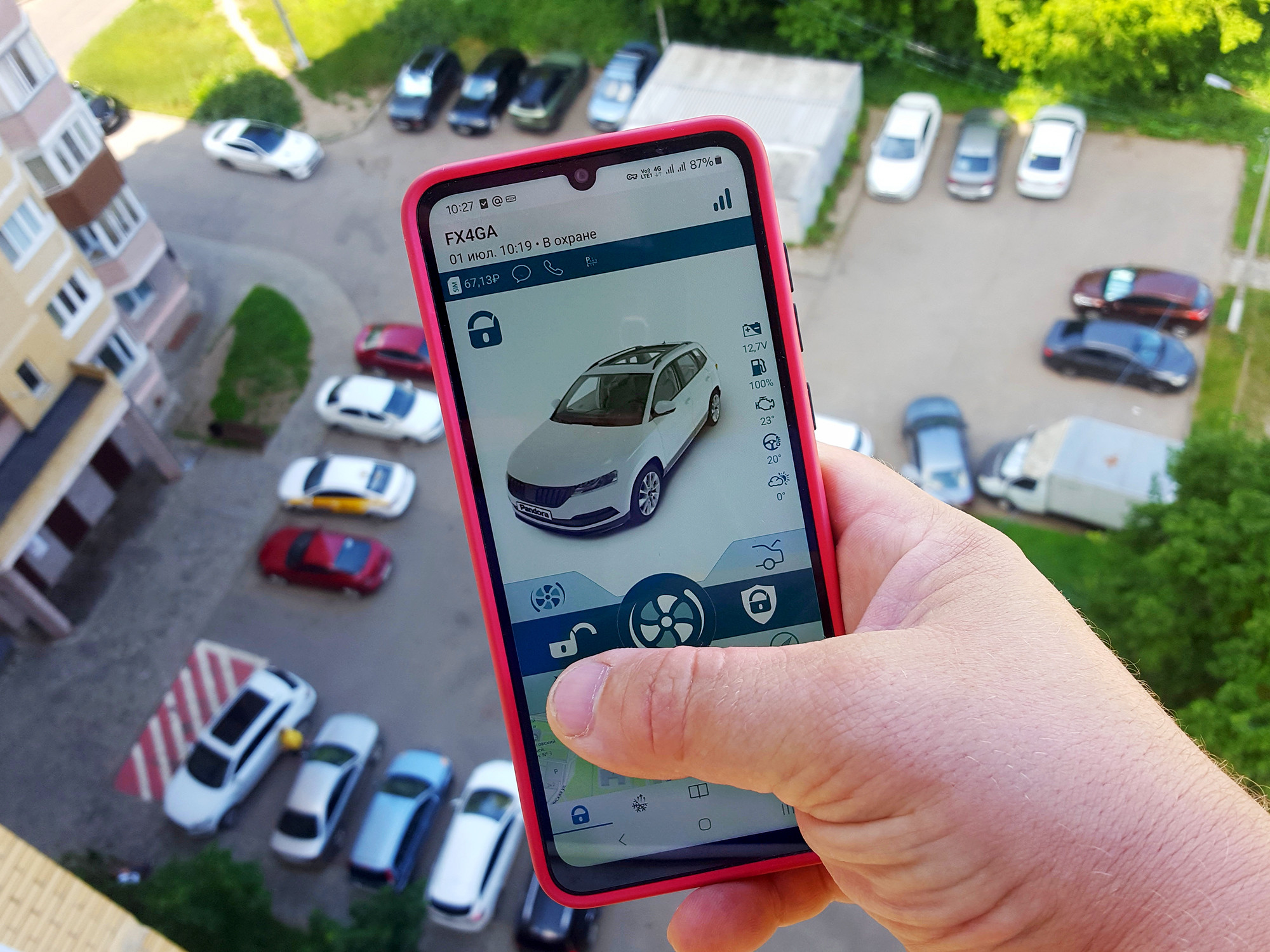
New restrictions on SIM cards in Russia could, in some cases, make remote monitoring and control of one's own car equipped with a modern GSM car alarm system impossible. Why this might happen and what to do about it, we will examine in our publication.
The authorities are preparing new restrictions for SIM cards, reports Kommersant. M2M SIM cards are planned to have their ability to transmit voice information and send SMS messages disabled in order to protect citizens from fraudsters. It is claimed that attackers register such "SIM cards" in bulk and use them to make mass spam calls.
M2M stands for "Machine-to-Machine." Simply put, these are SIM cards for various types of smart devices that transmit data. These cards are inserted into payment terminals, video surveillance cameras, barrier gates, "smart home" systems, and other similar devices. For example, into modern GSM/GPS car alarm systems. It would seem, why would you need to make calls through them? But it's not that simple!
In modern GSM car alarm systems controlled via a mobile app on a smartphone, two communication options are used between the owner and the car (excluding the radio channel of the key fob, which is not truly long-range).
The first is through the mobile internet channel and the mobile app interface. This is the most convenient option, but this channel does not work if mobile internet is turned off or jammed. And such occurrences have been widespread and regular lately.
The second is precisely through the regular voice communication channel, which works quite successfully under mobile internet restrictions. That is, you can call the car's number (from any phone, including a landline) and, by pressing a specific combination of buttons on the phone, send a command to start the engine, disarm the alarm, or perform another available action. The list of these commands is available both in the paper instructions for the alarm system and in the mobile app. By the way, pure voice communication is also used: in case of an alarm, the system calls the owner's phone, notifying them of breached security zones and triggered sensors, and via the microphone built into many alarm system units, you can listen to the situation inside the cabin to understand if an intruder is inside tampering with the wires.
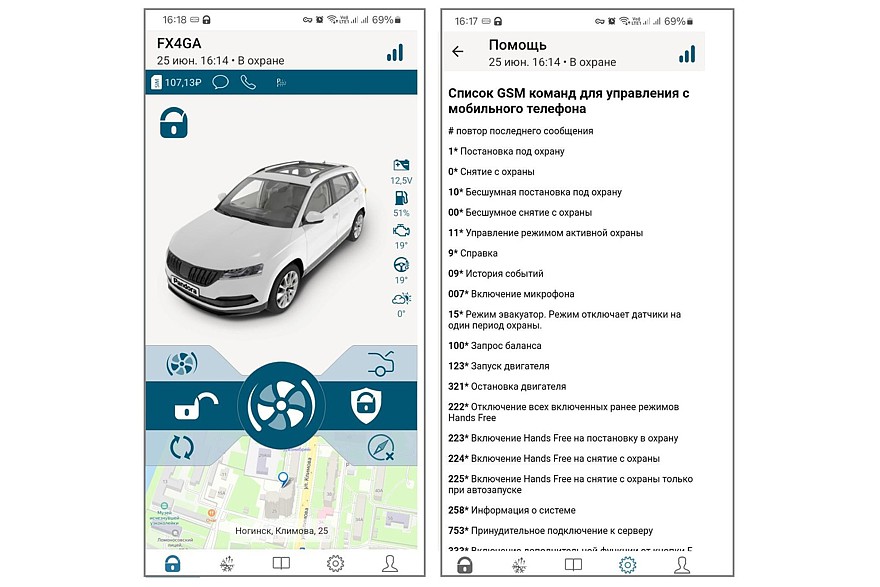
This second channel of "button commands" and voice communication has been thoroughly mastered by many car owners over the past year and a half of endless mobile internet outages, whereas previously not everyone even knew about this capability of their own alarm system.
What will happen if M2M SIM cards have their ability to transmit voice information and send SMS messages disabled? In the case of stable mobile internet – nothing: the user won't even notice the changes. But when it is temporarily disabled, you will no longer be able to call your car's alarm system and, for example, start the engine for winter warming and turn on the windshield for defrosting, or activate the air conditioner for summer ventilation. And the car won't be able to call you if there is an attempted theft or break-in. And this is an absolutely realistic forecast that radically reduces the convenience of using a car, dragging us back to a "medieval-Zhiguli" level.
However, manufacturers of car alarm systems, whose product range now predominantly features models with GSM control over simple purely "key fob" models, urge not to panic prematurely.
A specialist from the company "Pandora," whom we also asked to comment on the situation, speaks about the "white list":
Legislation in the telecommunications sector has been changing very rapidly lately, and the speed of implementing such initiatives is alarming. We are discussing this initiative with telecom operators. For our users within the framework of Pandora telemetry systems, this could certainly affect part of the user functionality. We cannot provide any specifics yet; we will work out a solution together with our partners as the main SIM card suppliers. As for "white lists," we are making every effort to ensure the operability of our GSM systems under blocking conditions.
Well, that's good if so. But what if not? Even a "white list," as internet users know from practice, is not the most stable thing. Sites on the list may slow down or not open at all during restrictions. And not all car alarm manufacturers will end up on this "white list," so what should those drivers who chose other brands of security systems do? No matter how you look at it, the potential problem is obvious.
In this situation, we see a typical attempt in our reality to act in a less-than-logical way. If spam calls from such cards are indeed a reality, and not just a "just in case" assumption by officials, then something certainly needs to be done. However, a solution has existed for a long time: any mobile operator has the technical capability to see which device any SIM card registered in its network is operating in. And, accordingly, can easily distinguish at the software level a smartphone from a barrier gate, and a tablet from a cash register. And nothing prevents the management of mobile operators from instructing their programmers to write some software that will detect voice and SMS traffic coming from a SIM card installed not in a smartphone or tablet, but in a vacuum cleaner or gas meter. And automatically limit or disable this traffic. It's unclear why this wasn't done long ago.
Or rather, it is clear, of course. The number of M2M SIM cards in Russia is estimated at about 60 million pieces — one-fifth of the total. This is a huge array of paid service generation – traffic, calls, and SMS. Mobile operators will maintain an innocent expression until the very end and will gladly serve such subscribers, even if they see that some "barrier gate" is making voice calls to hundreds of new numbers every day.



Comments (0)