
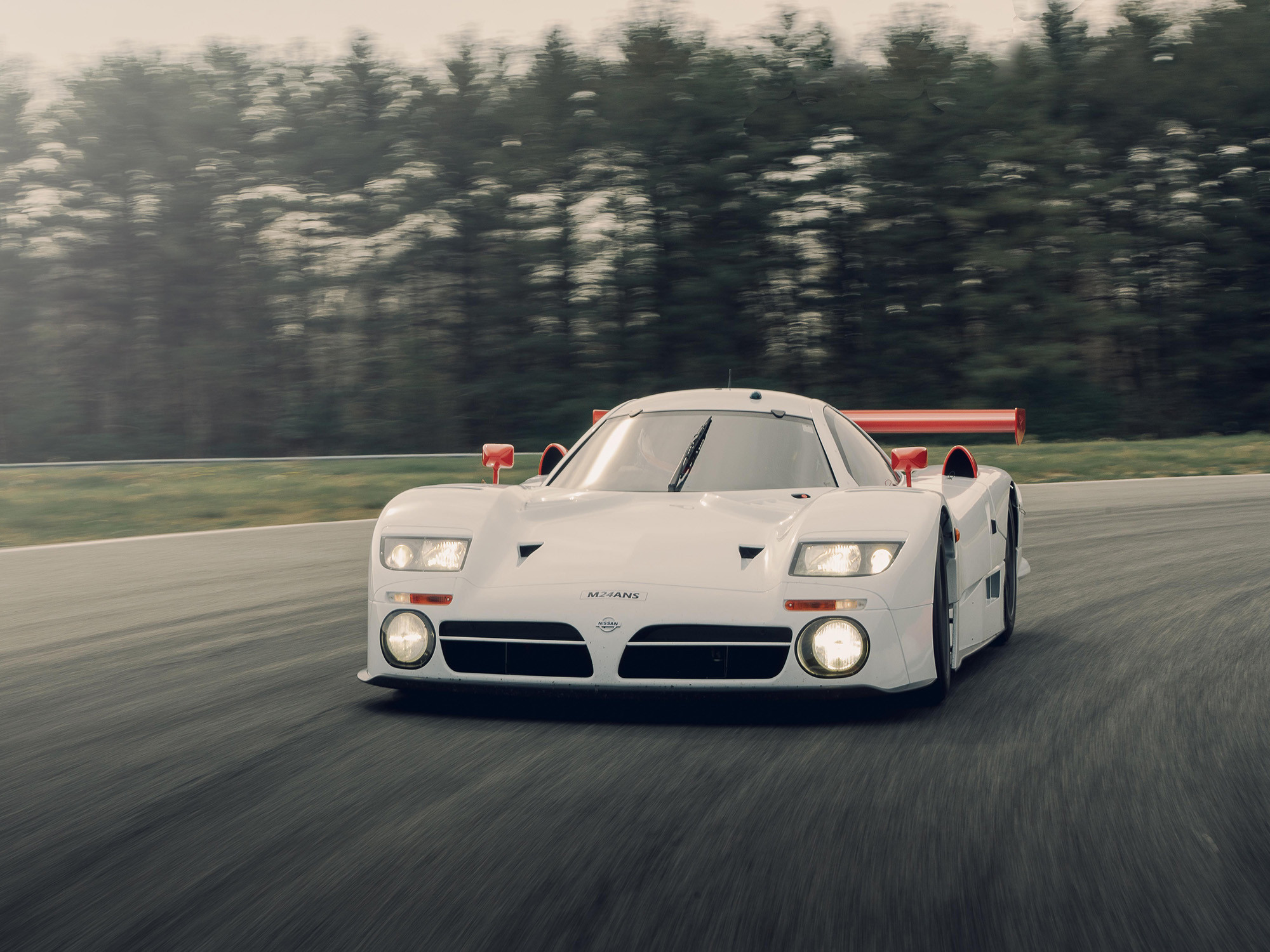
Few people know, but several years before the appearance of the Bugatti Veyron hypercar with its fantastic performance and mind-boggling price tag, owners of thick wallets could buy equally expensive cars. And not only in England or Germany, but also in Japan. Moreover, from a company that has always positioned itself as a manufacturer of mass-market cars.
Despite the fact that in the mid-nineties the Japanese automotive industry was confidently conquering the world, and Japanese engines had earned a good reputation in Formula 1, the Japanese achieved very modest success in the most prestigious 24-hour endurance race at Le Mans. In 1991, the rotary Mazda 787B won the first and, at that time, only victory for Japanese teams, and, of course, this state of affairs did not suit the Japanese.
In 1996, Nissan's management decided to create its own LMGT-1 category sports prototype and enter it in the 24-hour Le Mans race the following year. True, it immediately became clear that developing the car in-house would take a lot of time and might not meet the deadlines. And this was, to put it mildly, not very good, because the "sworn friends" from Toyota were also actively preparing to conquer Le Mans.
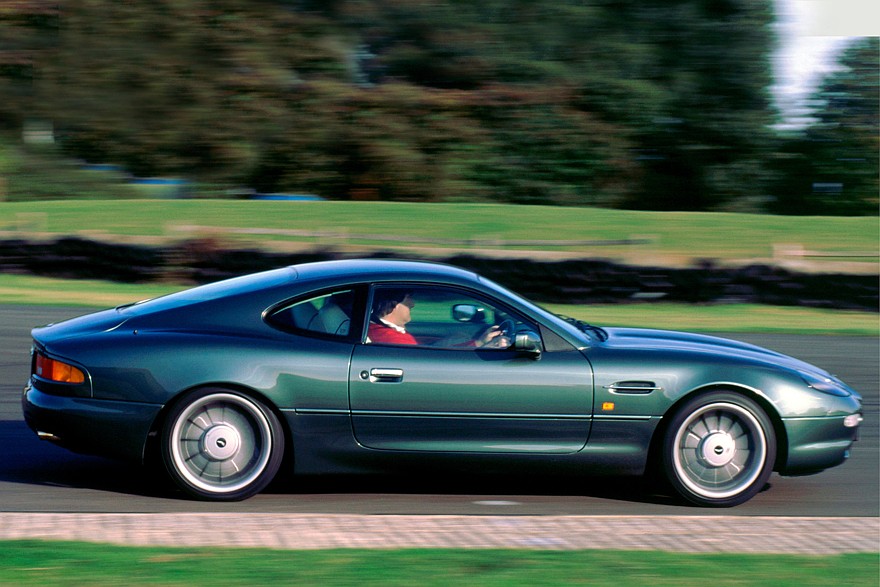
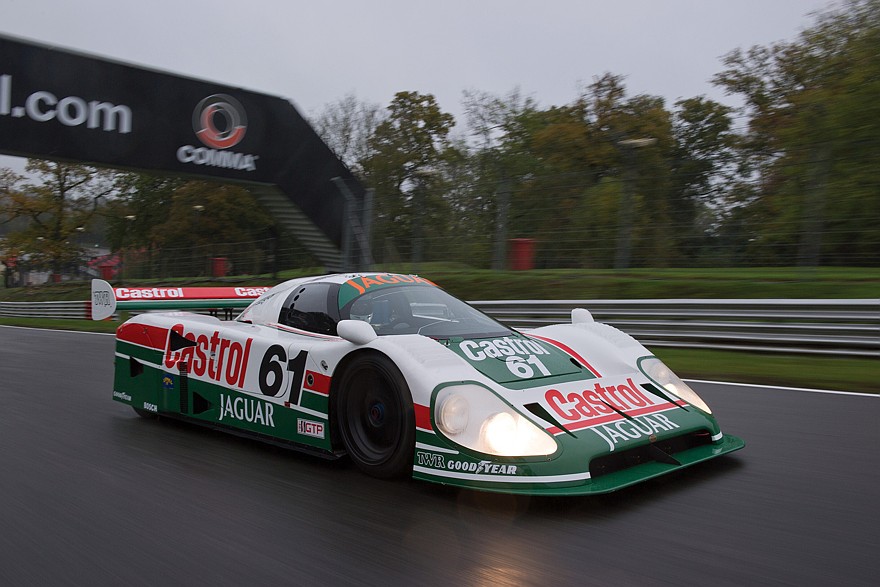
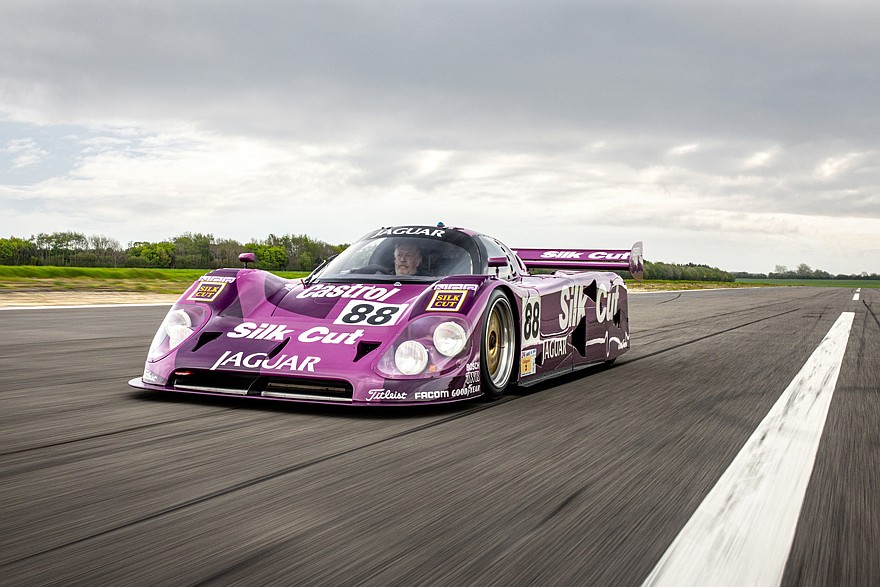
It cannot be said that the Japanese had never faced the problem of lack of time. For example, when developing the Nissan R89C sports prototype in the late eighties, its creation was entrusted to the British firm Lola Cars, which promised to meet tight deadlines. The British kept their promise. True, Nismo, the Nissan factory team, was not thrilled with such cooperation, as the car did not show the expected results. Nevertheless, this time the Japanese decided to look for partners in England, or more precisely, entrusted the car's development to Tom Walkinshaw Racing (TWR). At that time, this firm could boast not only of its own Formula One team, Arrows, but also of excellent designers such as Ian Callum and Tony Southgate. The former participated in the development of the Aston Martin DB7, while the latter's portfolio included two Jaguar sports prototypes – the XJR-9 and XJR-12, which won Le Mans in 1988 and 1990. Southgate was considered one of the most experienced designers, having worked on numerous Formula 1, IndyCar, and other racing series cars in his time. Therefore, it can be said with complete confidence: when the Japanese chose TWR as a partner, they definitely went to the right address and could expect a very good result.
But while there were no problems with funding and engineering personnel, the time deficit was noticeably felt. However, Southgate and Callum were no strangers to creating cars in tight deadlines, and they, without putting things off, began work on the sports prototype, named the Nissan R390 GT1.
The car was developed in England, at TWR's base, while final tuning was handled in Japan by Nismo engineer Yutaka Hagiwara. To save time, a slightly modified Jaguar XJR-15 monocoque was used as a base, the engine – a 3.5-liter twin-turbo V8 VRH35L – was found in Nissan's storerooms, and a six-speed sequential Xtrac gearbox was borrowed from Jaguar. The result was a mid-engine, rear-wheel-drive sports prototype with a carbon fiber body, weighing 1098 kg, 4.58 m long, 2.00 m wide, 1.09 m high, and with a wheelbase of 2.72 meters.
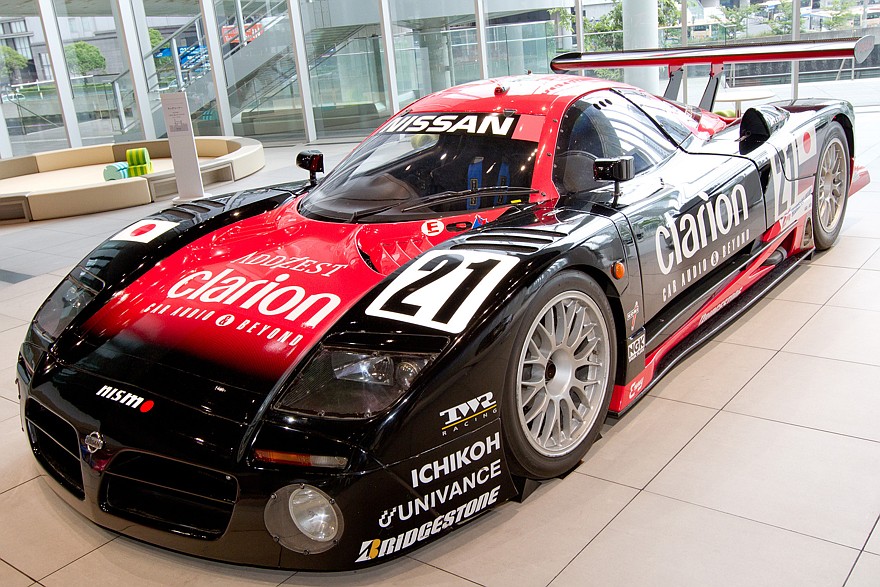
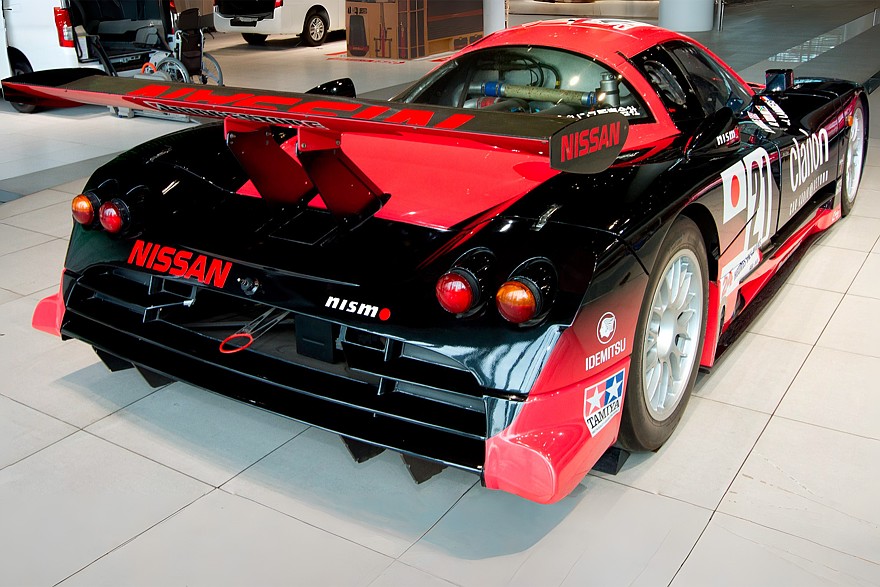
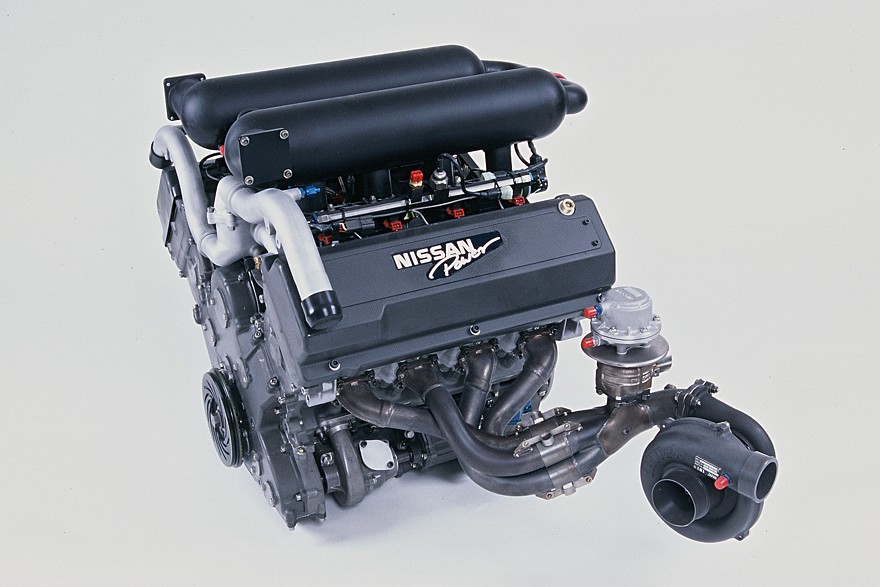
Since the Nissan R390 GT1 belonged to the LM-GT1 sports prototype category, according to existing rules, it had to have not only a racing but also a road-going version. This rule always greatly annoyed automakers, as it was frankly pointless and clearly not beneficial to motorsport. Apparently, officials were trying to adhere to certain "unshakable foundations" and the "spirit of Le Mans," trying to prove to the whole world that not only aristocrats and wealthy owners of factories, newspapers, and steamships could participate in car races, but also ordinary people. All this might have been relevant until the mid-sixties of the 20th century, but then, when motorsport turned not so much into a sport as into a multi-billion dollar business, this rule began to reek of outright archaism, and in places, stupidity. Sports prototypes were little inferior to Formula 1 cars in their characteristics and degree of uniqueness, yet it would never occur to anyone to demand that Formula 1 teams also create road versions. All this remained far in the past, in the era of Tazio Nuvolari or Jack Brabham, but in the mid-nineties, no one thought of abolishing this essentially absurd rule mandating a road version.
Rules are rules, and Nissan, or rather TWR, first created the racing sports prototype Nissan R390 GT1, and then presented its road version, deciding to limit itself to a single example. Fortunately, the rules did not specify exactly how many cars needed to be built. So the Japanese decided to take advantage of this loophole, especially since the project budget was not unlimited.
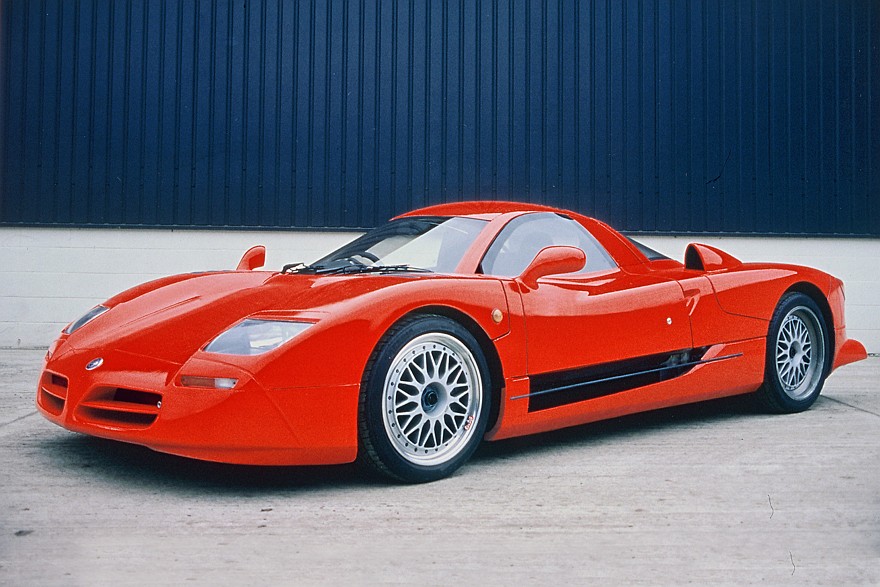
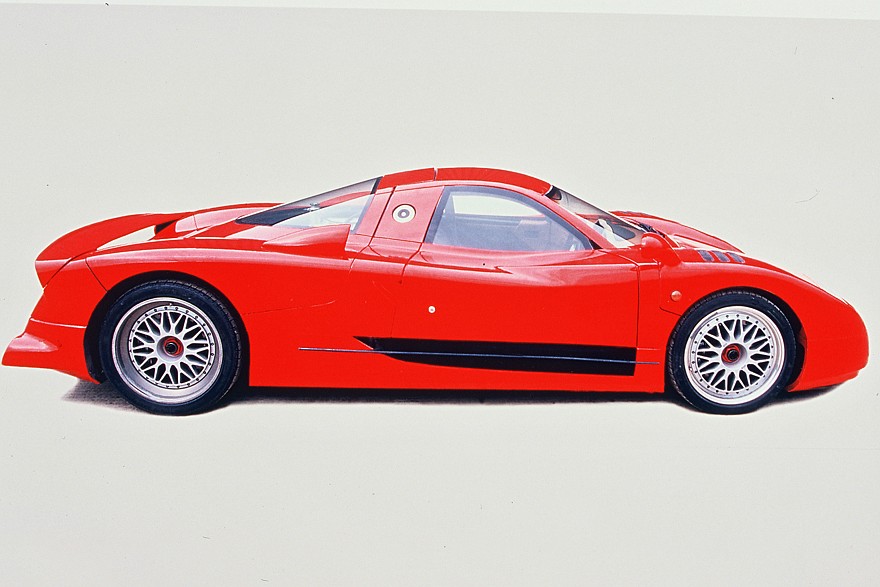
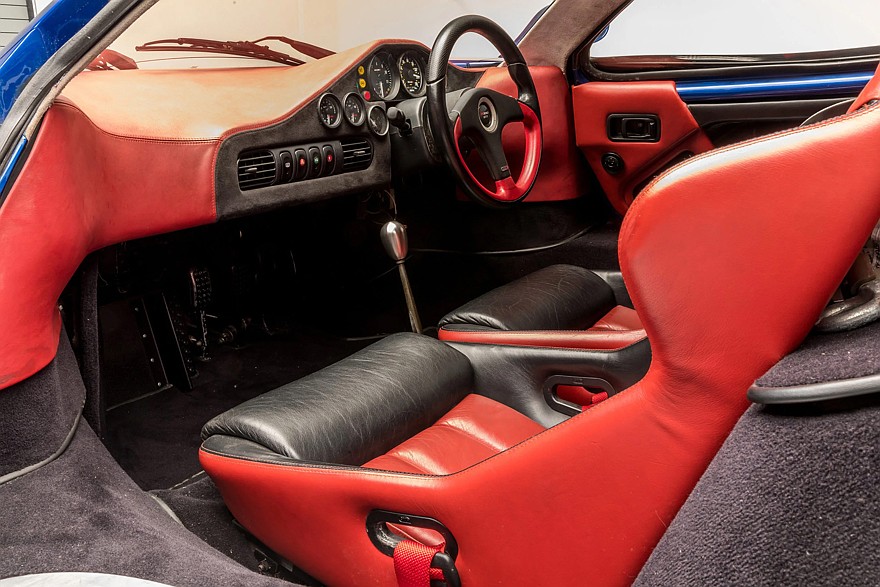
The sports prototype had its huge rear wing removed, mirrors replaced, headlights removed from the bumper, leather seats installed in the cabin, and the dashboard also upholstered in leather. The maximum speed was limited by an electronic "collar" to 270 km/h, which was 50 km/h less than the racing version, and the engine was detuned from 641 to 550 hp. The power reduction allowed the car to meet the environmental standards in effect at the time. However, despite all the tricks, one look at this car, 1.09 m high and with a ground clearance of 90 mm, was enough to understand: this was anything but a car for public roads. If there was anything civilian about it, it was only the headlights from the Nissan 300ZX. However, the Japanese certification authorities did not think so. Formally, all requirements for car certification were met, and the car was issued the necessary documents allowing it to drive on public roads. It is worth noting an interesting point: the Nissan R390 GT1 became the third civilian sports car after the Porsche 911 GT1 Strassenversion and the McLaren F1, with a price tag of one million dollars. True, if the British supercar found 71 buyers, the civilian version of the Nissan R390 GT1 was produced in a single example. Over the years, it gained another civilian brother, but more on that later.
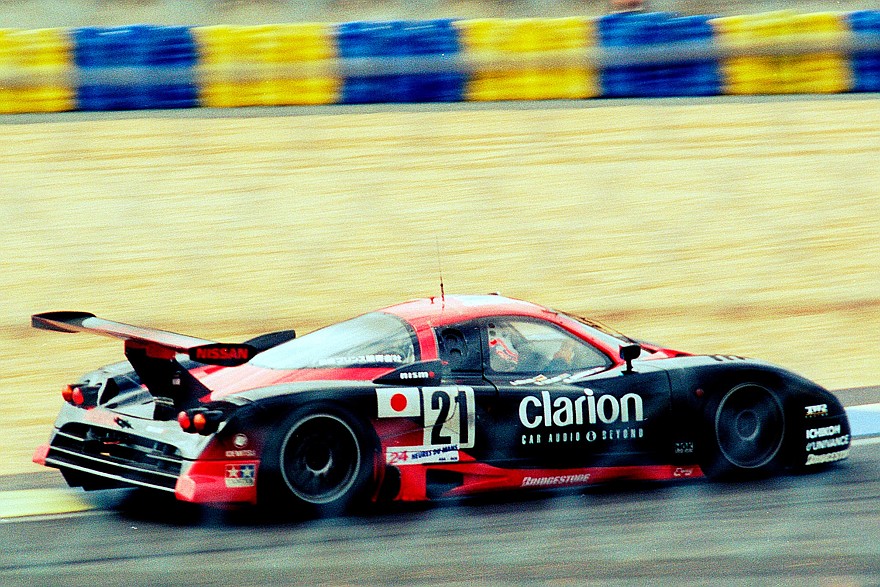
On May 14, 1997, the 65th 24-hour marathon at Le Mans began, in which three Nissan R390 GT1 sports prototypes participated. Even during test runs, the car showed decent results, but this did not cause much excitement, as the Nismo team and the creators of the sports prototype knew that the car that demonstrated fantastic reliability and whose drivers made as few mistakes as possible would win at Le Mans. Usually, before a race, many cars look good, and many even look excellent, but not all of them make it to the finish line.
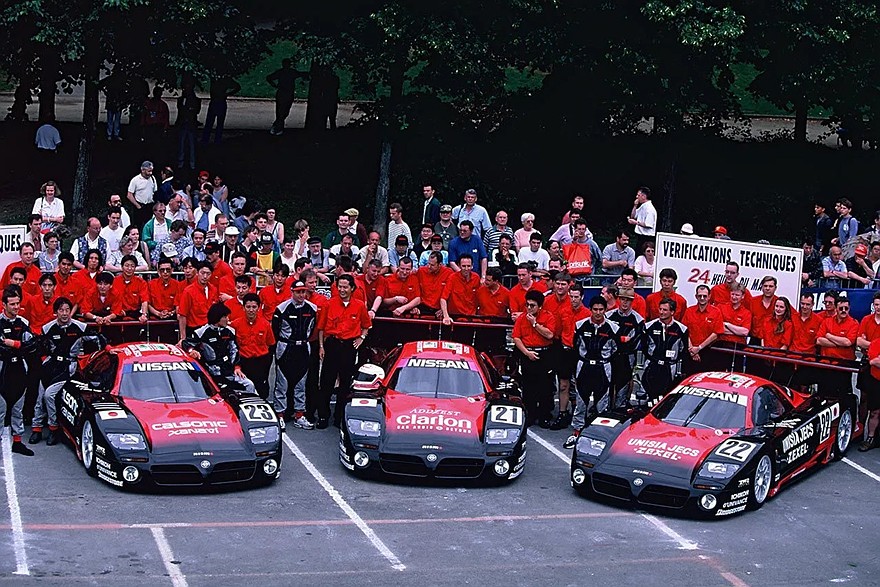
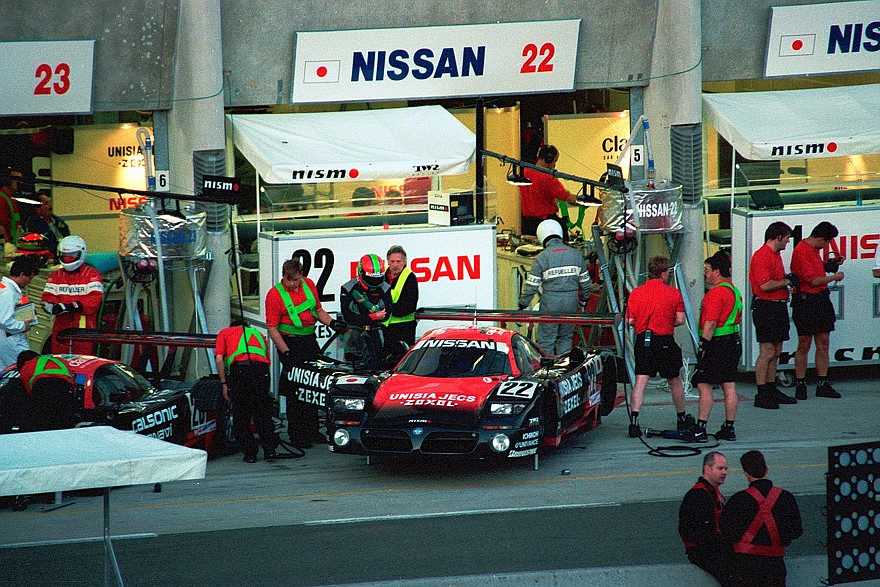
But even the pessimists did not suspect what surprises the Nissan R390 GT1 had in store for them. After the first ten laps, it turned out that the cars' gearboxes were overheating, all three of them. It was a clear design miscalculation, and after two of the three Nissan 390 GT1s dropped out by mid-race, the Nismo team braced for a global-scale fiasco. It's one thing to lose one sports prototype, or at most two, but when all cars retire without even covering half the distance, it is truly a fiasco. True, the third car, number 23, driven by Japanese drivers Kazuyoshi Hoshino, Masahiko Kageyama, and former Formula 1 driver Eric Comas from France, remained on the track, but was constantly on the verge of retirement. What saved it was that at the most critical moments, the car was called into the pits, where its gearbox was replaced. There were two such replacements, and to say that the mechanics in the pits performed a true labor feat is an understatement.
As a result, the Nissan R390 GT1 did make it to the finish, but only in twelfth place. After this, Nissan's management pondered: was it worth continuing the sports program with such dismal results and such car reliability? However, Tom Walkinshaw convinced the Japanese to let his engineers refine the car without fuss or haste, because overall everything was working normally. And if the aerodynamics were perfected, then the next year the Nissan R390 GT1 would undoubtedly show good results. Maybe even win.
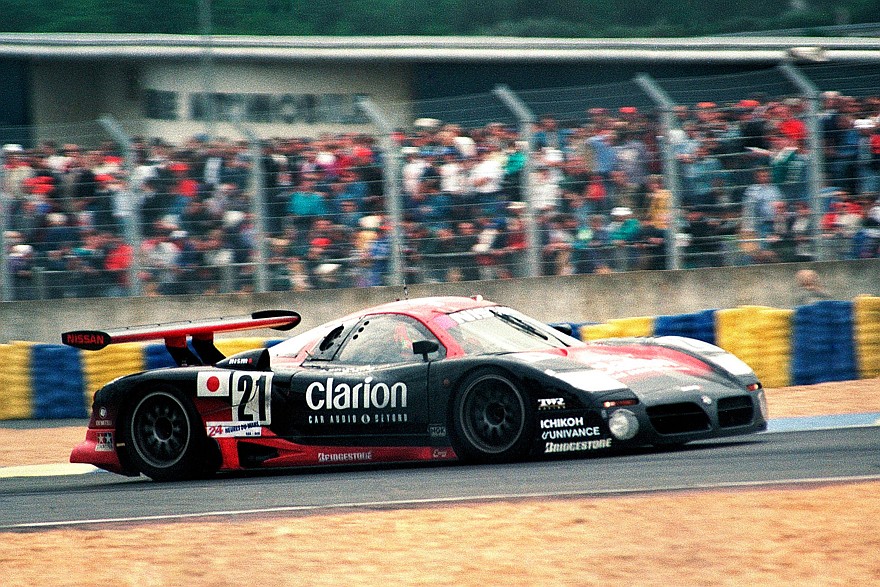
Fortunately for Nissan's management, there were smart people there who did not act rashly or draw far-reaching conclusions. Funding for the motorsport program continued, Tony Southgate refined the car, paying special attention to cooling the brakes and transmission. The rear wing was moved slightly forward, the shape of the side air intakes was changed, the rear section was lengthened by 13 centimeters, and the Williams Formula 1 team shared its traction control system.
At the same time, to avoid nitpicking from the bureaucrats of the Automobile Club de l'Ouest (ACO), responsible for organizing the Le Mans race, the civilian version was also updated, also receiving the lengthened rear section. Moreover, the Japanese went even further: they repainted the car from red to blue and changed the serial number plates.
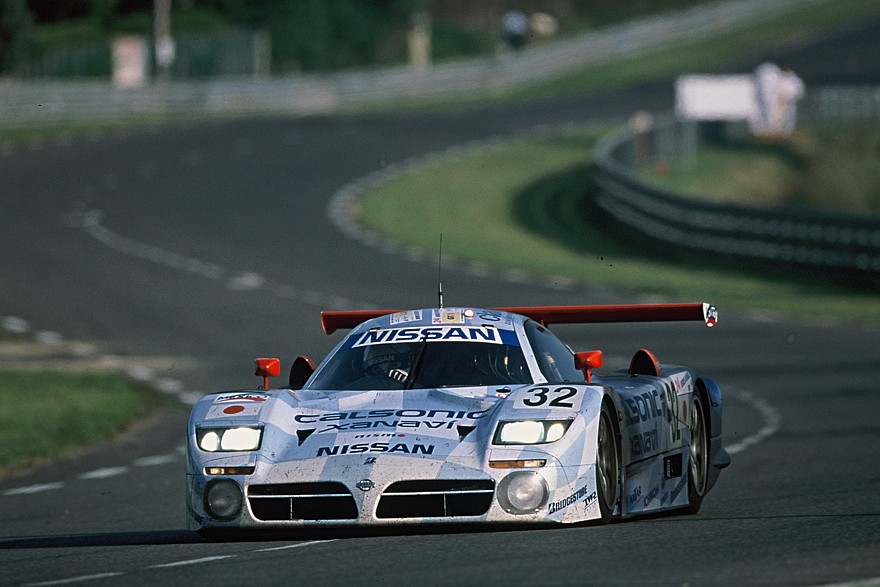
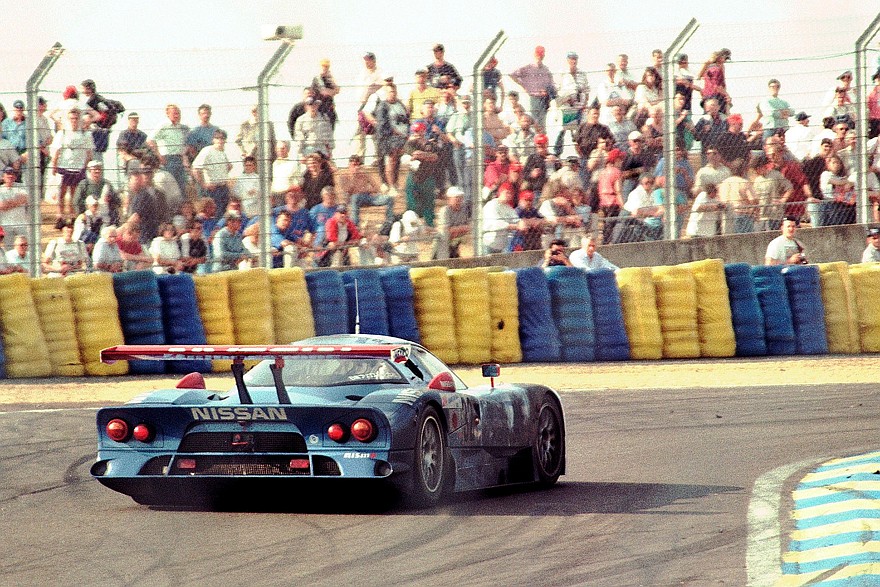
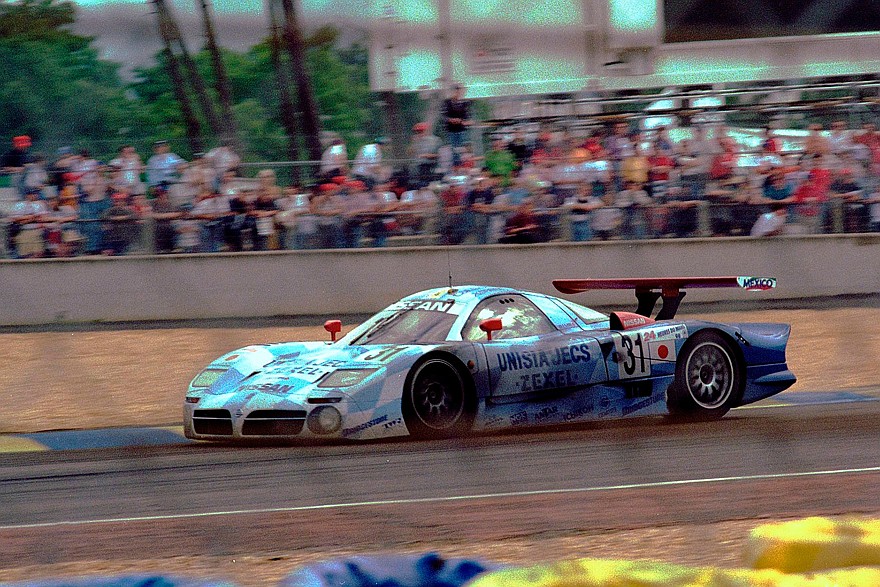
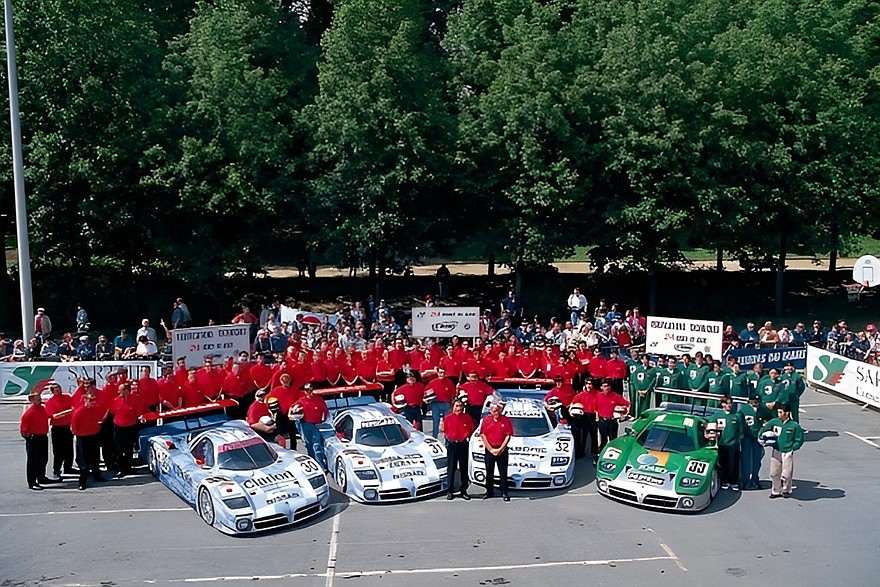
And although the improvements to the racing version were, at first glance, minor, it was precisely these that turned a good sports prototype into a truly competitive one. This was confirmed on June 7, 1998, at Le Mans, when all four participating Nissan R390 GT1 cars made it to the finish. Moreover, car number 32, driven by the same Hoshino, Kageyama, and reinforced by the legend of Japanese motorsport Aguri Suzuki, finished third. It lost only to the Porsche 911 GT1-98, but beat the McLaren F1 GTR and, importantly, the "sworn friends" from Toyota. The other three Nissan R390 GT1s finished in fifth, sixth, and tenth places.
Unfortunately, this marked the end of the racing career of the Nissan R390 GT1. In 1999, new ACO rules came into effect, which the car no longer met. The single road-going car, along with the seven racing cars, were sent to the Nissan factory museum. And they would have slept there forever for decades, but the impossible happened: French driver Eric Comas, having very close ties with Nissan's top managers, asked to be sold one of the sports prototypes. The Japanese always treated Comas very well, remembering his past merits, so they accommodated him. And the Frenchman, for an undisclosed sum, acquired the car that finished fifth at Le Mans in 1998.
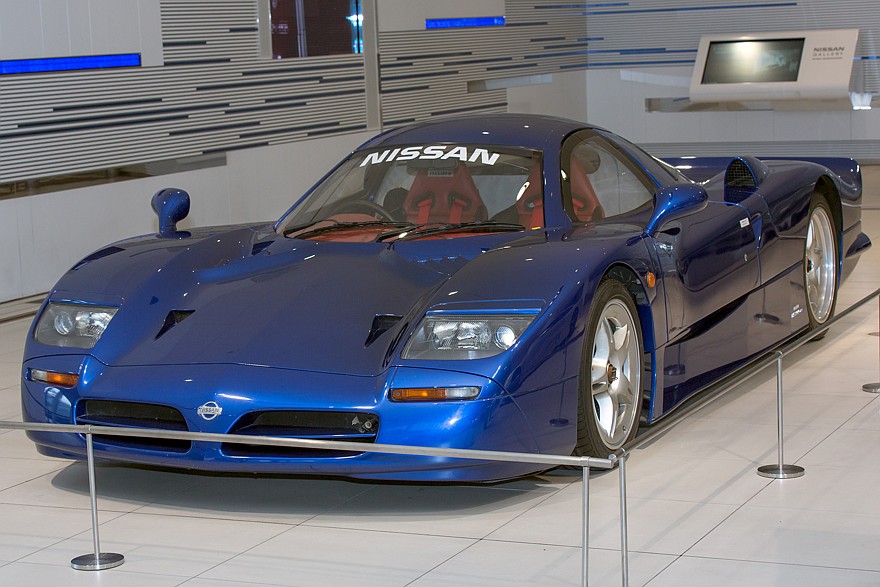
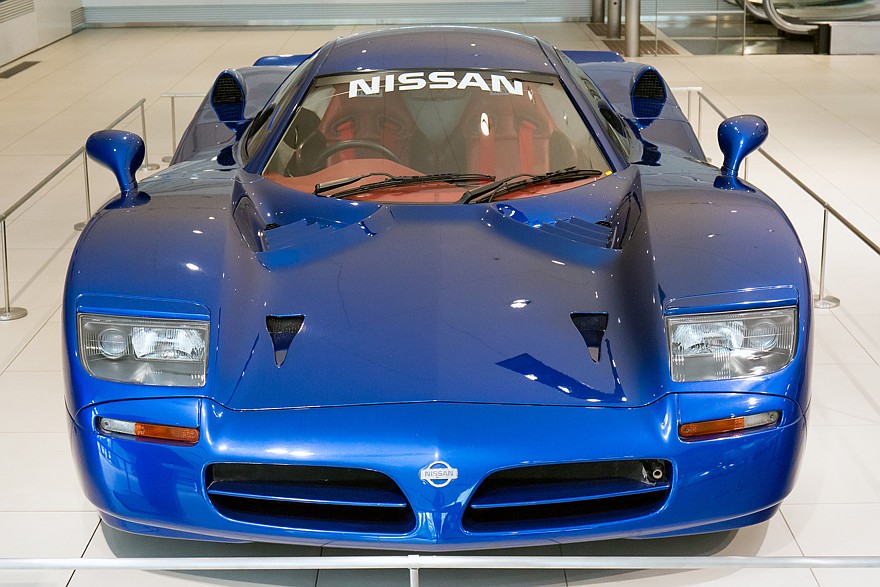
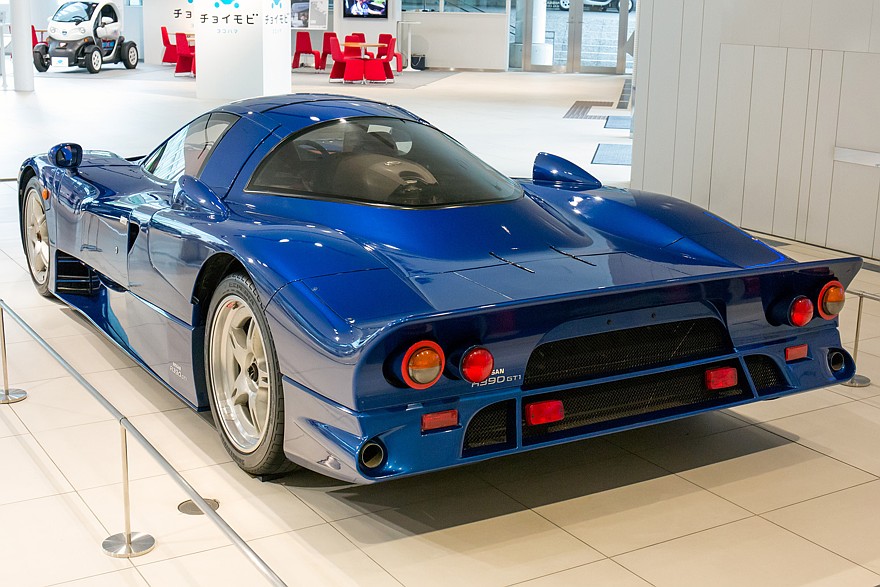
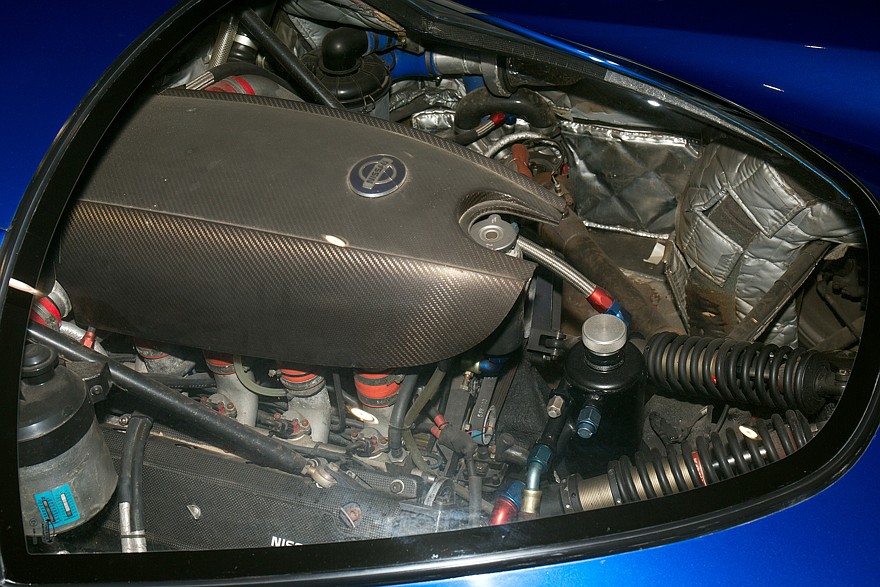
It took Comas another two years to convert the racing Nissan R390 GT1 into a road car. True, as he himself claims, only 5% of the original parts were replaced on the car, but this was enough to obtain permission to drive on public roads. Comas uses it occasionally – for example, he exhibited the car at the Concorso d'Eleganza Villa d'Este in 2022. That is, he showcased the only civilian Nissan R390 GT in the world that can be bought. Of course, only if Comas decides to sell it, which seems unlikely.
Occasionally, Nissan also shows its museum Nissan R390 GT1 to the public. The car is brought to one exhibition, then another, or allowed to spend some time at the Petersen Automotive Museum in Los Angeles. And even though this car did not conquer Le Mans, it is still associated with very warm memories for the Nismo team. After all, finishing among the top three sports prototypes on the planet is something truly valuable.
Comments (0)