
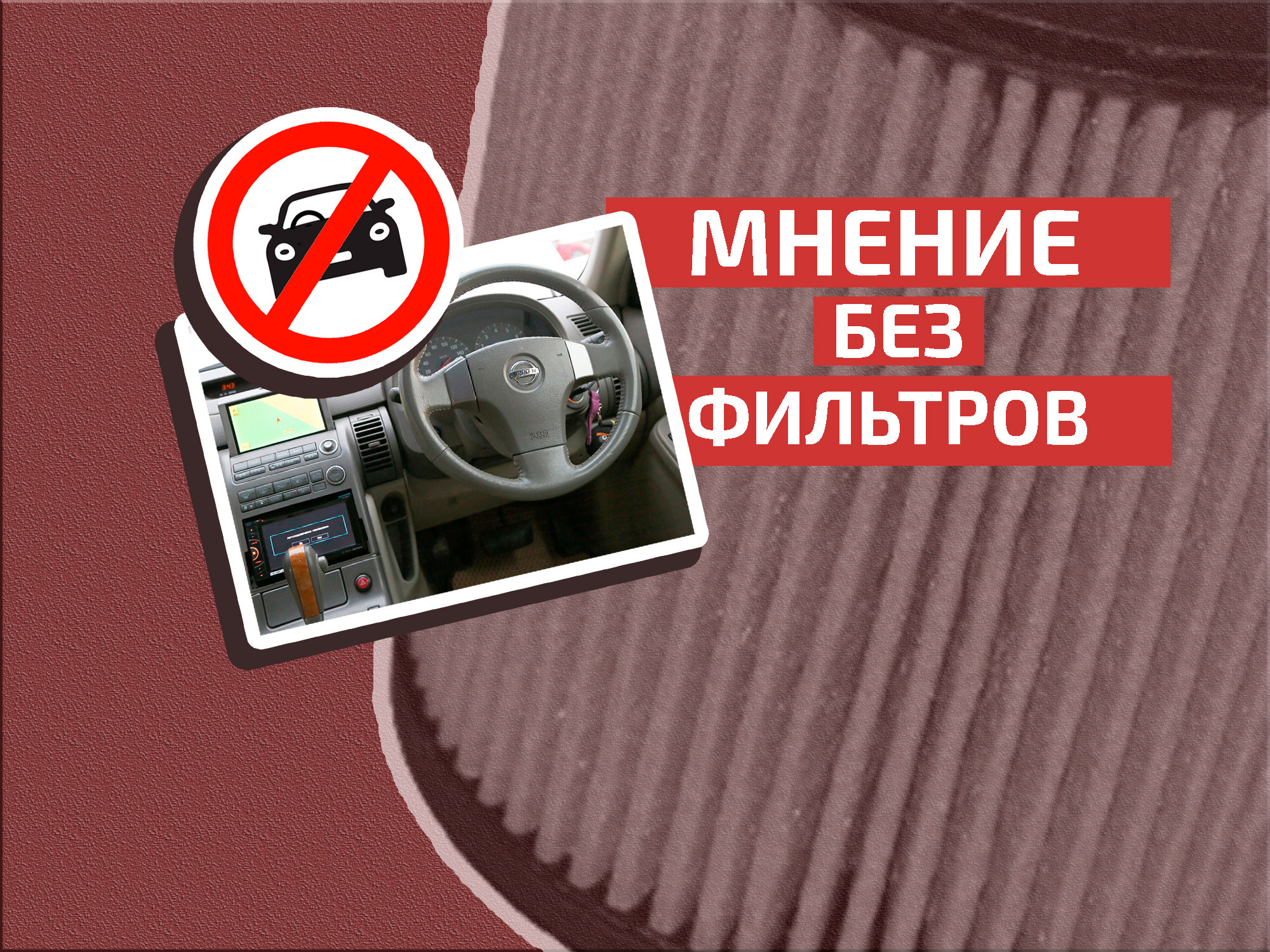
RIA Novosti recently delighted us with the news: Russia has decided to assess how dangerous it is to operate right-hand drive vehicles. Well, it's not the first time the entire half of the country east of the Urals has been shaken by such initiatives. The difference is that this time, the western part has also tensed up a bit.

I'll say it right away: nothing terrible has happened yet, and there's no talk of banning the operation of "right-hand drive" cars. Not yet. Until 2028, specialists from the Ministry of Internal Affairs, the Ministry of Industry and Trade, and the Federal State Unitary Enterprise "NAMI" will study the specifics of operating such vehicles, and based on their findings, proposals will be made aimed at reducing risks on the road. What exactly those risks are is still unclear. As is what there is to research for two years. Probably, if you want, you can study something, although cars with the steering wheel on the "glove compartment side" have been driving around here for at least thirty years, and in that time, anything could have been studied. But oh well, let them research: maybe it's actually interesting. What interests me more is another question: why is this necessary?
Of course, reducing risks on the roads is a good goal. Noble, even, in some ways. But how can you reduce them by studying the operation of right-hand drive cars? Obviously, in the Far East, where such cars are the majority, they will be involved in accidents. But in the western part of Russia, the number of accidents (well, risks) involving "right-hand" cars is minuscule. It's hard for me to say what general conclusions can be drawn from specific examples.
However, it's easy for me to notice that in my simple courtyard in a far from prestigious district of St. Petersburg, there are already two nearly new right-hand drive cars. And you know what's most interesting? They're not Hondas or Toyotas, but Mercedes-Benz C-Class. And more and more Audis with the steering wheel on the glove compartment side are driving around the city, as well as similar BMWs. They're being brought in, of course, from the Japanese auctions we've known about for a long time, and recently – via Korea, because Japan has imposed serious restrictions on us. But nothing is impossible, and for a Russian person, hauling a nearly new Mercedes from Japan through Korea is a sacred duty. Even if it has right-hand drive. Moreover, some of the simplest "Germans" (naturally, with mileage) end up costing not much more than our Lada Vesta. And since the same Mercedes-Benz for Japan are assembled in the same place as those for Europe, there's no difference in the cars (except for the steering wheel, of course). So for many, the choice is obvious: you can't spoil a good "German" with just one detail.
Of course, we're talking about inexpensive "Europeans." A wealthy person can afford to bring a "left-hand drive" G-Class or Audi A8 from South Korea, because for a car costing 10-20 million rubles, you want a normal steering wheel, and the extra cost for it doesn't matter much to such buyers (if only we all lived like that).
In short, as long as our Ladas were only competing with various Toyotas and Hondas, we could turn a blind eye to right-hand drive. Because as soon as we opened our eyes, residents of the Far East would pour concrete into Zhigulis in protest and express nasty separatist sentiments. And now, when our domestic auto industry has just started to breathe freely (yes, yes, that's irony – both "domestic" and "breathe freely"), right-hand drive "Europeans" are flooding in. There are risks, of course. Not exactly operational ones, admittedly, but they still need to be minimized.
Comments (0)