
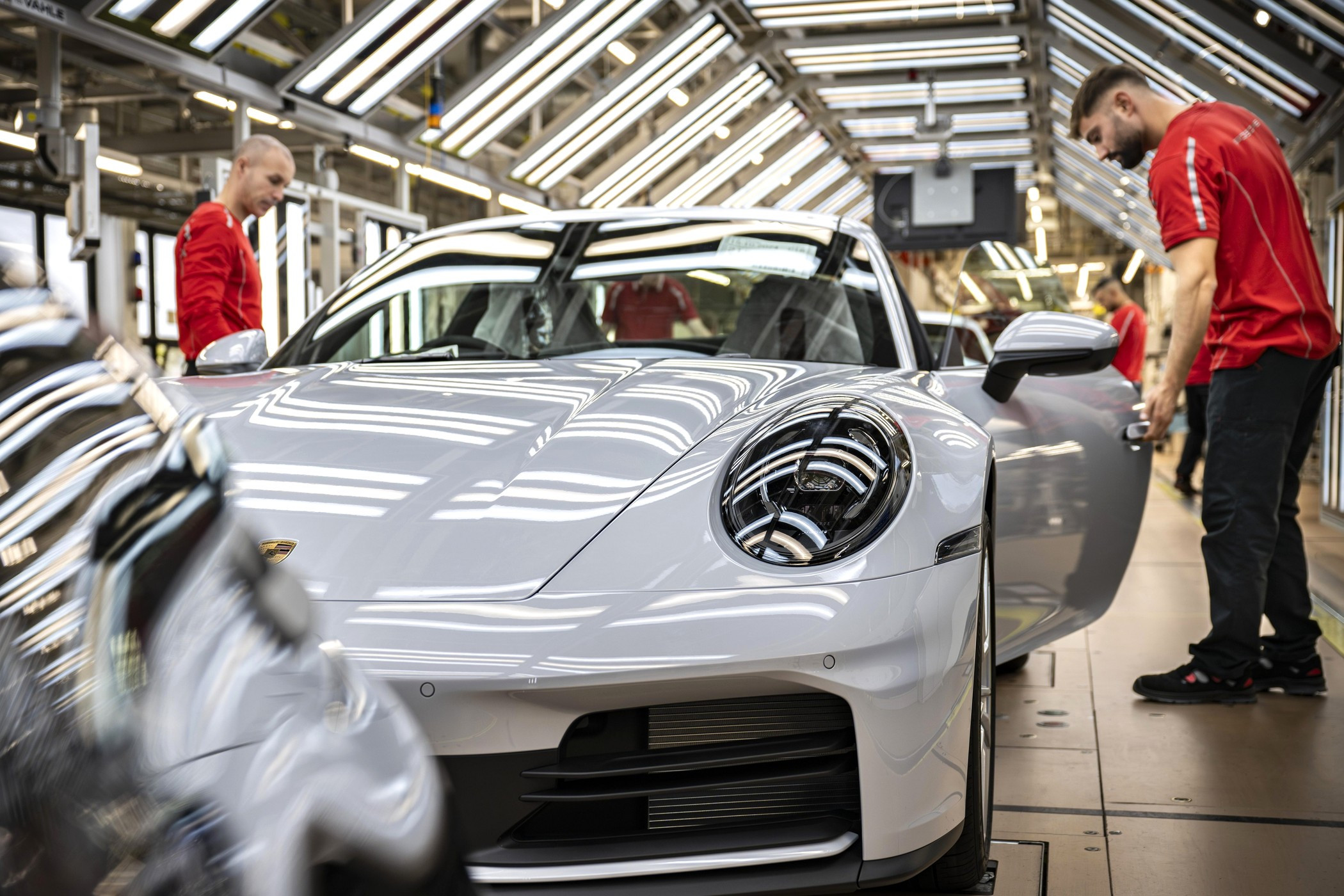
Porsche is sinking along with its parent company Volkswagen and needs new cost-cutting measures. According to insiders, the latest wave of layoffs at Porsche will affect around 5,000 employees, primarily "white-collar" workers — engineers, department heads, and office staff. The company expects further declines in sales due to an unbalanced model lineup and a sharp weakening of its position in China.
This is not the first time Porsche has cut staff, but previous optimization measures have proven insufficient to maintain stability. Porsche's sales have been declining after a record year in 2023 (320,221 units). In the first half of 2026, the company sold only 122,306 vehicles, a 16% decrease compared to January-June 2025. Porsche's worst performance is in China, where sales in the first half of the year plummeted by 32% to 14,501 units. In Europe and even in its home market of Germany, Porsche sales are also declining.
Porsche's net profit after tax in 2025 fell by 91.4% to €310 million. Financial results for the first half of 2026 will be published next week.
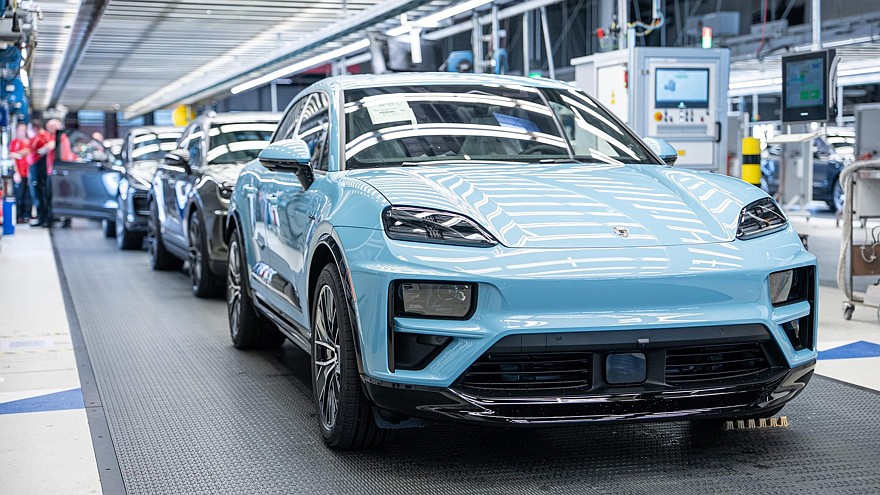
Porsche's main problem is that it recklessly discontinued the entry-level gasoline crossover Macan (a replacement will only arrive in 2028) and the gasoline mid-engine sports cars 718 (their replacement is still uncertain), while Porsche's electric vehicles are too expensive and sell poorly. Production of the Taycan family has to be periodically paused due to low demand.
Porsche's current production capacity is designed for 400,000 cars per year, but it is now clear that the company is unlikely to exceed the 250,000-car mark annually. According to the German business publication Automobilwoche, Porsche's new CEO Michael Leiters expects the company to break even in the future with an annual output of 180,000 cars.
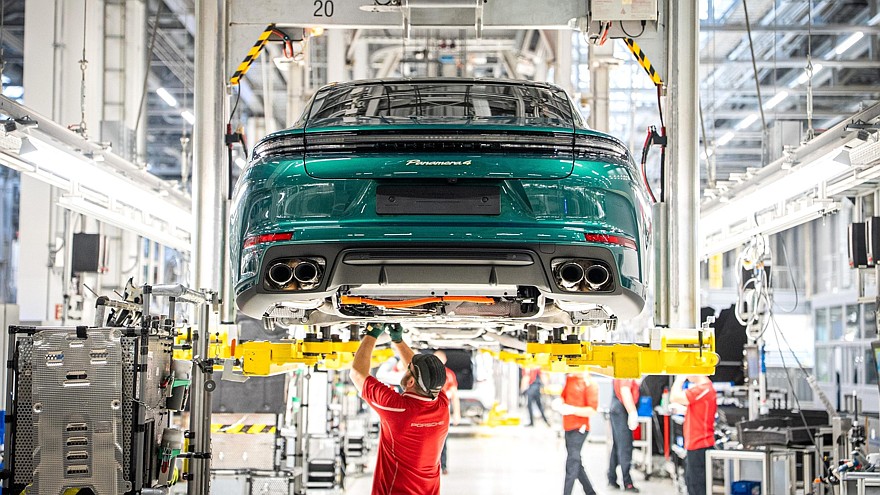
Automobilwoche reports that Leiters proposed to the supervisory board to cut another 5,000 people and, albeit reluctantly, received approval. The most unpleasant aspect is that the cuts will affect engineers — Porsche's core value. Given current trends, Porsche is forced to pursue closer cooperation with Audi to reduce engineering costs. The cuts will also affect some department heads and a significant number of office workers. Salary reductions, as well as cuts to bonuses and incentives, are also expected.
In theory, leaving the Volkswagen Group could be a salvation for Porsche, but in reality, this is hardly possible. In 2012, in the interests of the Porsche-Piëch family, the merger of Porsche and Volkswagen businesses was completed. Today, these companies are closely linked through cross-shareholdings and administrative ties, effectively operating as a single entity. It would be much easier to let Lamborghini go free — we wouldn't be surprised if that happens soon.
We should add that the Volkswagen Group is already in a state of transitioning from crisis to catastrophe, without a clear action plan — it is only clear that massive layoffs are coming there as well, which will inevitably affect Porsche.
Comments (0)